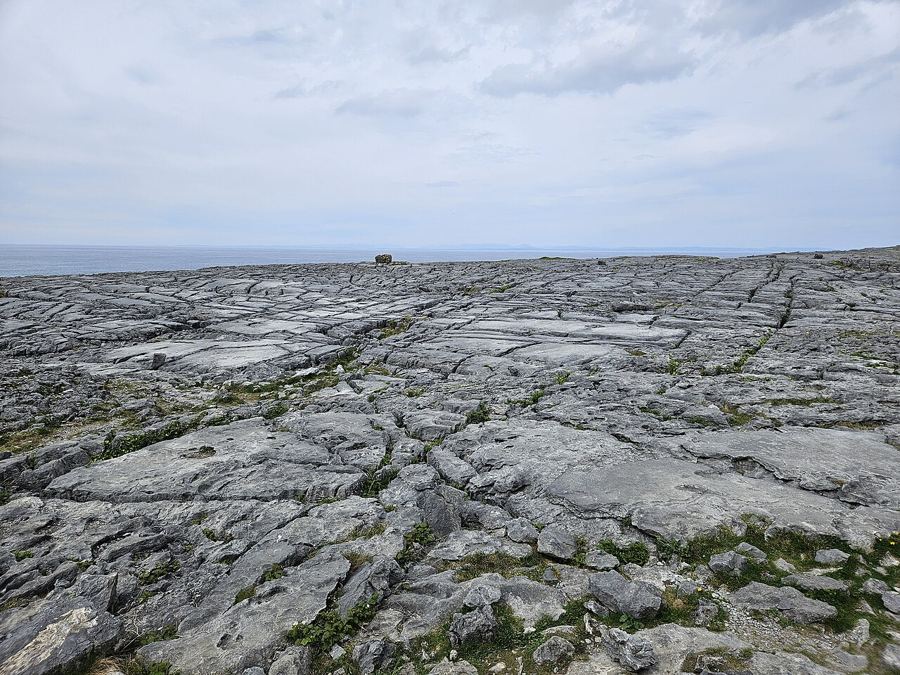
The Burren, a country of stone
A plain account of north-west Clare’s limestone country, from its tropical-sea beginnings to the pavement, clints, grikes and underground rain.
North Clare, by the season
The Burren is limestone, flowers, tombs, abbeys and green roads. These stories range from gentians and Poulnabrone to Mullaghmore, turloughs and Corcomroe Abbey, with the green roads and winterage: cattle on the hills in winter.
A plain account of north-west Clare’s limestone country, from its tropical-sea beginnings to the pavement, clints, grikes and underground rain.
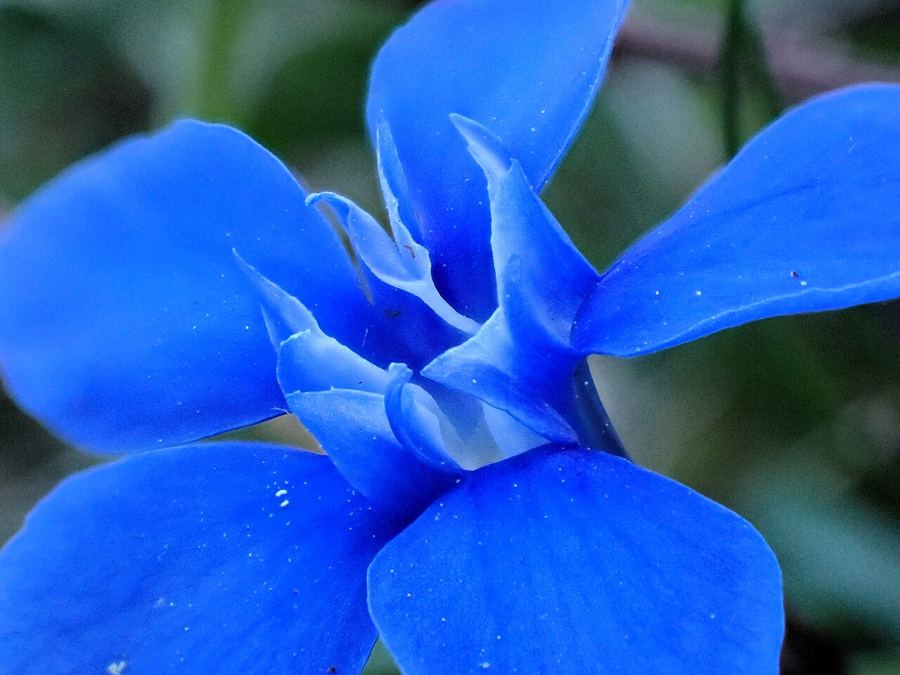
In the Burren, Arctic-alpine and Mediterranean plants grow side by side. The deep-blue spring gentian gives this meeting of climates a clear focal point.
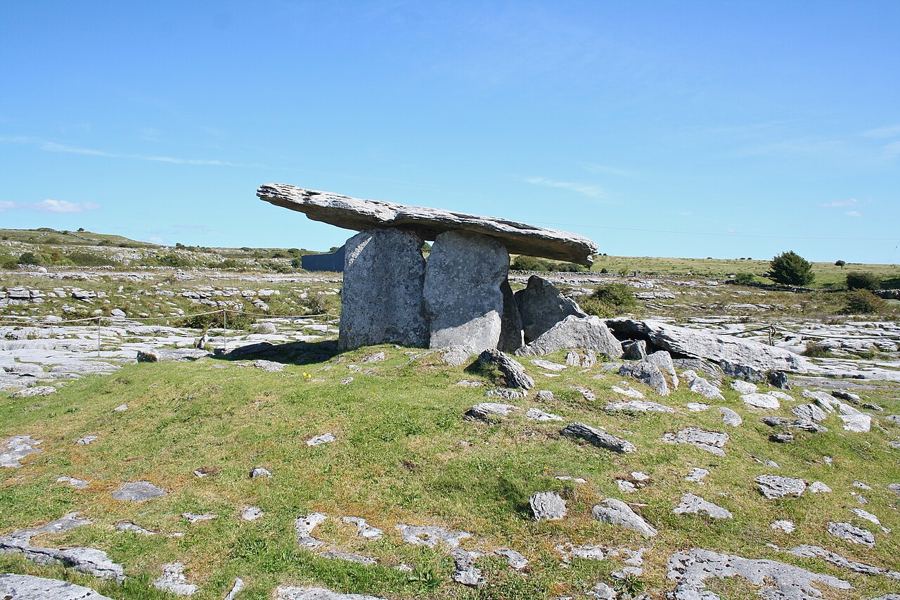
On the Burren’s limestone pavement, Poulnabrone makes a plain shape against a very long human story: a capstone, two uprights and the remains found beneath them.
A folded limestone hill, a compact park of varied ground, and the visitor centre plan stopped after a long campaign.
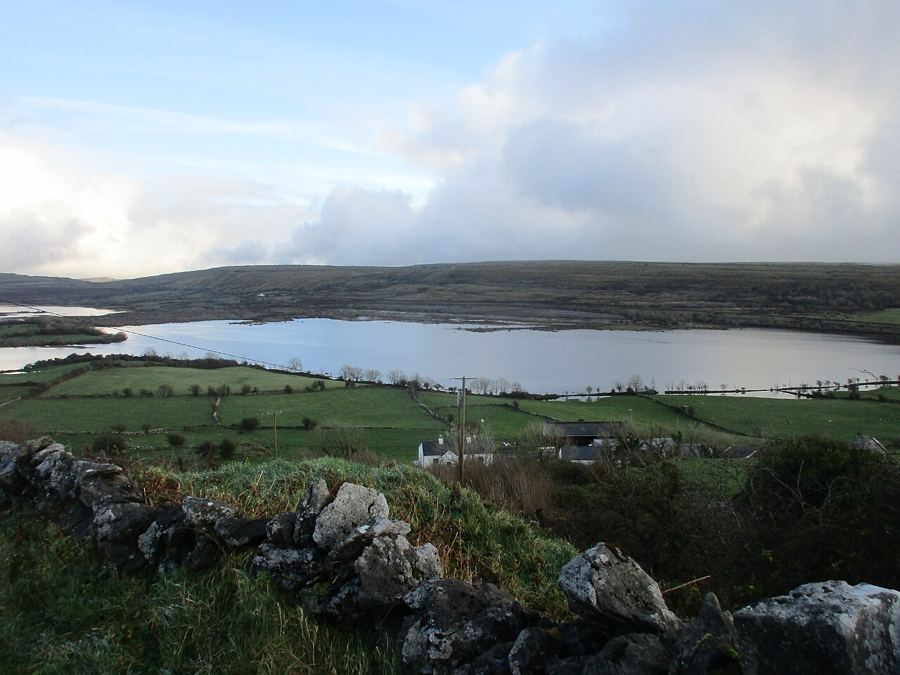
The Burren’s limestone lakes fill and drain with groundwater; in summer, their dry beds are grazed as pasture.
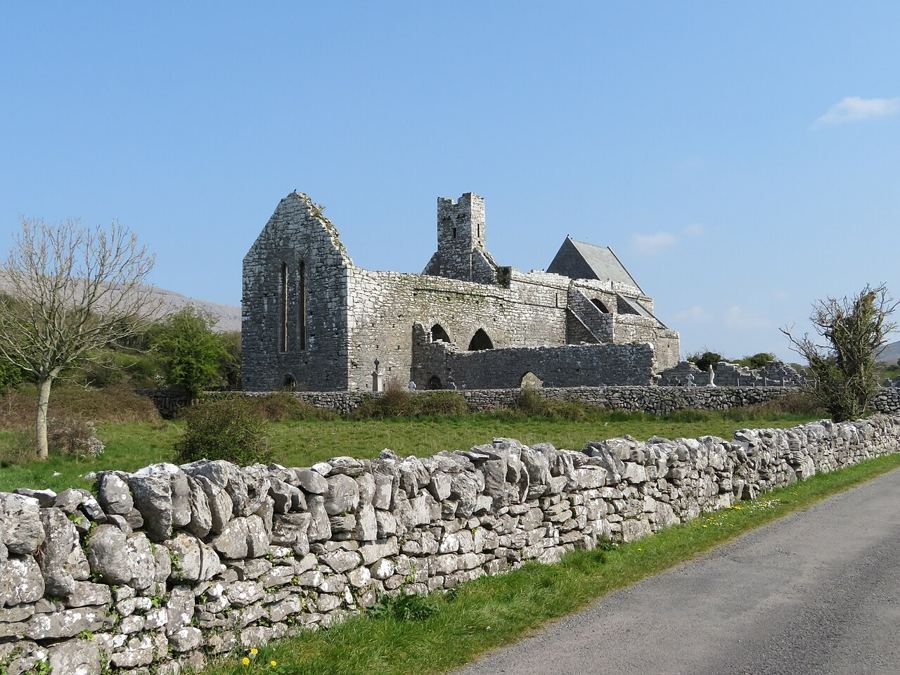
A ruined Cistercian abbey in the north-east of the Burren, with O’Brien patronage, carved faces, a fertile-rock name and a place in Yeats’s play.
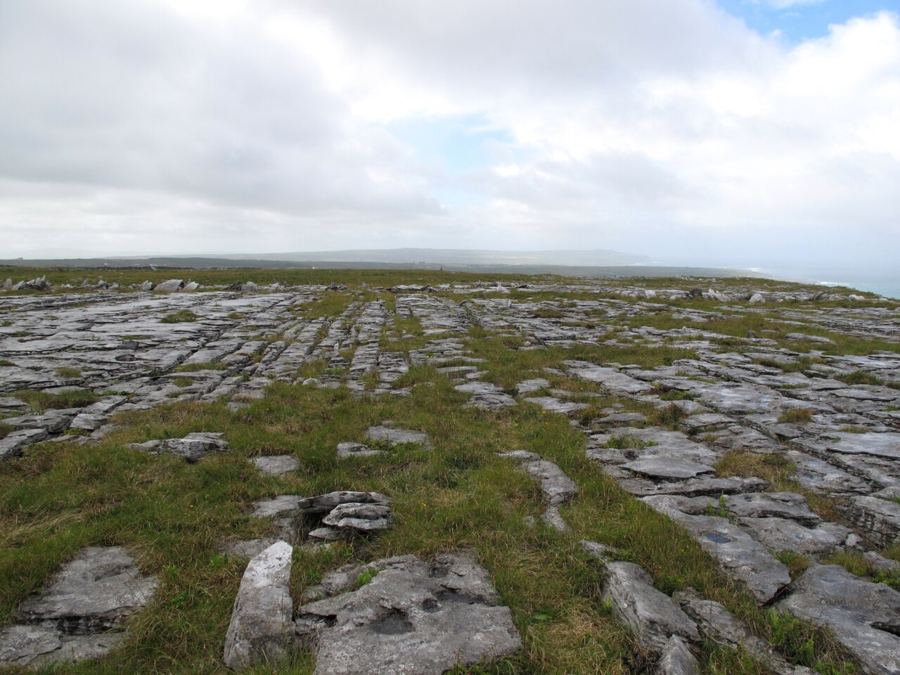
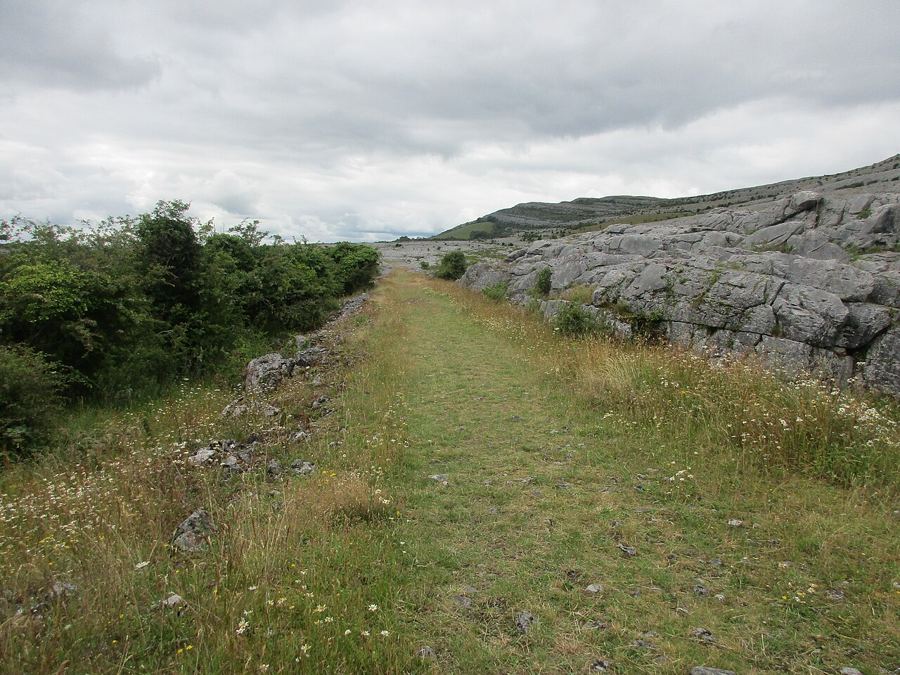
Old unpaved tracks between stone walls carry the Burren’s history of farm movement and relief work into the walking routes of today.
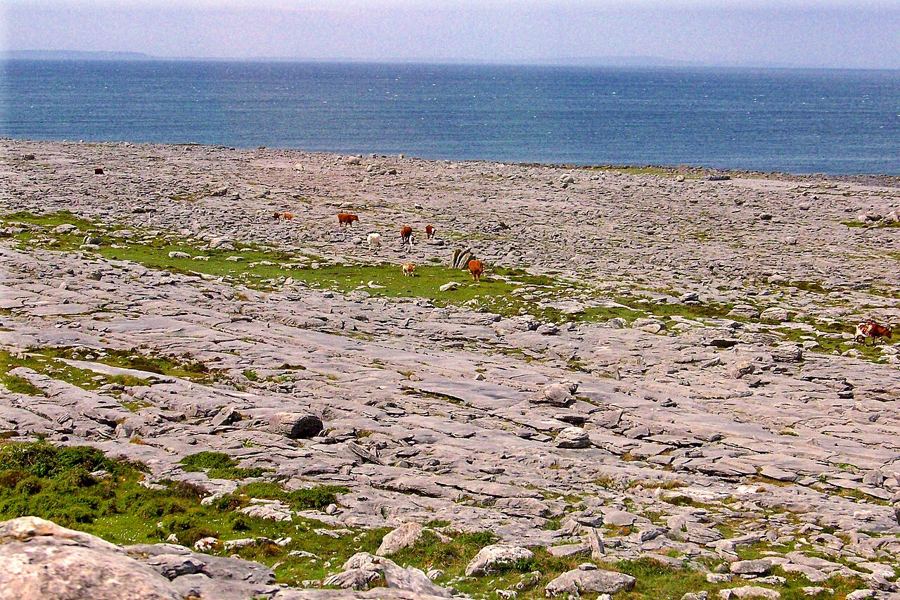
In the Burren, cattle go uphill for winter. Winterage turns the usual farming calendar around, with limestone, grass and spring flowers all part of the arrangement.
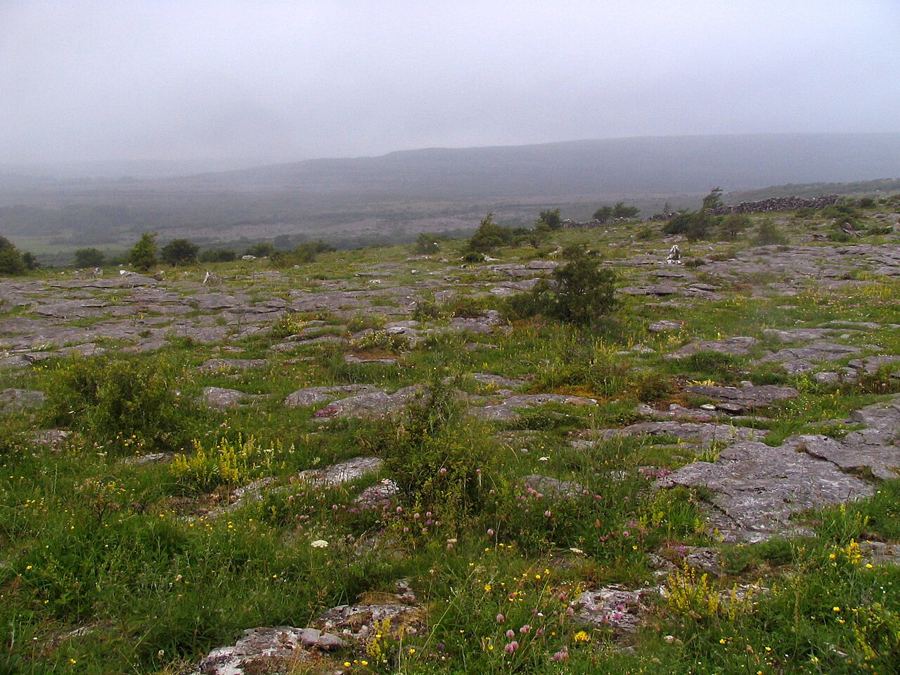
Edmund Ludlow’s famous line makes the Burren sound stripped bare. Its springs, wells, turloughs and grass between rocks complicate that verdict.
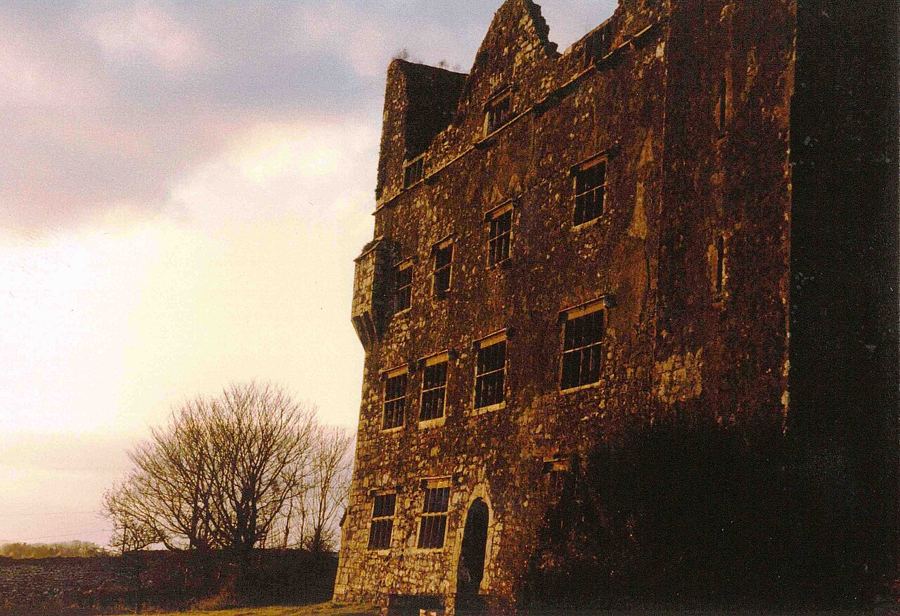
A roadside ruin between Kilfenora and Corofin brings together two kinds of building and a story about its mistress that needs to be kept in the realm of folklore.
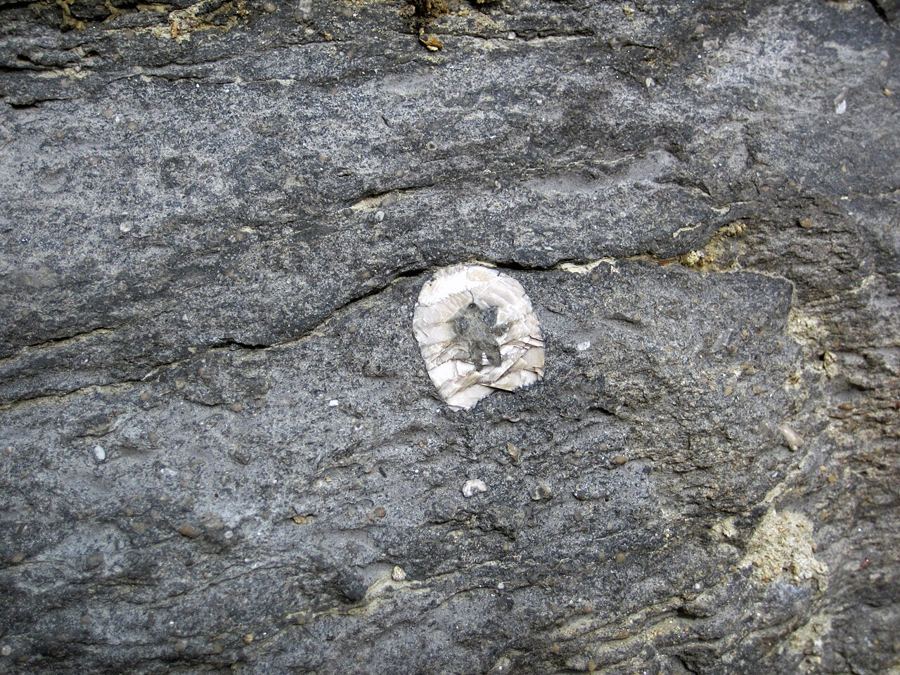
In the Burren, weathered limestone makes an old tropical sea legible in crinoid stems, corals and brachiopods, especially on the shore around Doolin and Fanore.
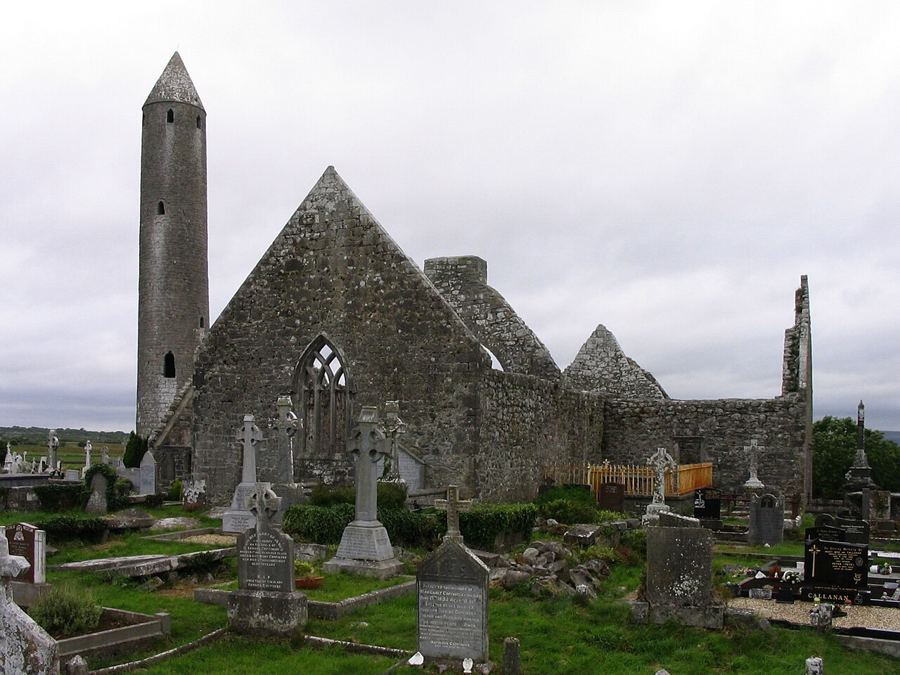
On the Galway side of the Burren, Kilmacduagh holds a cathedral, smaller churches and a round tower whose tilt is only part of its story.