Poulnabrone, a tomb on the pavement
On the Burren’s limestone pavement, Poulnabrone makes a plain shape against a very long human story: a capstone, two uprights and the remains found beneath them.
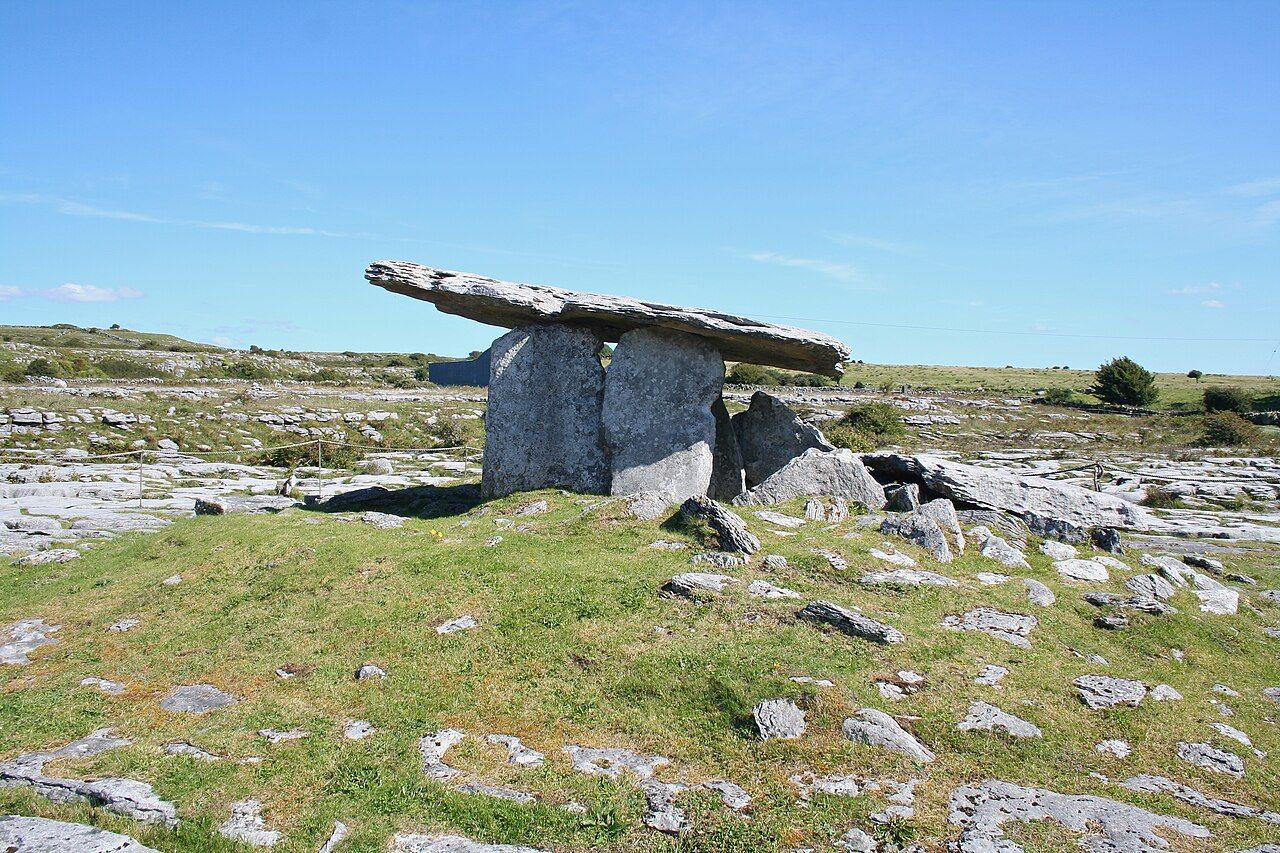
The limestone pavement gives Poulnabrone its setting before the tomb gives it a name. A thin capstone rests on two upright portal stones. The arrangement is spare enough to take in at once, and substantial enough to hold attention. Here is a tomb on the stone pavement of the Burren, with a form that can be described in a few words and a history that cannot be reduced to its outline.
That outline is the place to begin. The capstone rests across the upright stones; the upright stones carry the capstone. In this plain account, the structure is already doing its work. It stands on limestone pavement, not apart from it, and the words “portal tomb” give a name to the kind of monument. The site’s force is in that meeting of a built form and the open stone beneath it. Nothing has to be added to make the arrangement legible.
The phrase the green roads suggests a landscape read by routes; Poulnabrone offers another way of reading the Burren, through a fixed shape on limestone. The tomb does not explain the whole landscape, and the landscape does not explain the tomb. It gives the structure a setting, while the structure gives a visitor a point to hold in mind. Pavement, capstone, uprights. A short list, and a place that stays with the eye.
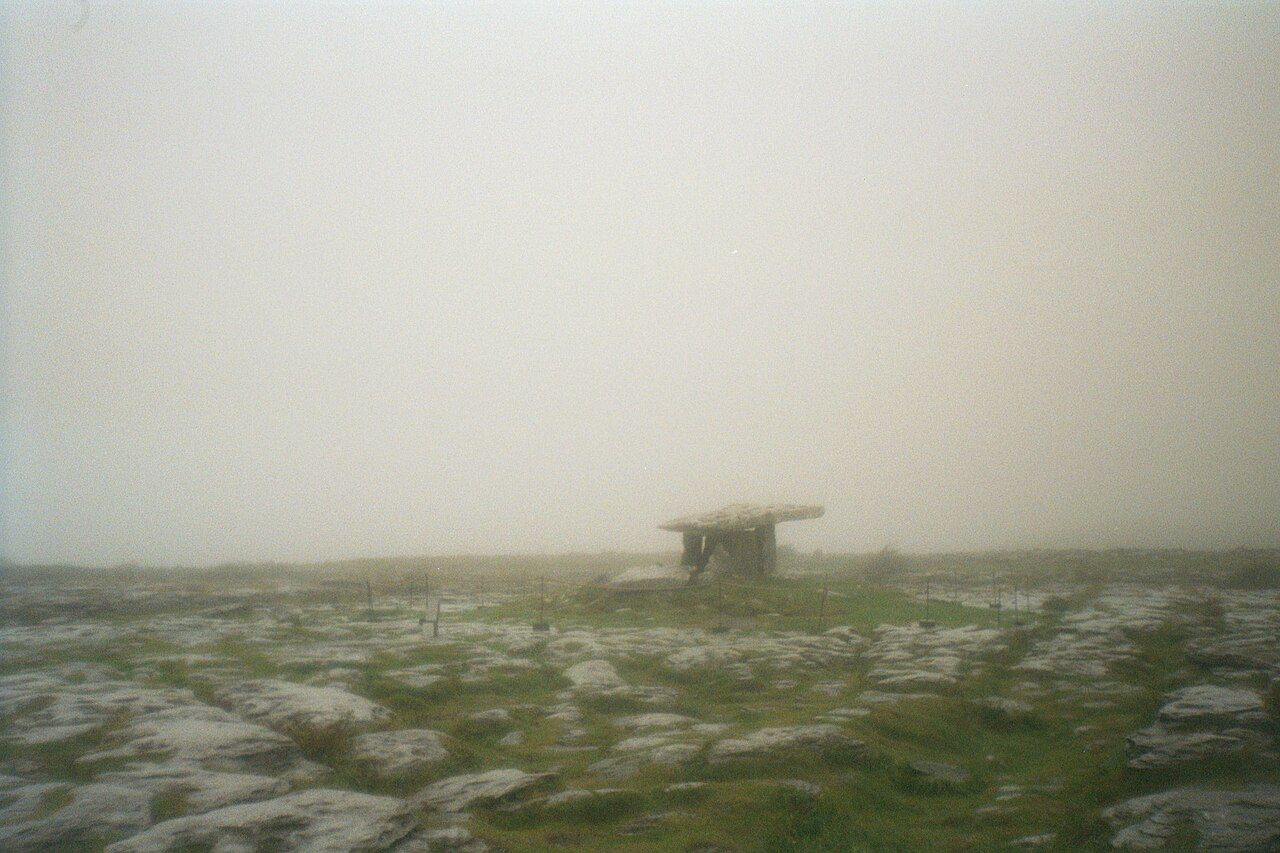
See also Turloughs: The Lakes That Come and Go.
In 1986, excavation found the remains of more than thirty people. That is the detail that changes the scale of the view. The tomb is not only a group of stones that can be understood from its shape; it is also a burial place with human remains found within it. More than thirty people is a firm count in the account of the excavation, though it does not turn those people into a crowd of known lives. The facts carried here give no names or stories for them. The number still matters. It puts many people, rather than a single burial, at the centre of the story.
The burials date from about 3800 to 3200 BC, in the Neolithic. Those dates place the burial use far back in time, without making the stones any less direct in the present. The tomb’s simple form and the long reach of its dates sit together without a need for a grand explanation. The pavement can be seen; the capstone and portal stones can be described; the remains and their dates can be stated. The space between those facts is real. It is better left as space than filled with imagined scenes.
The tomb’s name is usually translated as the hole of the quern stones. It is a phrase that sits oddly beside the measured account of the monument; that small riddle is welcome. The name offers a small riddle, while the stones offer a plain arrangement. Neither cancels the other. A name can travel through translation with a bit of mystery still attached; a structure can remain clear in outline without giving away every part of its past. Poulnabrone holds both at once: an easy form to describe and a name that invites a second thought.
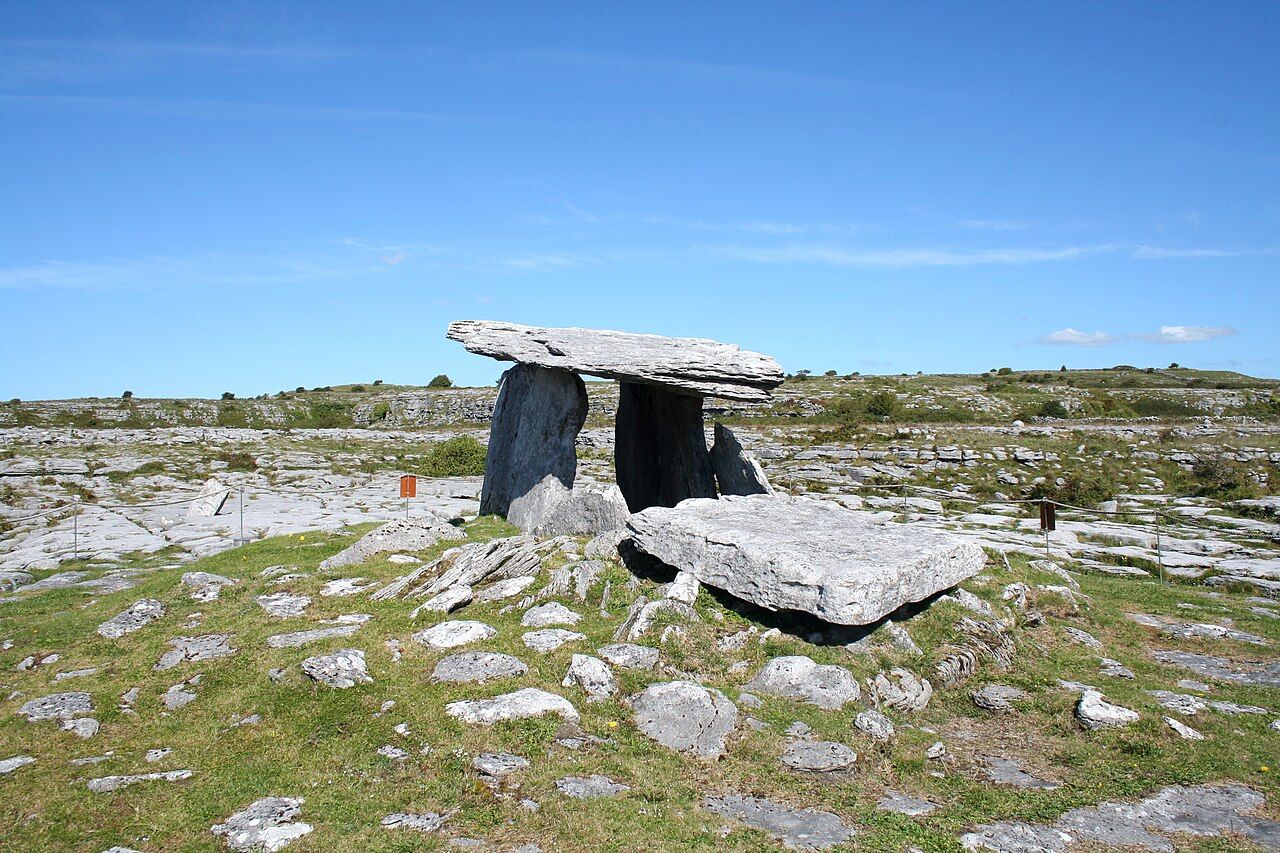
The tomb is not a story made smaller by its stones. It is one of the most visited archaeological sites in Ireland, and its importance does not depend on elaborate detail. The fact of the excavation, the number of people whose remains were found, and the Neolithic dates are enough to make the place more than a recognisable outline. At the same time, the limestone pavement keeps the account grounded. The site stands there as a tomb, on the Burren’s stone, with its facts stated plainly and much else left unknown.
For a visitor, that is a useful way to approach Poulnabrone: begin with what is present in the account, and let the scale come from the facts rather than from embellishment. A thin capstone. Two upright portal stones. Remains of more than thirty people. Burials in the Neolithic. The pieces are few, but they do not make a small story. The site is visited often, yet its central impression remains an uncomplicated one: a tomb standing on limestone, and human history held in a form that can be named without being fully explained.
The tomb is not a story made smaller by its stones.
The numbers: excavation in 1986; remains of more than thirty people; burials from about 3800 to 3200 BC. The name, meanwhile, has found a hole for the quern stones.