Fossils in the pavement
In the Burren, weathered limestone makes an old tropical sea legible in crinoid stems, corals and brachiopods, especially on the shore around Doolin and Fanore.
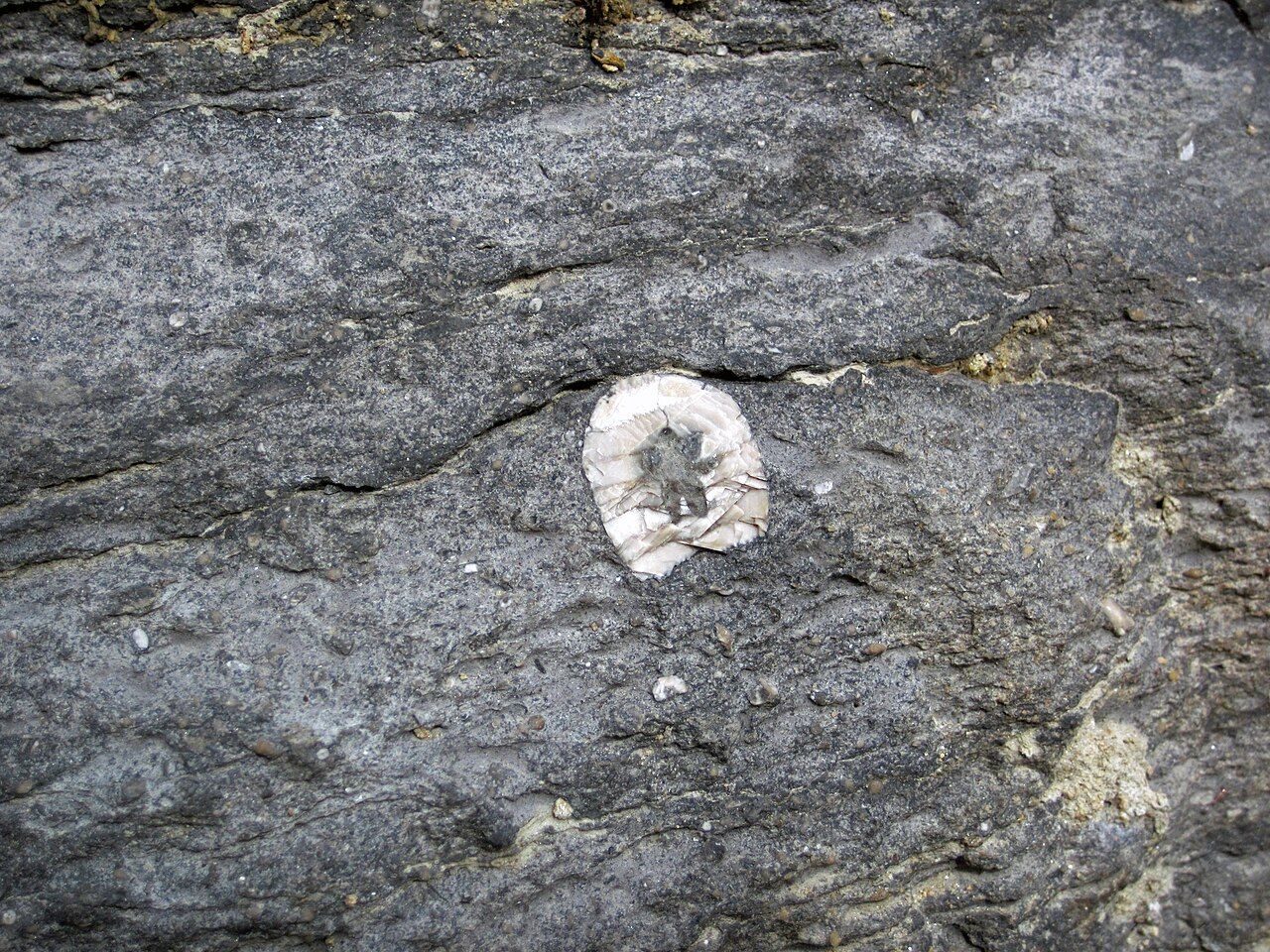
A weathered surface of limestone pavement, a scatter of shapes on stone. The fossils stand out there without needing a display case or a label. A stem made of small discs can be picked out from the surrounding rock; elsewhere, the forms belong to corals or brachiopods. The pavement is not only a surface to cross. It holds the remains of animals that lived in a tropical sea about 330 million years ago.
That distance in time is difficult to picture, and the stone does not make it easier by explaining itself. It offers something smaller and clearer: the shape of a creature, preserved in limestone. The sea is no longer present, but the fossils remain part of the Burren. The contrast is plain. A place now known for its limestone pavement contains the traces of life from a tropical sea, and the traces are visible on weathered surfaces.
Crinoids are the most common fossils here. They are sea lilies, related to starfish, and their stems look like stacks of small discs. The description is simple; the effect is memorable. A stack of discs is an easy form to recognise, even when it is set into stone rather than arranged separately. The eye has something definite to follow. Not a whole creature in perfect outline, but a feature that gives a sense of how it was built.
There is a useful pleasure in that modest scale. A crinoid stem does not announce itself as a grand spectacle. It asks for a closer look, and then offers a pattern that can be read without much fuss. Once the discs have been noticed, the pavement seems less like a blank stretch of rock. Not because every mark becomes a fossil, but because the known forms have made the surface worth attending to.
Corals and brachiopods are also found in the limestone. Brachiopods are shelled animals. Their presence widens the picture beyond the crinoid stems, but the fossils do not need to be arranged into a dramatic scene. The facts are already enough: animals lived in a tropical sea; their remains are held in the stone; some of their forms can still be seen on weathered pavement.
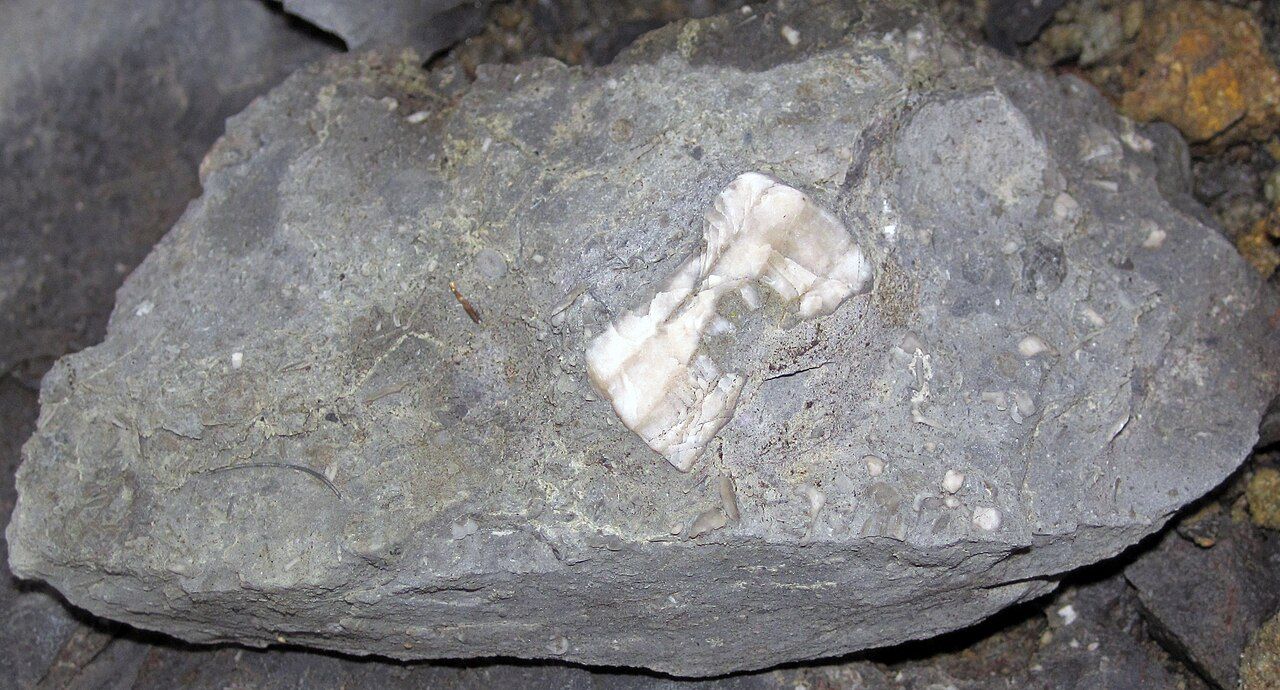
The easiest place to see fossil-rich rock is on the shore around Doolin and Fanore. That is where the subject comes close to the ordinary business of looking at stone. The fossils do not sit apart from the limestone; they are part of it. A visit need not turn into a search for rare specimens. The common crinoid stems, with their small discs, give the eye a clear form to notice; the corals and brachiopods show that the pavement holds more than one kind of fossil.
The same attention to place suits Doolin out of season, where the focus stays on Doolin rather than on a checklist of attractions. Here, too, the strongest part is not a grand claim but a close one. A weathered surface, a fossil that stands out, the knowledge that the animal belonged to a sea from about 330 million years ago. The scale is both very small and very large. The discs can be counted by the eye; the time behind them cannot be easily held in mind.
Fossils are not souvenirs to take away. Collecting fossils from the Burren is not allowed in protected areas. The point of the pavement is not to remove a piece of it, but to notice what is already there. That distinction matters especially with something so easy to mistake for an ordinary mark in stone. A fossil seen in place keeps its relation to the limestone around it; a loose piece would lose that setting.
The Burren’s fossils do not turn the pavement into a lesson with a tidy ending. They make it possible to look at the stone as something formed from more than the present moment. Crinoids, corals and shelled brachiopods belong to the same account, even when only one shape catches the eye. The shore around Doolin and Fanore makes that account easy to approach. The weathered limestone does the rest, quietly holding the marks of a vanished sea.
See also Mullaghmore and the national park.
The numbers: about 330 million years ago.