Mullaghmore and the national park
A folded limestone hill, a compact park of varied ground, and the visitor centre plan stopped after a long campaign.
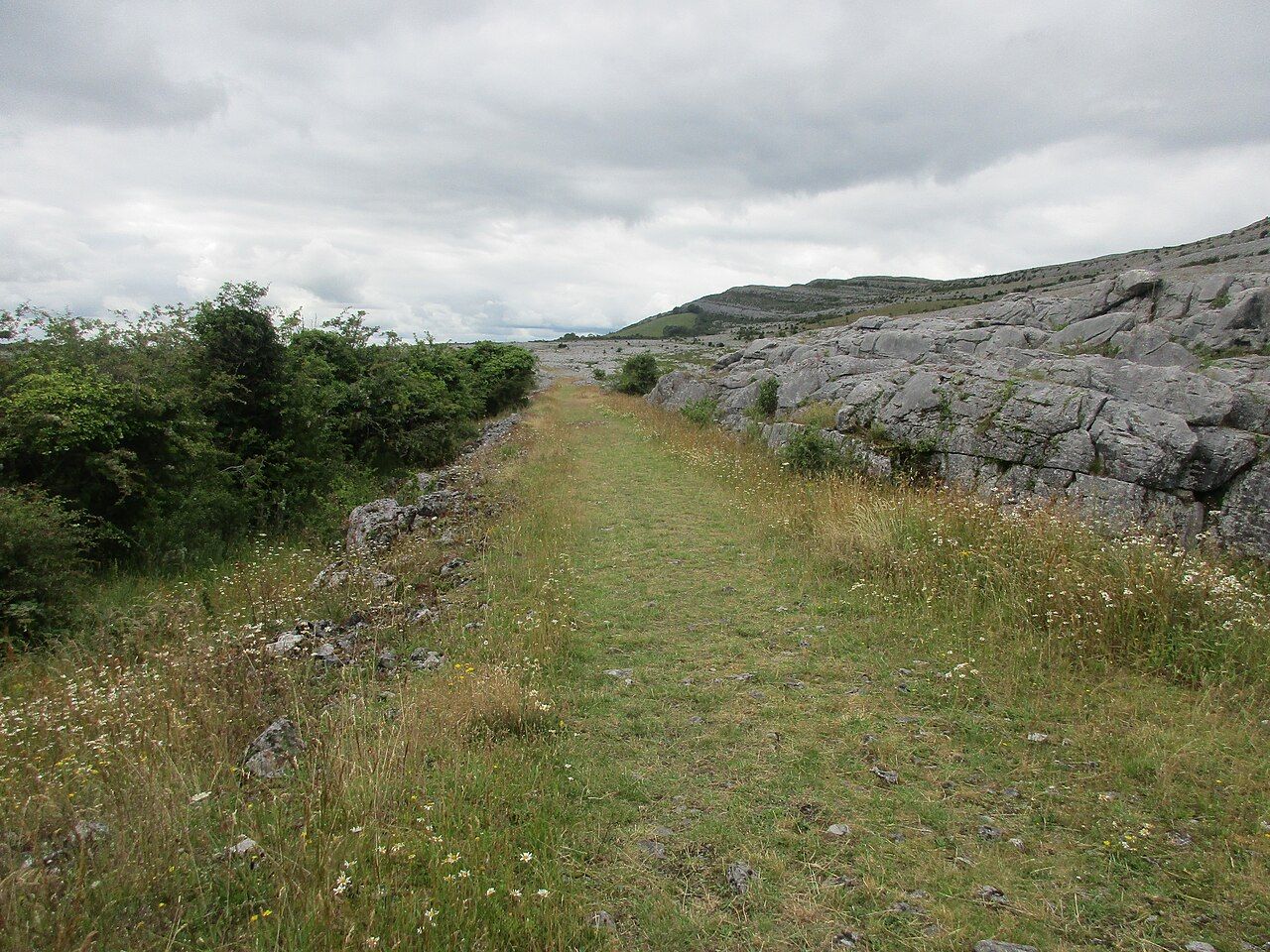
Mullaghmore rises in folded layers of limestone, the best-known feature of the Burren National Park. The hill gives the place its clearest shape: not a smooth rise, but stone folded into visible lines. That folded shape is enough to hold attention, while the ground around it keeps the park from being only a hill. The park covers about 1,500 hectares in the south-east of the Burren. A small area, with a feature that is hard to mistake.
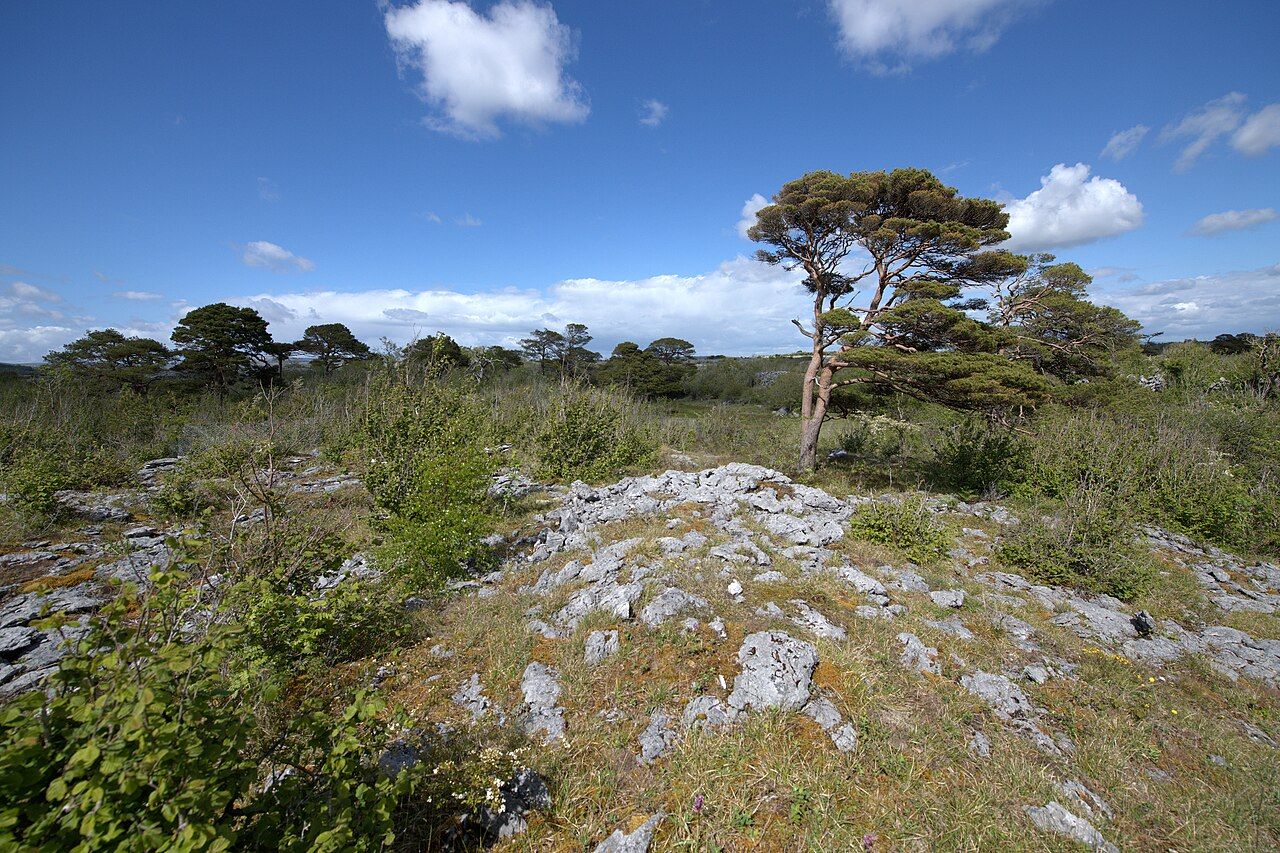
The park is the smallest of Ireland’s national parks. That fact sets a scale, but does not make the landscape one-note. Limestone pavement, lakes, turloughs, hazel scrub and woodland all belong within it. The mix is the point. A folded hill at the centre of attention, and several kinds of ground around it.
The waymarked trails start from a car park south of Mullaghmore. That is a useful detail in a place where the hill can draw the eye before the rest of the park has had a look-in. The trails offer a starting point for taking in more than the familiar outline. No grand entrance needed; just the car park, the paths and the land.
The limestone pavement is part of the park’s character, alongside its lakes and turloughs. The list of landscapes sounds almost like a small inventory, but it is a better way to think about the place than treating Mullaghmore as the whole story. Folded stone is the headline. Pavement, water, scrub and woodland fill out the rest.
A plan to build a visitor centre at Mullaghmore was stopped in the 1990s after a long campaign. It is a useful part of the place’s story, and a reminder that the hill has not only been a landscape feature. The centre was planned, then the campaign stopped it. The park remains best approached through what is actually there: its trails and varied ground.
The linked words Ennis in November point away from the hill, towards another subject in the wider area. Its folded limestone is already a strong enough feature, and the park’s smaller details make the visit more than a stop for a view.
There is a wider Burren story beyond the hill, too. The national park holds a particular part of that landscape: limestone pavement, lakes, turloughs, hazel scrub and woodland, gathered around its best-known folded hill. For visitors, the simplest way into it is the waymarked trails from the car park south of Mullaghmore.
See also Winterage: Cattle on the Burren Hills in Winter.
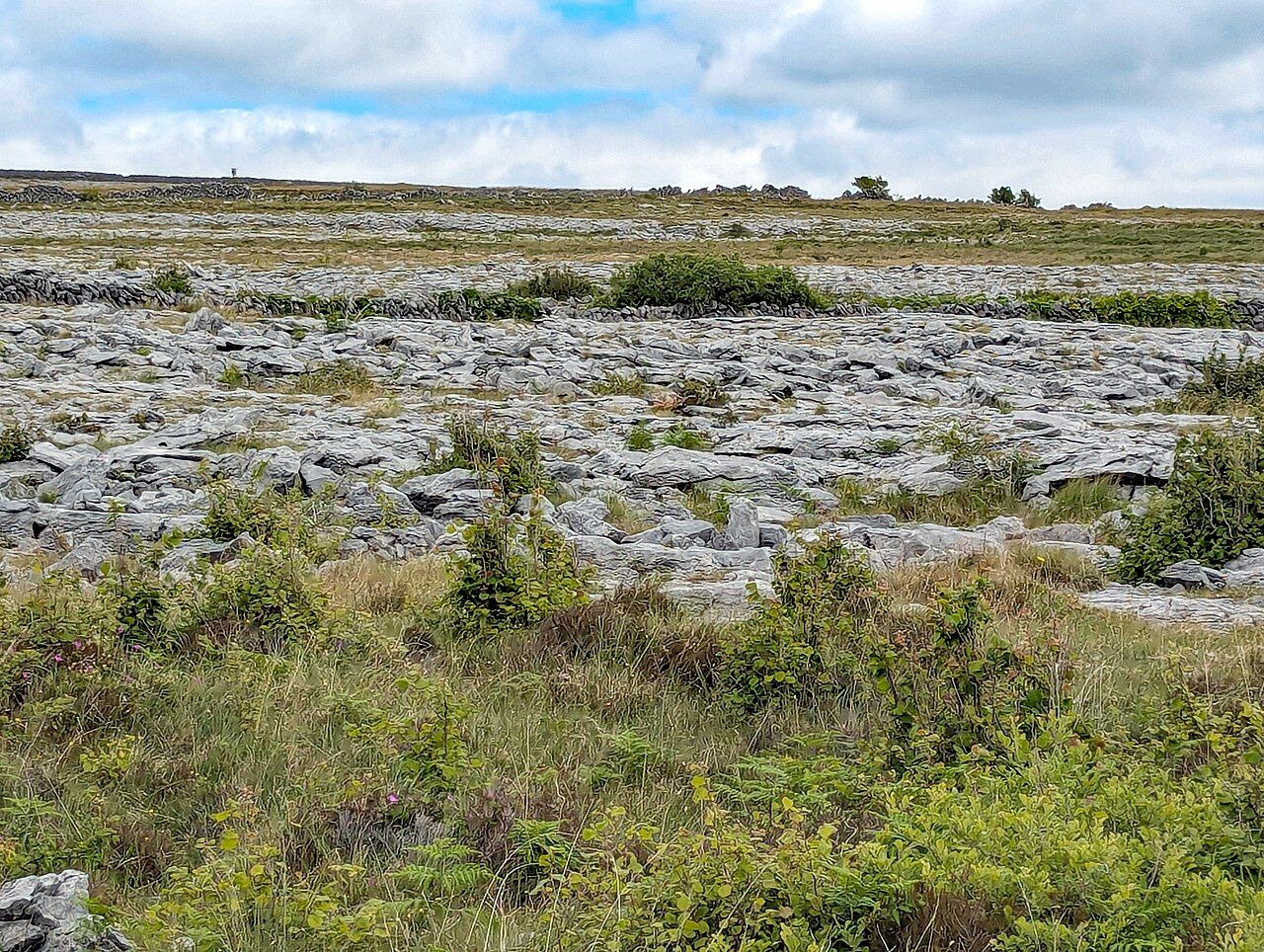
The numbers: about 1,500 hectares; the smallest of Ireland’s national parks.