The Burren, a country of stone
A plain account of north-west Clare’s limestone country, from its tropical-sea beginnings to the pavement, clints, grikes and underground rain.
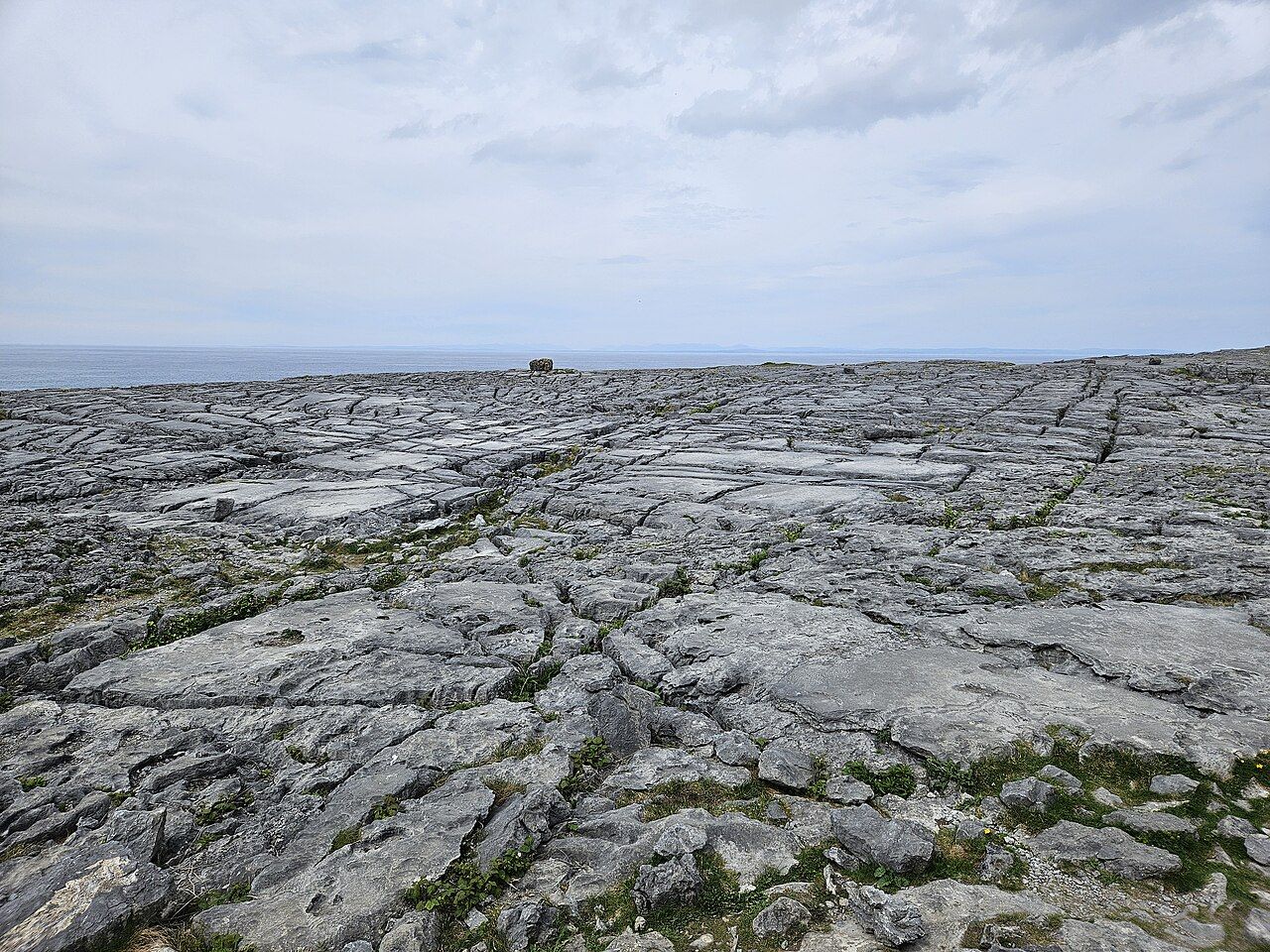
What kind of country is made mostly of stone? In north-west County Clare, the answer is the Burren: a karst landscape of limestone, with a history written across its bare surface.
The name is direct. The Burren comes from the Irish boireann, meaning a rocky place. That is a plain description beside a name such as [link:kilmacduagh|Kilmacduagh's leaning tower], or [link:obriens-tower|O'Brien's Tower]. Here, the name and the ground agree: stone is the first thing the landscape has to say.
The limestone began at the bottom of a warm tropical sea, where it was laid down about 330 million years ago. That is a long way from the dry, open pavement visible now. The change in setting is hard to picture, but the stone is a reminder that this country has not always looked as it does.
Glaciers scraped the rock bare, leaving wide areas of limestone pavement. The word pavement fits: broad stretches of exposed stone, divided into shapes that look almost arranged. It is not a smooth road, and it does not need to be. The Burren's surface is a map made of limestone and cracks.
The blocks of limestone are called clints; the cracks between them are grikes. Those names make the surface easier to read. A clint is a block, a grike is a crack. The distinction is useful without being grand. The Burren does not need a flourish to make its details worth looking at.
Rainwater dissolves limestone. Most water in the Burren runs underground, so the visible surface does not tell the whole story of where the water goes. The cracks are not just marks in the stone; they belong to a landscape in which water can pass below ground.
That is the pleasure of looking closely here. The wide pavement gives the first impression; clints and grikes supply the smaller scale. The history is not separate from the view. A warm tropical sea, glaciers scraping the rock bare, and rainwater dissolving limestone all belong to the same account.
The Burren rewards a steady look more than a search for a single grand feature. Stone, blocks, cracks. The ground is both the subject and the evidence. A bus window can make a fine frame for a landscape, but the pavement’s details ask for a slower look once the frame is gone.
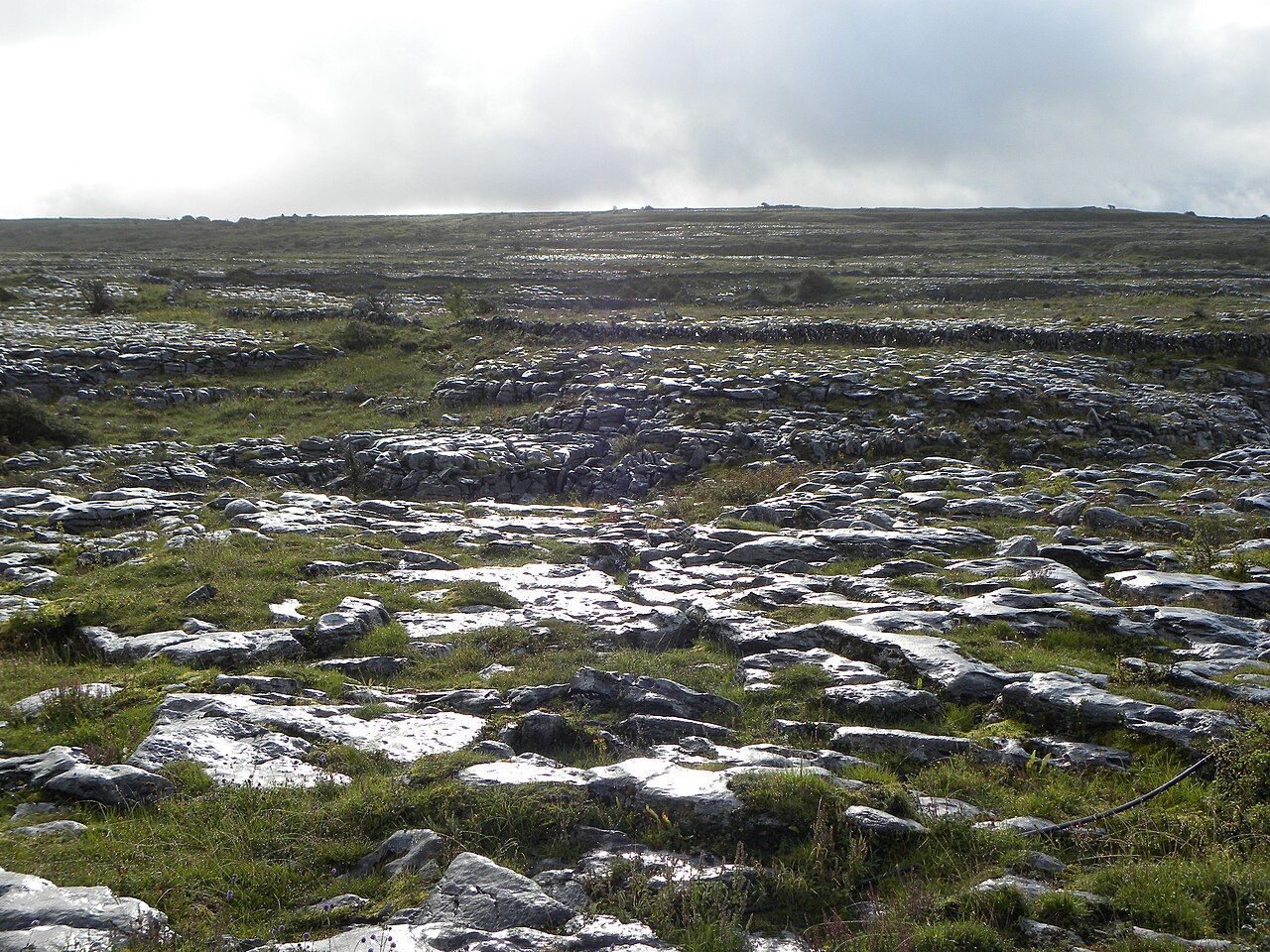
The Burren's surface is a map made of limestone and cracks.
The Burren's surface is a map made of limestone and cracks.
See also Fossils in the pavement.
The numbers: about 330 million years, and most of the rain takes the underground exit. The surface seems to have lost the argument.