Kilmacduagh and the tower that leans
On the Galway side of the Burren, Kilmacduagh holds a cathedral, smaller churches and a round tower whose tilt is only part of its story.
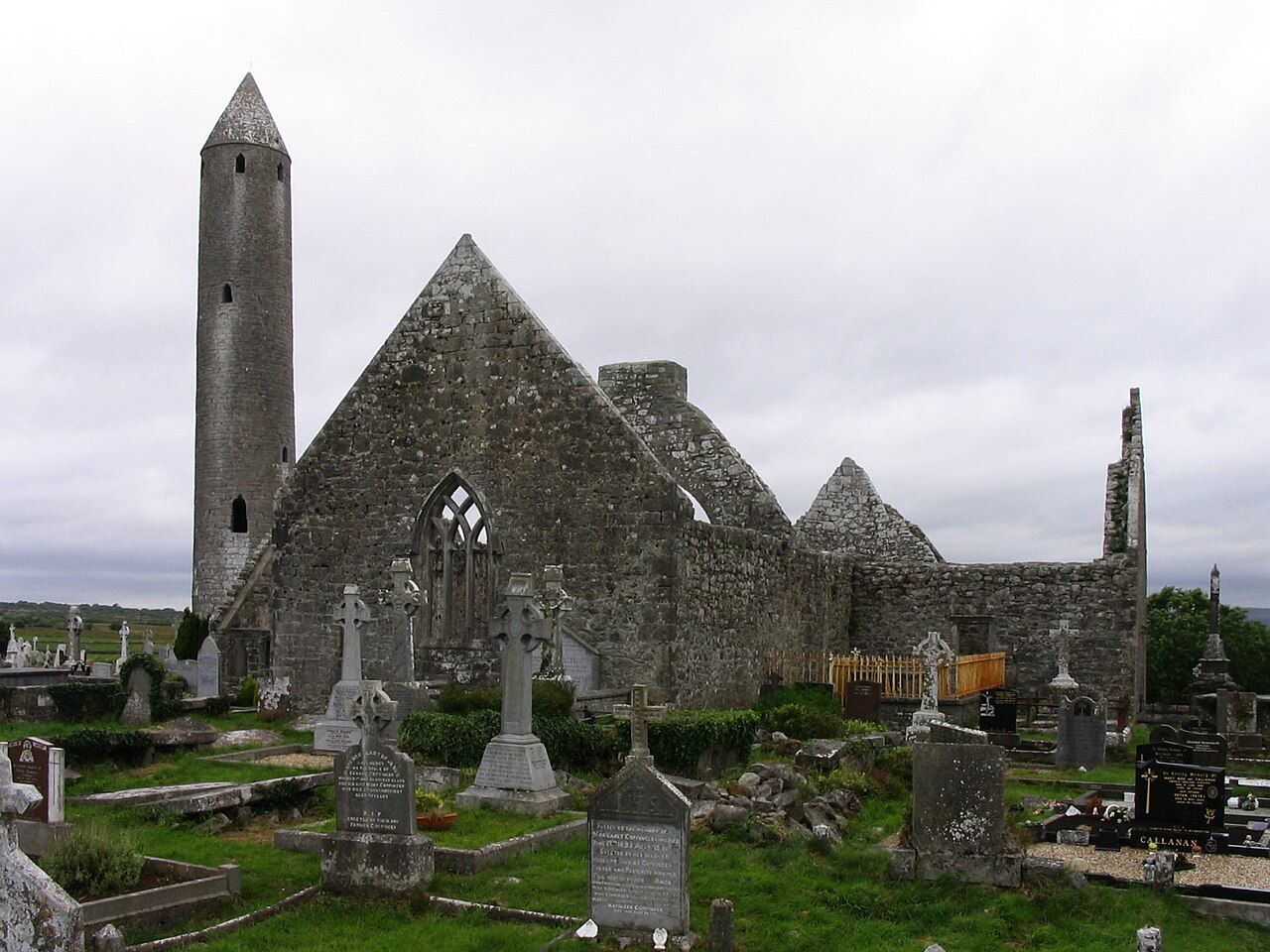
The tower at Kilmacduagh does not stand quite straight. It leans noticeably off vertical, a plain fact that changes the way the site is read. The eye goes to the tilt first; then to the rest of the monastic place around it. The round tower is about 34 metres high, the tallest surviving in Ireland. That is enough to make it a landmark without asking the lean to do all the work.
Kilmacduagh is just over the county border in Galway, on the east side of the Burren. Its position gives the site a useful clarity: the county line and the Burren are part of its setting, not an excuse for a grand story about remoteness. What is here is a monastery founded in the seventh century by St Colman mac Duagh. The site holds a cathedral and several smaller churches. Those buildings matter as much as the tower, even if the tower makes the quickest impression.
The lean is not the whole story, but it is the detail that gives the place its quickest identity. A tower that is both tall and visibly off vertical asks for a second look. It is easy to let that single detail become the whole visit, and that is the part worth resisting. The tilt is striking, certainly. But a monastic site is more than the most unusual thing in it, and Kilmacduagh has enough here to reward a slower reading.
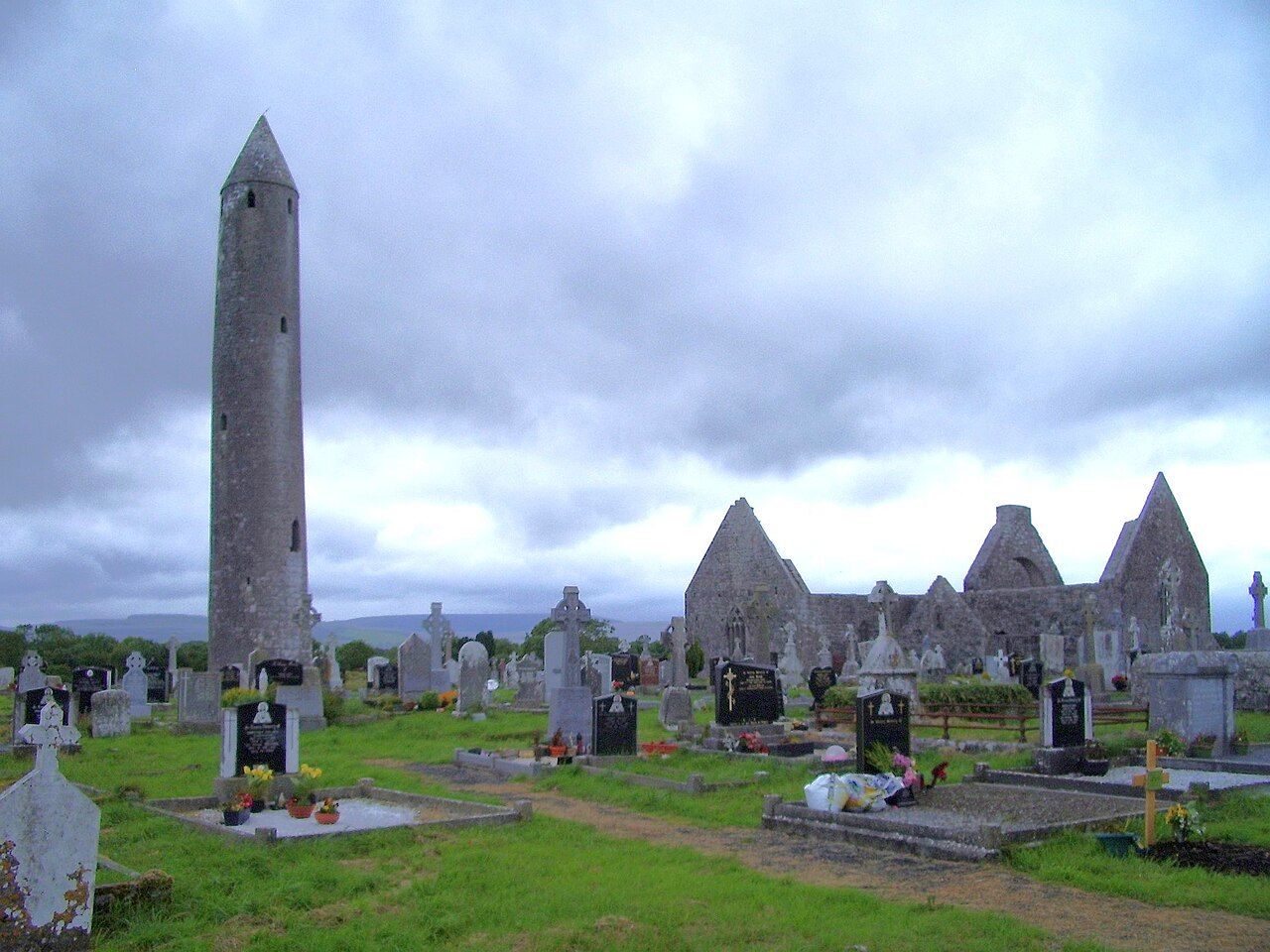
The lean is not the whole story, but it is the detail that gives the place its quickest identity.
There is a difference between noticing a building and understanding a place. Kilmacduagh offers no need for an elaborate account to make that difference clear. Its name belongs to Colman mac Duagh, its foundation belongs to the seventh century, and its surviving group includes a cathedral and several smaller churches. The round tower has the particular distinction of being the tallest surviving in Ireland. Each fact adds a separate measure: a founder, an age, a set of buildings, a landmark.
Colman is said to have lived as a hermit in the Burren before founding the monastery. The detail is brief, but it shifts the story from a list of structures to a person and a choice of place. It also keeps the Burren close to the site’s account. Kilmacduagh is on the east side of the Burren; Colman’s earlier life is connected with the same landscape. It is already enough to make the founding feel rooted here rather than detached from its surroundings.
See also Winterage: Cattle on the Burren Hills in Winter.
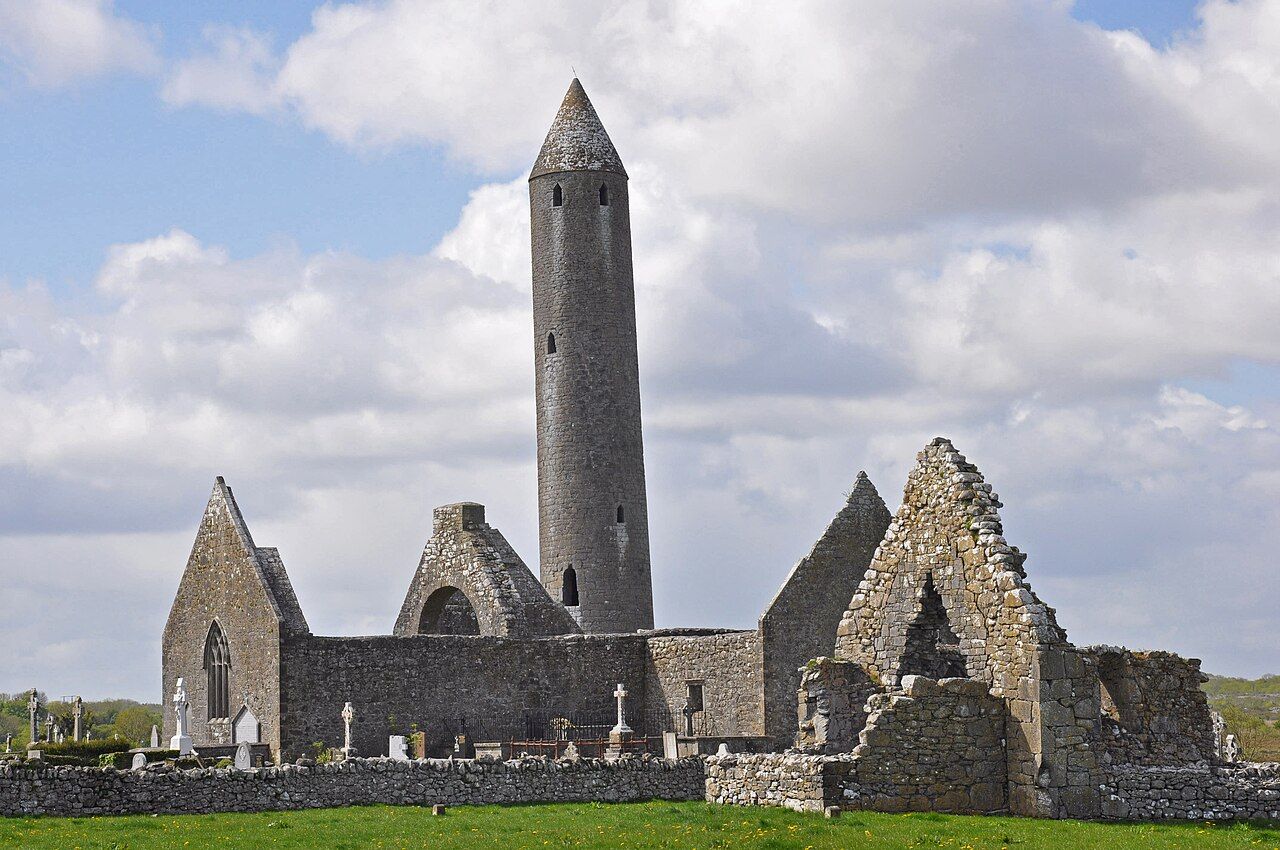
The tower’s height and lean make an unusually direct pair. One is a measure, the other an impression. About 34 metres is easy to state; off vertical is just as plain, but harder to reduce to a number. Together they give the tower its force. Still, a visit spent only measuring it against the straight line in the mind would miss the wider arrangement. The cathedral and smaller churches are not supporting scenery. They are part of the same monastic site, and the tower is one element within it, however much it catches the eye.
There is a temptation to treat a famous-looking feature as the whole reason for stopping. That is a poor bargain here. The tower deserves attention, but so does the fact that Kilmacduagh is a monastic site, founded by Colman, with a cathedral and several smaller churches. The useful way to hold the place in mind is not to choose between its famous lean and its history. Both are present. The tower gives the visit its sharpest visual detail; the foundation story gives that detail a setting and a name.
Kilmacduagh is a place of clear facts, and it gains nothing from padding them out. Galway, the east side of the Burren, Colman’s life as a hermit, the monastery’s seventh-century foundation, the churches, the cathedral, the tower. Enough to make a full account without turning the lean into a legend. The tower can keep its angle. The rest of the site can keep its balance.
The numbers: about 34 metres high; founded in the seventh century. The tower has the lean, and gets the last word.