What Ludlow’s Burren left out
Edmund Ludlow’s famous line makes the Burren sound stripped bare. Its springs, wells, turloughs and grass between rocks complicate that verdict.
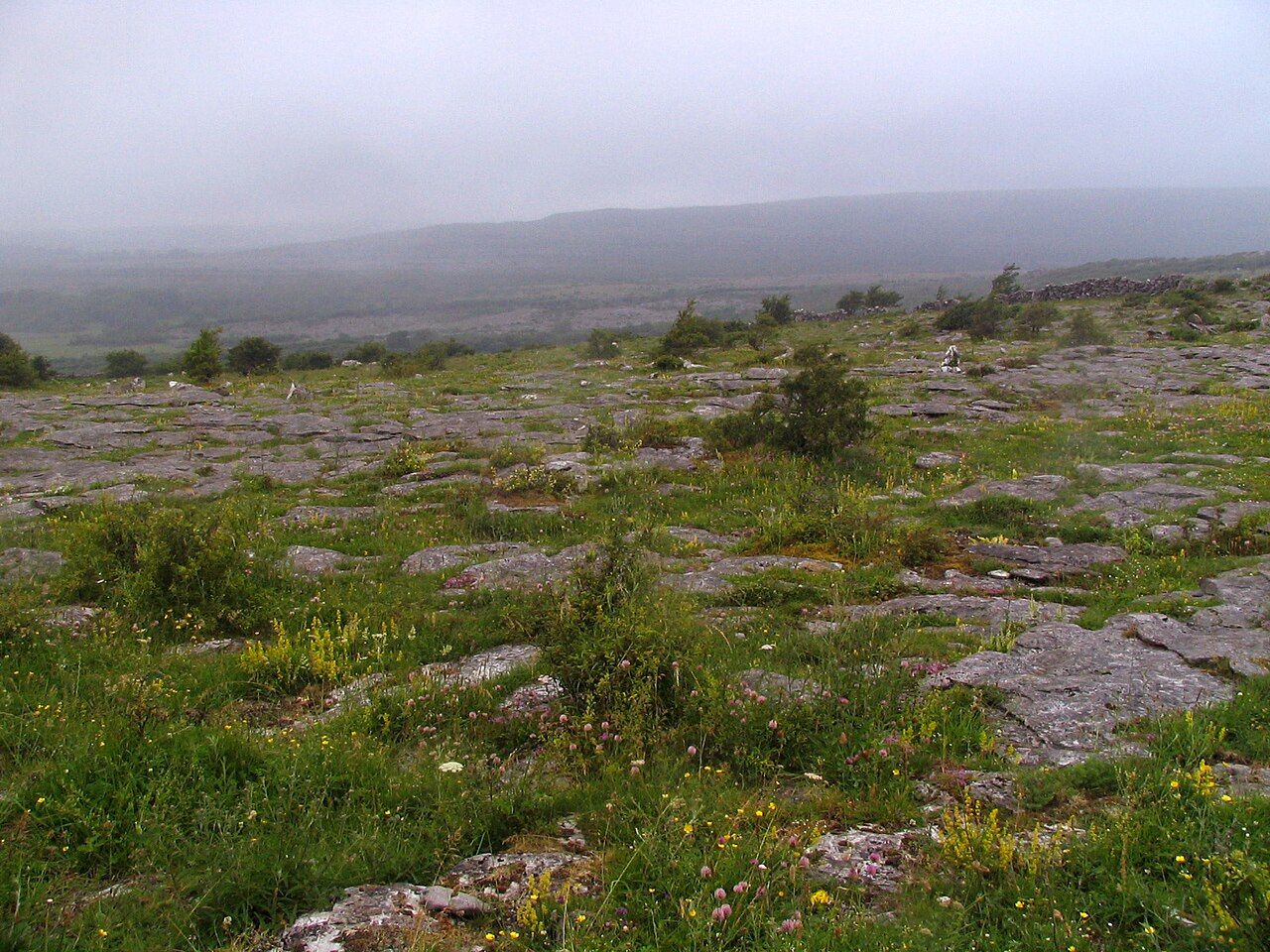
What does a sentence leave out when it makes a place sound empty? Edmund Ludlow’s description of the Burren is famous for what it says is missing. The place itself has a few replies.
Ludlow, a Cromwellian general, wrote of the Burren in the 1650s. His line is neat, severe and easy to remember: not enough water to drown a man, not enough wood to hang one, nor enough earth to bury him. It is a powerful way to describe absence. It is not the whole description.
The saying is often quoted, and that repetition gives its three shortages the feel of a complete account. But a memorable sentence can close a subject too quickly. The Burren does not fit inside the verdict. The line gives the visitor a starting point, not a reliable inventory of what the place holds.
Water is the clearest correction. The Burren holds many springs, wells and turloughs. That fact does not need to turn into a counter-slogan; it is enough to set beside Ludlow’s claim. “Not enough water” sounds final. Springs, wells and turloughs make the phrase less final, and the landscape more complicated than the joke suggests.
There is no need to discard Ludlow’s words altogether. Their force depends on the bluntness, and the bluntness is part of why they remain in circulation. The mistake is to let a line about water, wood and earth stand for every part of the Burren. Keep the sentence. Skip the assumption that it tells all.
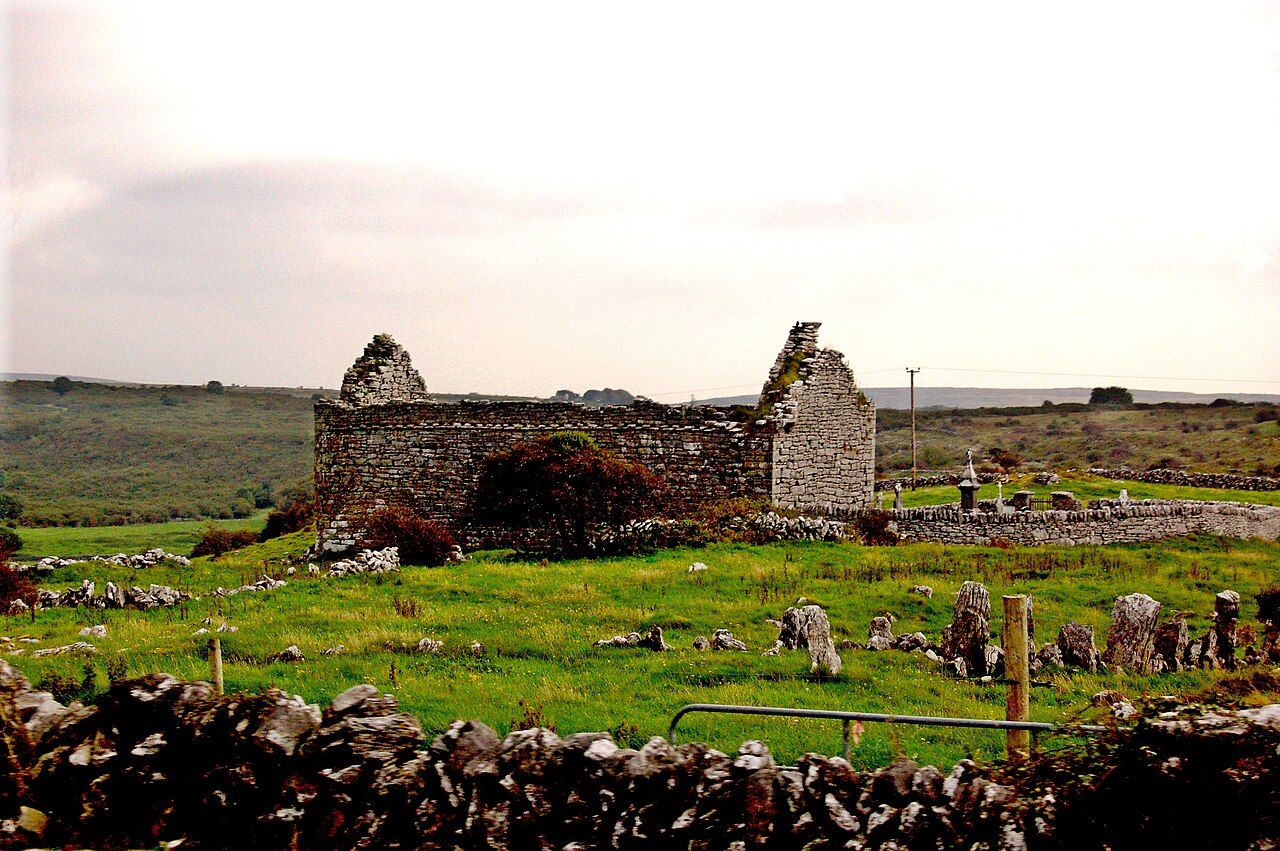
See also Corcomroe Abbey in its valley.
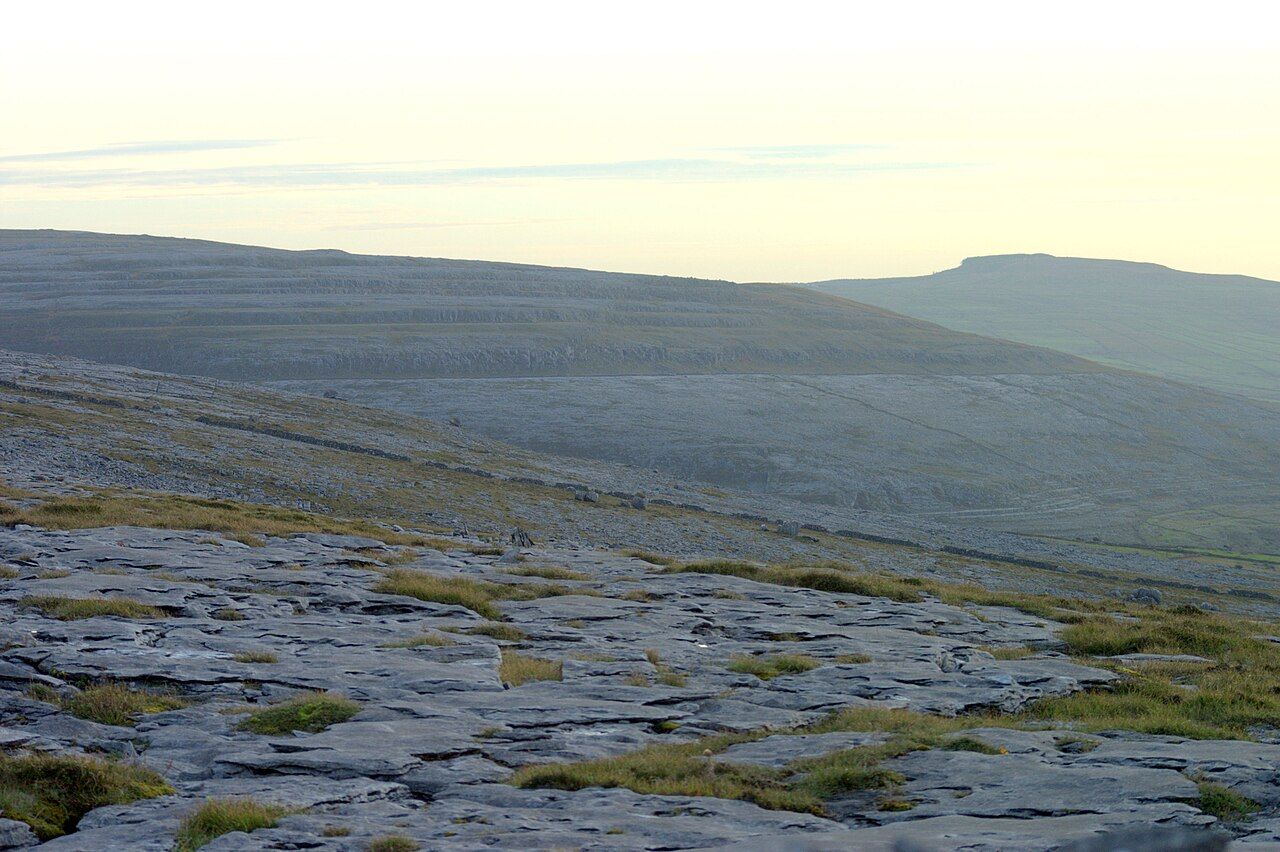
Ludlow did not leave the cattle out of his account. He added that they grew fat on the grass between the rocks. That detail changes the picture: the rocks are there, and so is grass, enough for cattle to grow fat. The famous saying is often remembered for its shortages; this is the part that makes room for something growing.
Stone walls divide the Burren into small fields. A division on the ground, not a grand phrase about what cannot be found. Set beside the line about earth, the walls and fields make a useful contrast: the description sounds bare, while the facts include boundaries, grass and cattle. The Burren is not improved by being made simpler.
Ludlow had also taken Ross Castle in Kerry in 1652. That fact belongs to the man behind the sentence, not as proof that the sentence is right or wrong, but as another piece of his story. The better way to read the famous description is with its omissions kept in view. Water, grass and small fields remain in the frame.
The numbers: Ludlow wrote in the 1650s; he took Ross Castle in Kerry in 1652. The quote still has not found enough earth to bury the springs.