Corcomroe Abbey in its valley
A ruined Cistercian abbey in the north-east of the Burren, with O’Brien patronage, carved faces, a fertile-rock name and a place in Yeats’s play.
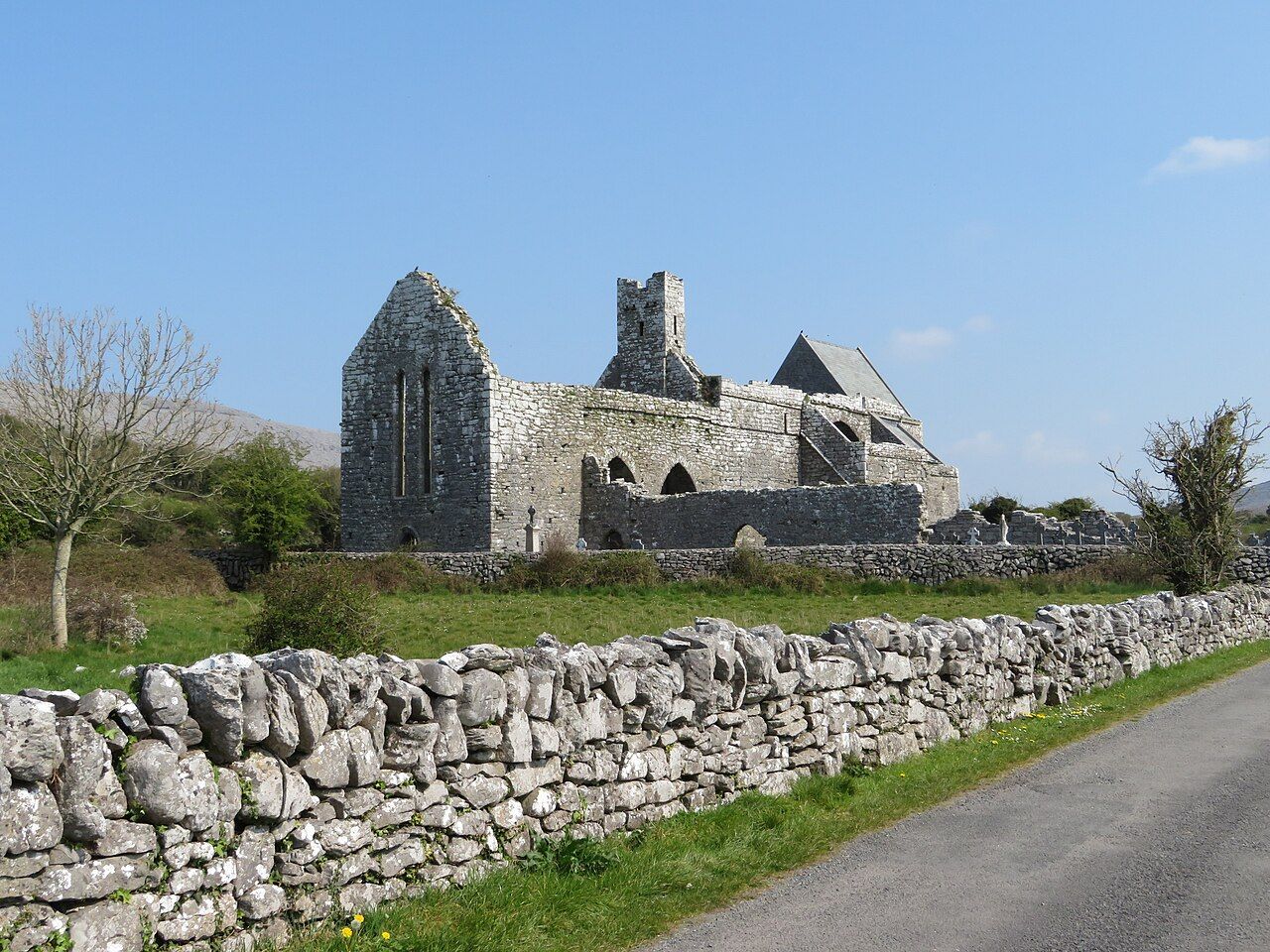
In the north-east of the Burren, a valley holds the ruined Cistercian abbey of Corcomroe. Its stones carry a more direct account: a foundation made under the patronage of the O’Brien kings of Thomond, a church with carved capitals, and a name that gives the place an older description of the ground beneath it.
Corcomroe was founded in the late twelfth century. That is the firm outline; the details here are few, and there is no need to pad them out with invented lives or motives. The O’Brien kings of Thomond stand behind the foundation as patrons. The Cistercian name identifies the abbey, while the valley locates it in the north-east of the Burren. Together those facts make a useful way into the place: religious foundation, ruling family, particular landscape.
The abbey’s Latin name was Sancta Maria de Petra Fertilis: St Mary of the fertile rock. It is a name with a neat tension in it. Rock suggests what is hard and fixed; fertile suggests what can give something back. The valley and the Burren are present in the name without needing a long explanation. It is better to let the phrase stand than to press it into a claim about how the land was used or what the founders intended. The name is enough to make stone feel less like mere background.
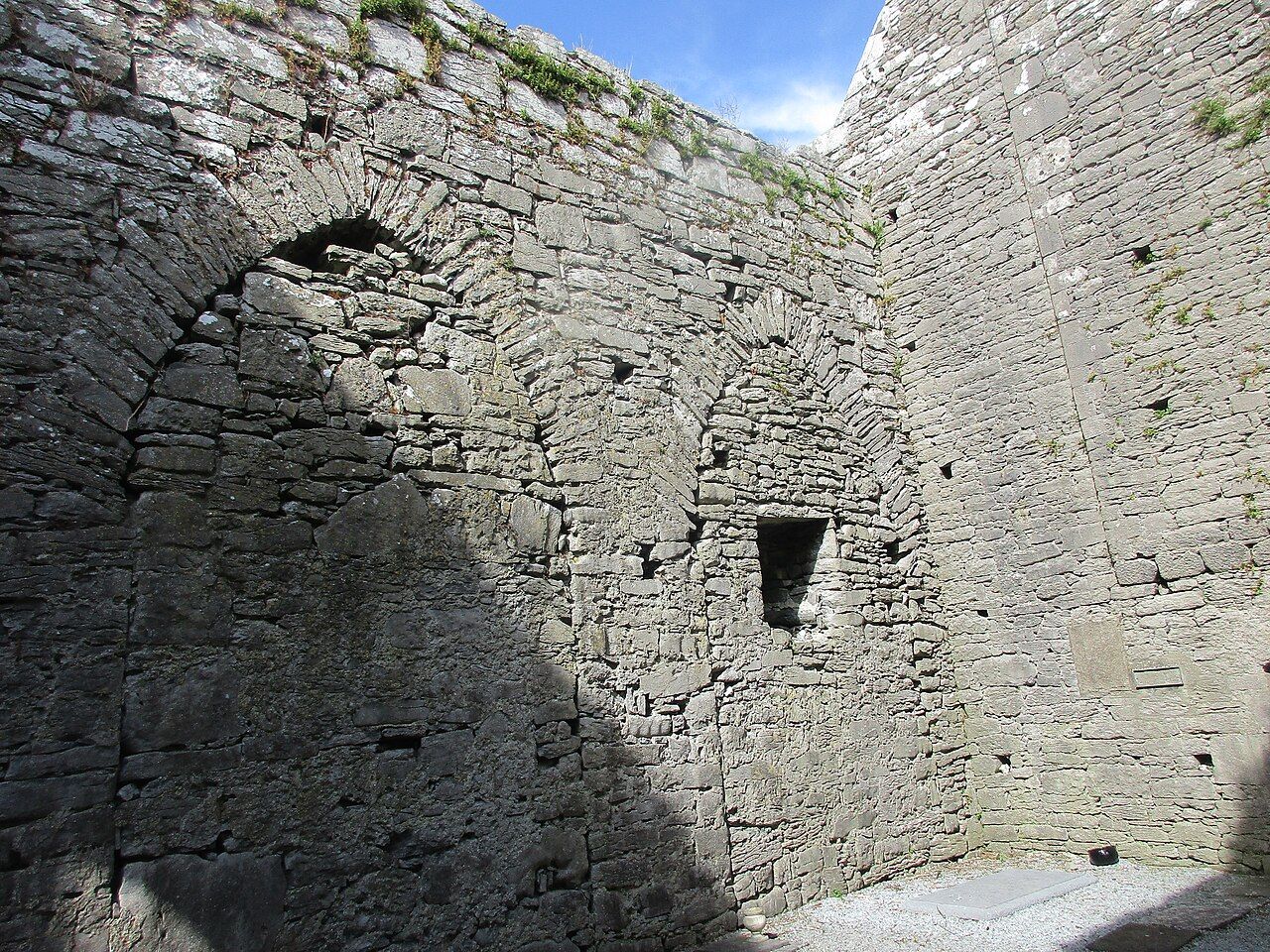
Inside the church, the carved capitals show plants and faces. The choice of subjects is plain, but it changes the way the church is read. A capital is not only a piece of structure when its surface has been worked into a plant or a face. The carving gives the eye something particular to stay with. Plants, faces: forms recognisable without a guide to turn them into a complicated code. The restraint is useful. These are carvings to look at closely, not an invitation to invent meanings that the facts cannot settle.
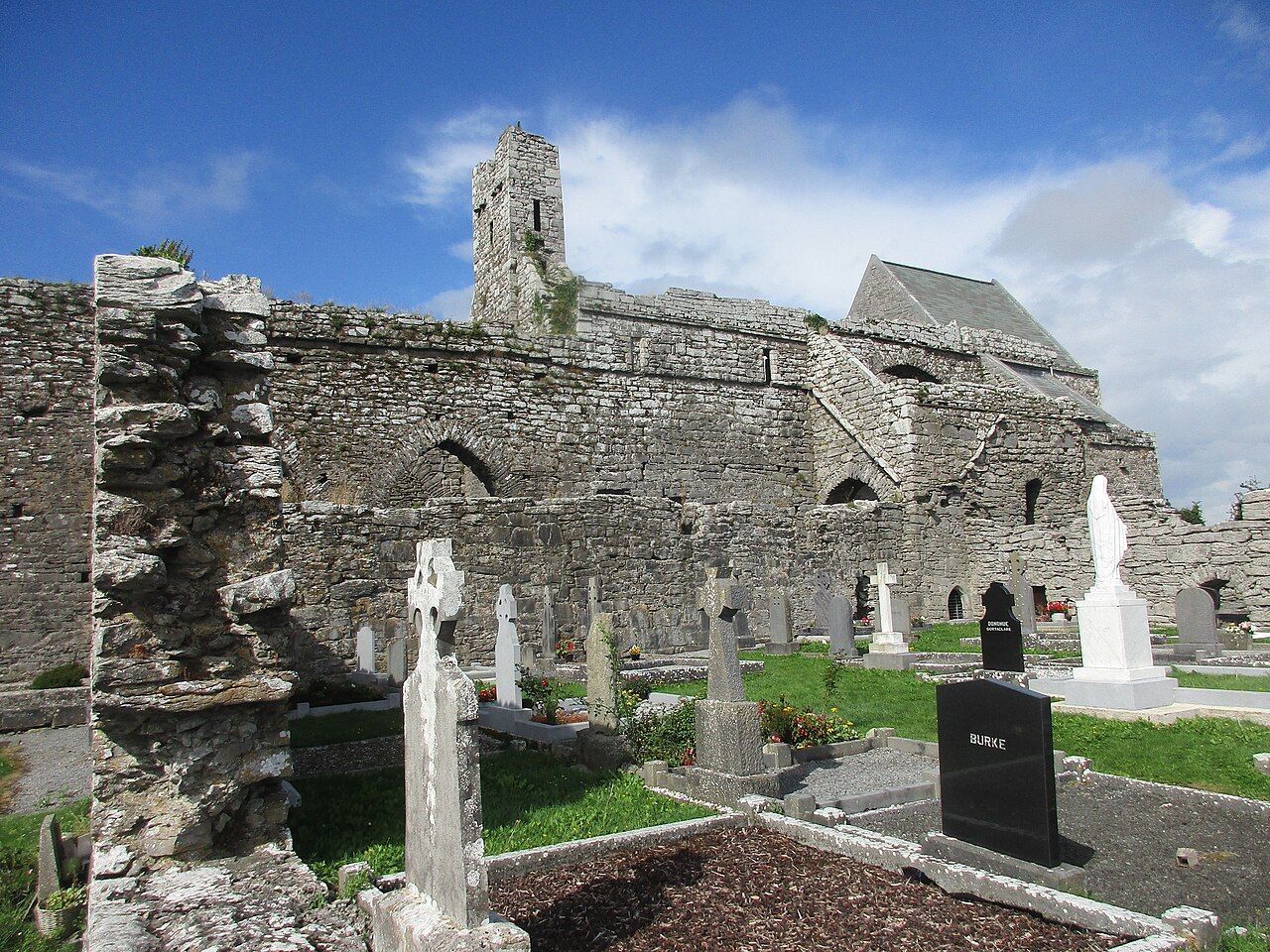
There is also a tomb effigy said to be of Conor na Siudaine O’Brien. The careful wording matters. The effigy is associated with that name, but the identification is given as something said, not as a certainty to be tidied away. At an abbey founded under O’Brien patronage, the name brings the ruling family close to the stone.
Literature gives Corcomroe another kind of presence. W. B. Yeats set part of his play The Dreaming of the Bones at the abbey. Part of it, not the whole play. That small distinction is worth keeping. A place can enter a work of imagination without its history being swallowed by the work, and the abbey’s own facts remain simple enough to hold beside Yeats’s choice: a ruined Cistercian foundation in a valley, with its carvings and its O’Brien associations.
The wider set of stories includes Inis Meáin and Synge's chair, but Corcomroe’s account stays with its own ground: the valley, the church and the names attached to them. Another marker points towards the surrounding region.
See also Mullaghmore and the national park.
A battle between O’Brien factions was fought near the abbey in 1317. The fact is brief, and should remain so. It places conflict close to the abbey without turning the site into a battle story, or assigning motives and consequences that are not given. The foundation under O’Brien kings and the later battle between O’Brien factions belong to different moments. Held together, they give the family name more than one place in the account: patronage at the beginning, conflict nearby in 1317.
That is enough for a visit to have several points of attention, without making the abbey carry more than it can. The valley gives the setting; the Latin name gives a compact phrase for the place; the church’s plants and faces reward a slower look; the tomb effigy brings an attributed name; Yeats gives the abbey a place in a play; and the battle fixes one event near it. None cancels the others. Corcomroe is not only a ruin, nor only a literary setting, nor only a record of O’Brien patronage. It is a place where those strands can be held together without being made into one tale.
The numbers: late twelfth century; 1317.