Doonagore Castle on the Hill
A round tower house above Doolin, with a story that runs from an earlier fort to its place as a landmark on the hill.
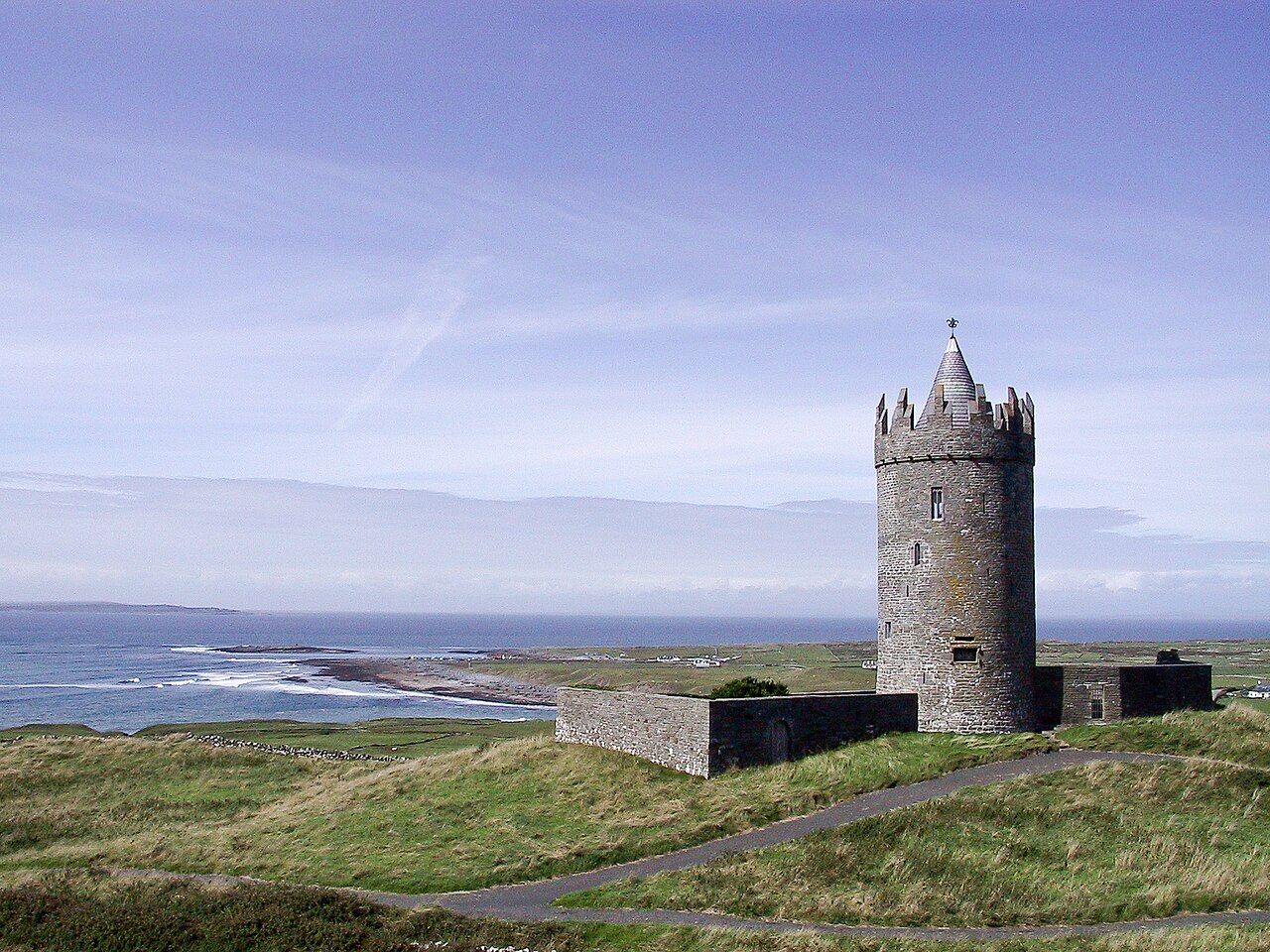
What makes Doonagore Castle stay in the mind: its story, or its round shape above Doolin? The answer is probably both, though the hill does a good share of the work.
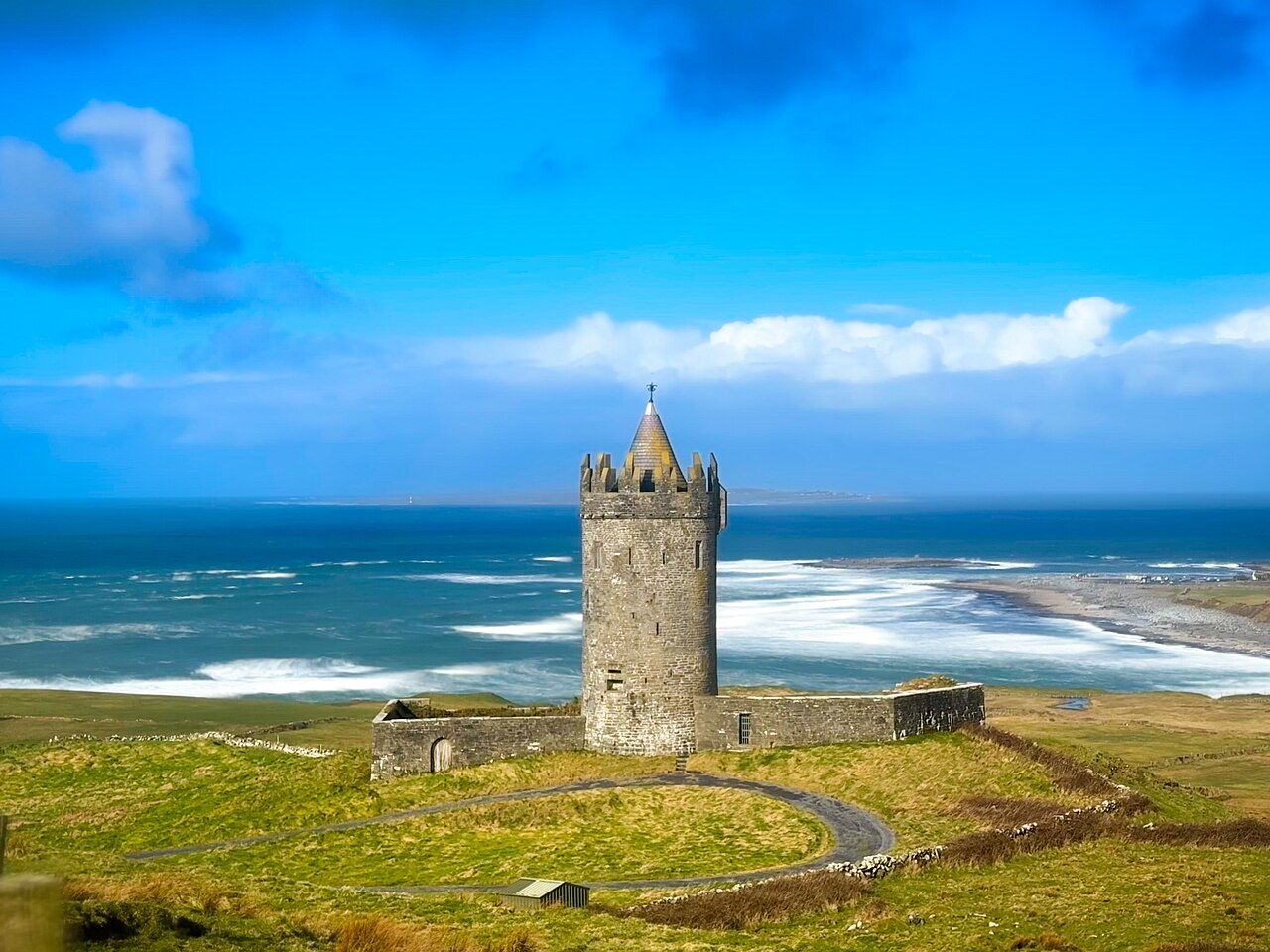
Doonagore Castle is a round tower house on a hill above Doolin, looking out over the sea. That is the plain description, and it is enough to give the place its bearing. The tower stands apart in the view, with the hill beneath it and the sea beyond. The position says plenty.
The castle dates from the sixteenth century and was built on the site of an earlier fort. There is a useful modesty in that sequence: one fort before it, then a tower house taking its place. The hill carries more than one chapter, though the earlier fort is a fact to note rather than a story that needs filling in.
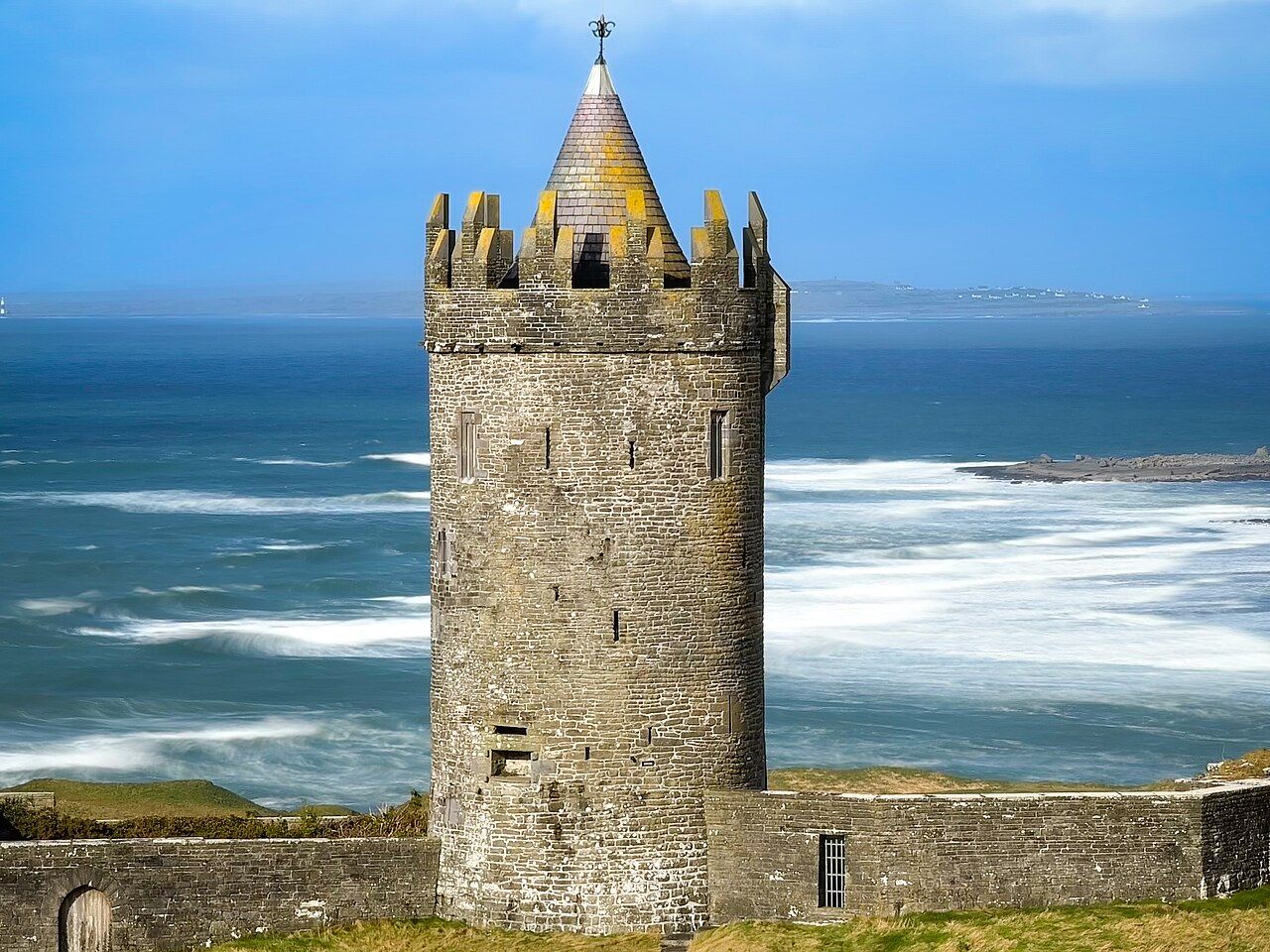
Its shape is the detail worth keeping. Doonagore is one of the few round tower houses in Ireland; most tower houses are square. A small difference in outline, then, and a large difference to the eye. Square is the usual answer. This one declines to follow it. Other stories hold the great stalactite under Doolin and Fossils in the pavement, but this tower has no trouble holding its own.
In 1588, survivors from a ship of the Spanish Armada were taken and hanged near the castle. The fact is stark, and there is no need to soften it with a grand phrase. A place can be a landmark and still hold a grim episode in its history. That contrast gives the outline on the hill a grim history, not just a pleasing shape.
The castle was restored in the twentieth century. It is now a private home, not open to visitors. That is worth knowing before the building starts to seem like an invitation to go inside. The outside is the public part of the story: its position, its shape and the history attached to it. The rest belongs to a home, and that is where the boundary sits.
For anyone coming down the hill to Doolin from the south, Doonagore Castle is a landmark. A landmark does not need a long itinerary or a long explanation. It gives the hill a clear point of recognition, and the round tower is easy to remember. The story can be carried along with the view: an earlier fort, a sixteenth-century castle, a later restoration.
See also The Aille River and its swallow holes.
The numbers: sixteenth century; 1588; twentieth century. And for once, a round tower house has no need to square things with anyone.