The great stalactite under Doolin
A cave near Doolin holds a long free-hanging stalactite, formed drip by drip in limestone, with a guided descent beneath the farm trail and native plants.
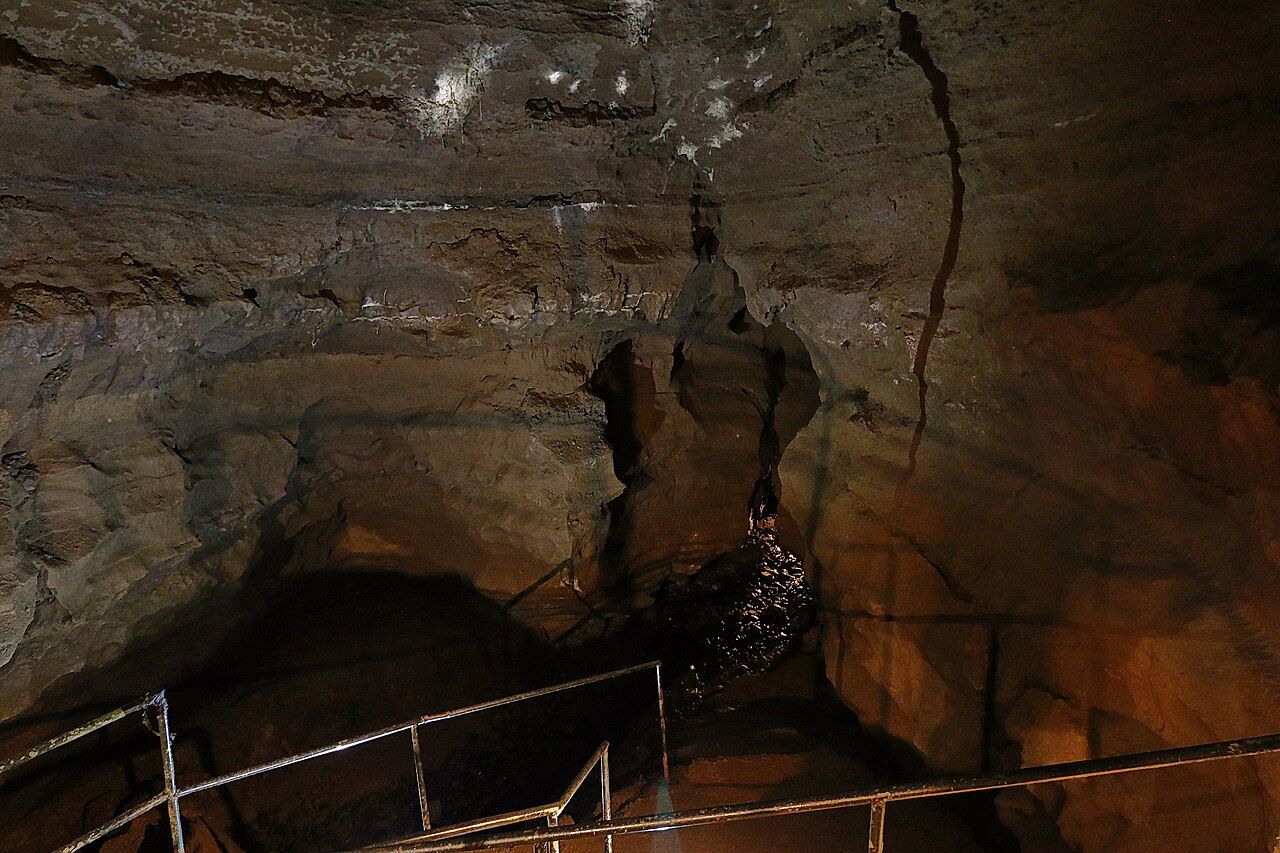
At the cave entrance, a farm trail and native plants make the first part of the visit an above-ground one. Then the route goes down into the cave on steps. That change of scale is the point: the entrance belongs to the farm trail and the plants around it; below is a place shaped by water and limestone. No grand introduction is needed. The cave has a clear subject waiting underneath.
Two cavers explored the cave in 1952. The date is brief, but it gives the stalactite a human measure: someone went down and found it, while its own making had already taken many thousands of years. The contrast is neat and worth keeping. Exploration has a date; the slow work of water does not fit into a tidy human timescale. The two scales sit beside one another without much fuss: a recorded year above, and an immense span of formation below.
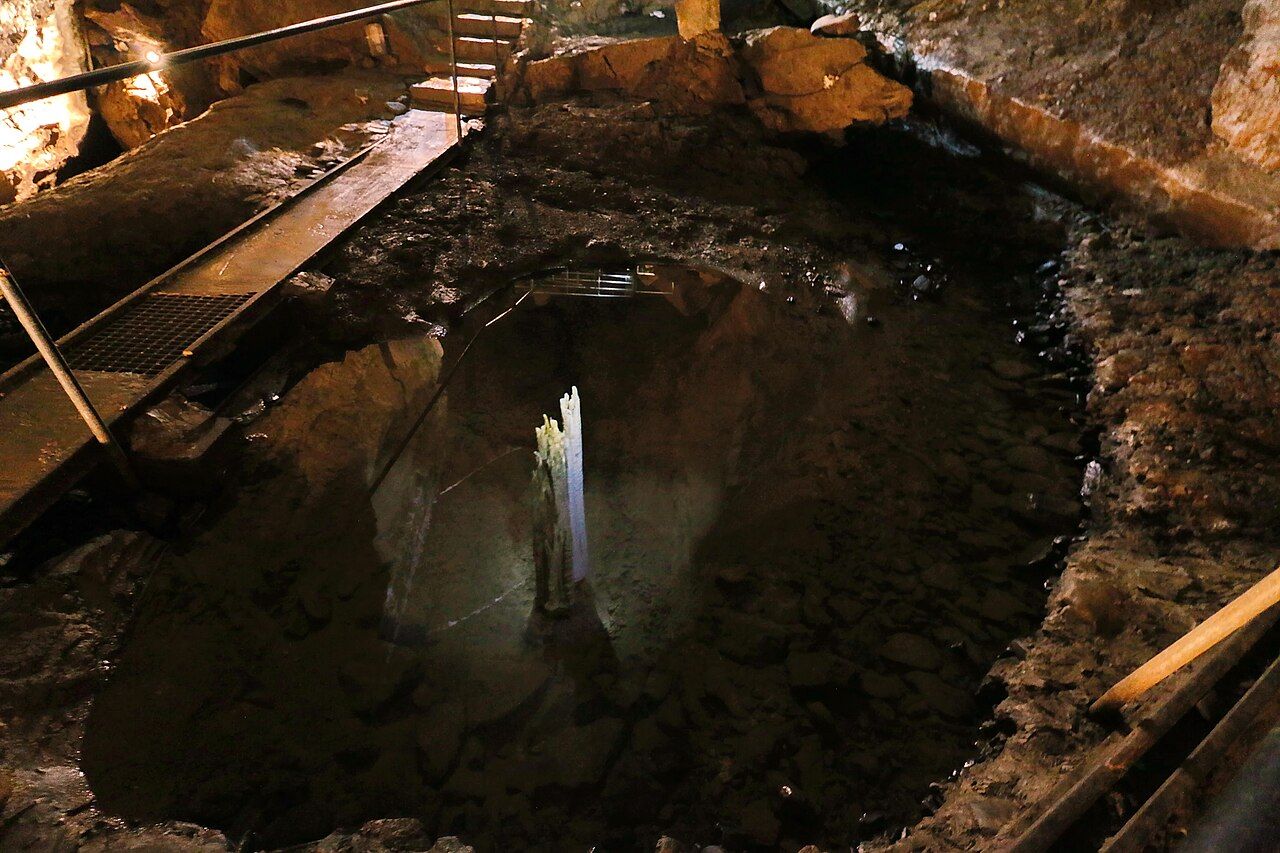
The stalactite is about 7.3 metres long, and among the longest free-hanging stalactites in Europe. That is the fact around which the visit turns. Its length is easy to grasp as a figure and harder to picture as something hanging above a cave floor. The scale is the surprise, not any need to dress the place up with grand claims. A clear measurement does the work well enough.
It grew drip by drip, as water passed through the limestone over many thousands of years. The account is simple; the duration is not. A drop at a time, repeated beyond ordinary patience. This is not a story of a sudden discovery beneath the ground, but of a form made slowly by water moving through stone. The cave’s best detail is also its plainest: time, given a route through limestone, left something remarkable. Nothing in the process is hurried, and the result is not a decoration placed in the cave but part of the limestone story itself.
The Burren has many caves because its limestone dissolves in rainwater. That fact makes this cave part of a wider pattern, though the long stalactite gives this particular visit its focus. Visits are guided, and the descent is by steps. For a wider turn through the Doolin story, there are also Crab Island and the Flaggy Shore. This one stays with the cave: the trail and native plants above, the limestone below, and a long record of water at work.
See also A week based in Doolin.
The numbers: about 7.3 metres; explored in 1952.