Crab Island and the Winter Waves
A low island, a ruined lookout tower and a powerful reef wave: Crab Island is best understood from the shore in winter storms.
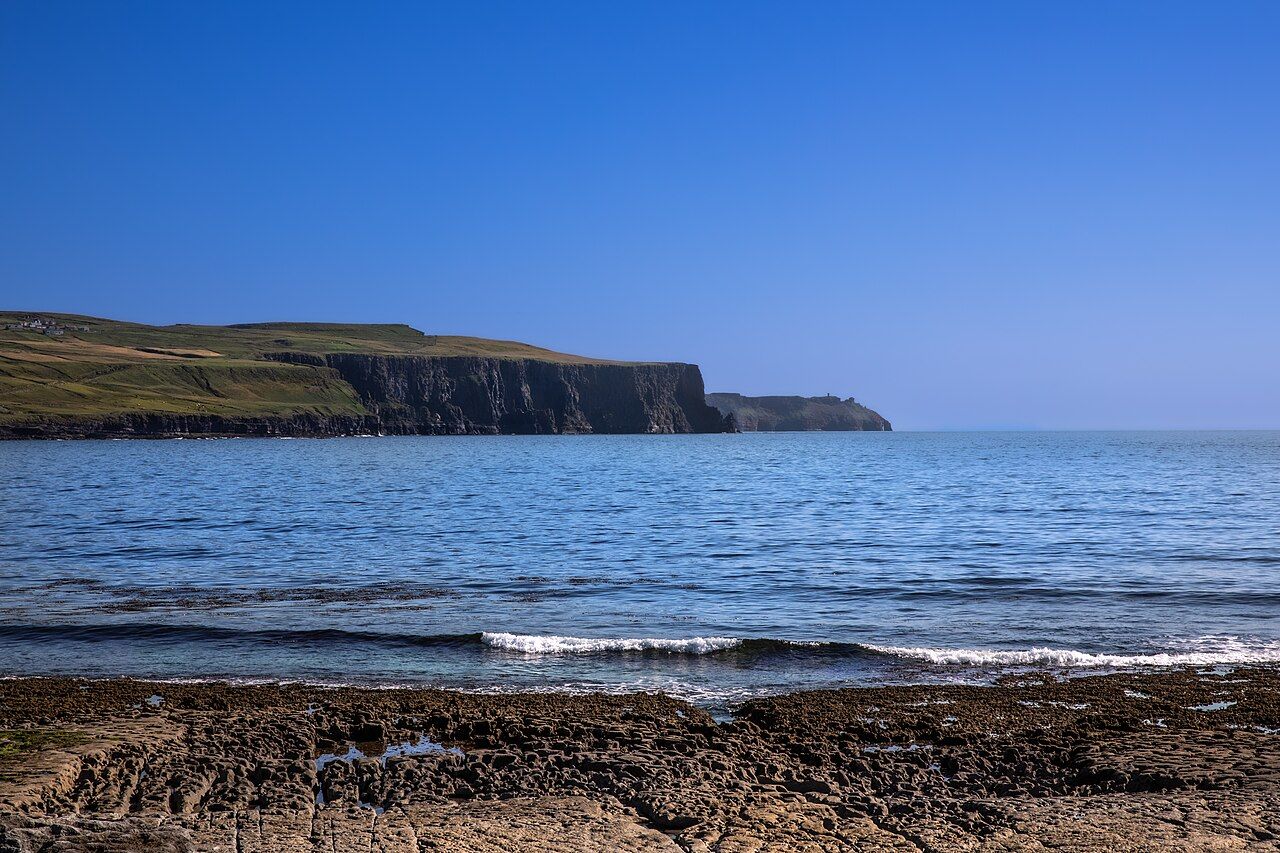
What is worth noticing at Crab Island when the Atlantic is doing the talking? The answer is not a list of attractions. It is a low island, a ruined tower and a wave that belongs to the reef beside it. The scene is simple, and the contrast between the island’s low outline and the powerful surf does the work.
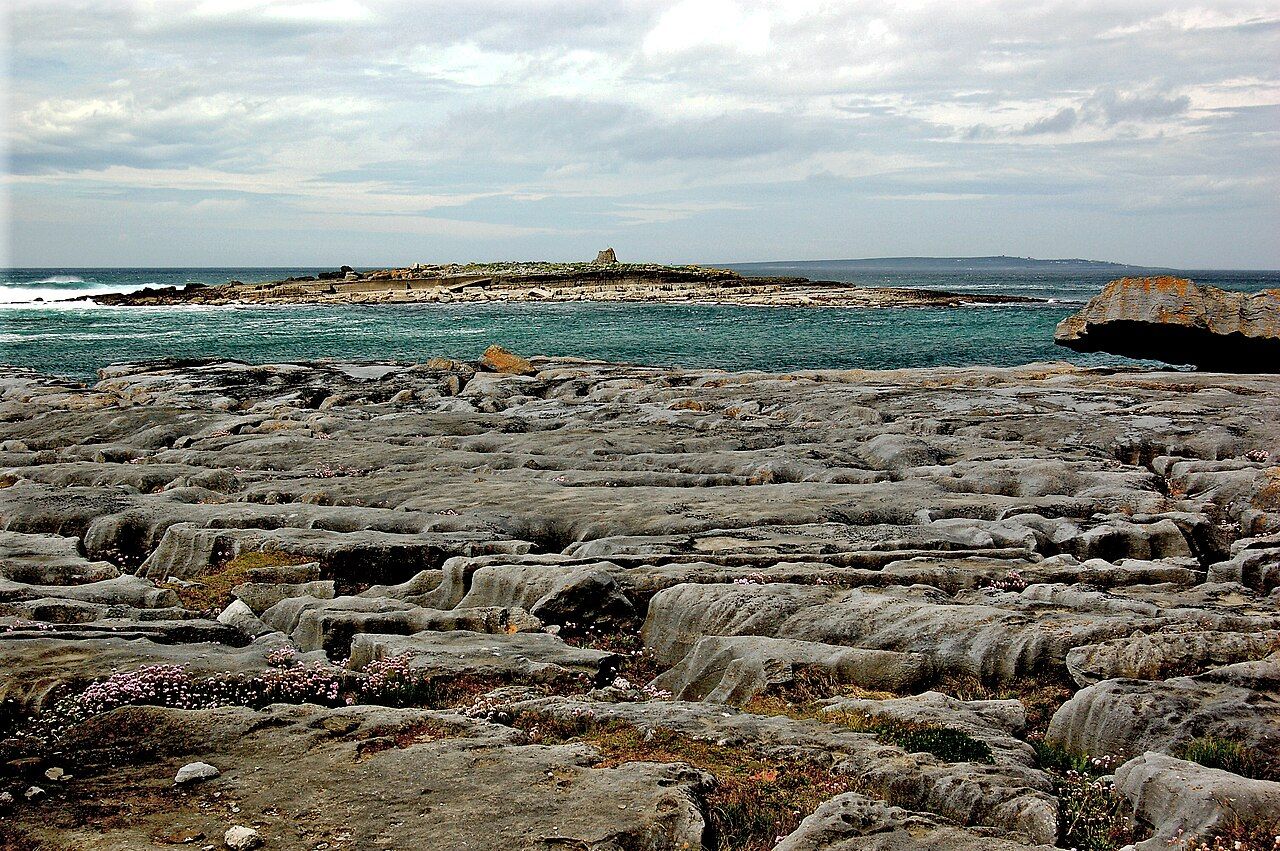
Crab Island is small and low, just off the shore at Doolin. That modest shape is worth holding on to. It is not a tall landmark set apart from the coast; it sits close to shore, with the water and the rocks making the main story. The island does not need to be made grander than it is. Its low profile suits a place whose main interest is the water breaking nearby.
There is a ruin of a lookout tower on the island. A ruin can easily invite a large story, but the useful fact here is a simple one: the tower is a lookout, and it is now a ruin. Against the island’s low outline, it gives the eye a fixed point while the water beside it keeps moving. Enough said. The tower is part of the view, not a reason to turn the island into something more elaborate than it is.
The surf breaks on the reef beside Crab Island, not on the island itself. In big Atlantic swells it is powerful, and only experienced surfers ride it. That distinction matters. This is not a wave to turn into a casual ambition or a test of nerve. The coast has another named wave in Aill na Searrach the wave under the cliffs, but Crab Island’s surf is the reef beside it. The place is easiest to understand by keeping the island, reef and breaking wave distinct.
From the shore, the waves are best watched in winter storms. That is the clear seasonal fact, and it is enough to shape the visit in the mind: stand on shore and watch the reef do its work. Crab Island belongs in a week based in Doolin as a place to look at, rather than a promise of a ride. There is a particular satisfaction in watching a powerful wave without making a project of joining it. Bus windows have their appeal, but this view is made for stopping.
The shore around Doolin is flat limestone, and slippery when wet. It is a plain detail, but an important one beside a surf story. The rock is part of the setting, not a soft edge to it. The island may look low and the shore may look flat; neither description makes wet limestone less slippery. The coast is made of rock, water and the weather that meets them.
Doolin pier has its own rough-weather version of the show. Freak waves wash over the rocks there in rough weather. That belongs to the same coastal picture, but it is not the same scene as watching the reef wave beside Crab Island. The shore, the island, the reef and the pier each have their place in the account. It is a coast with more than one way of making the water noticeable.
See also Doolin Pier and the Rough Water of the Sound.
The numbers: a low island, a ruined lookout tower, a powerful reef wave. The wave is not taking applications for a lookout.