Aill na Searrach: the wave under the cliffs
At the foot of the Cliffs of Moher, Aill na Searrach is a wave for big Atlantic swells, reached by jet ski and watched from far above.
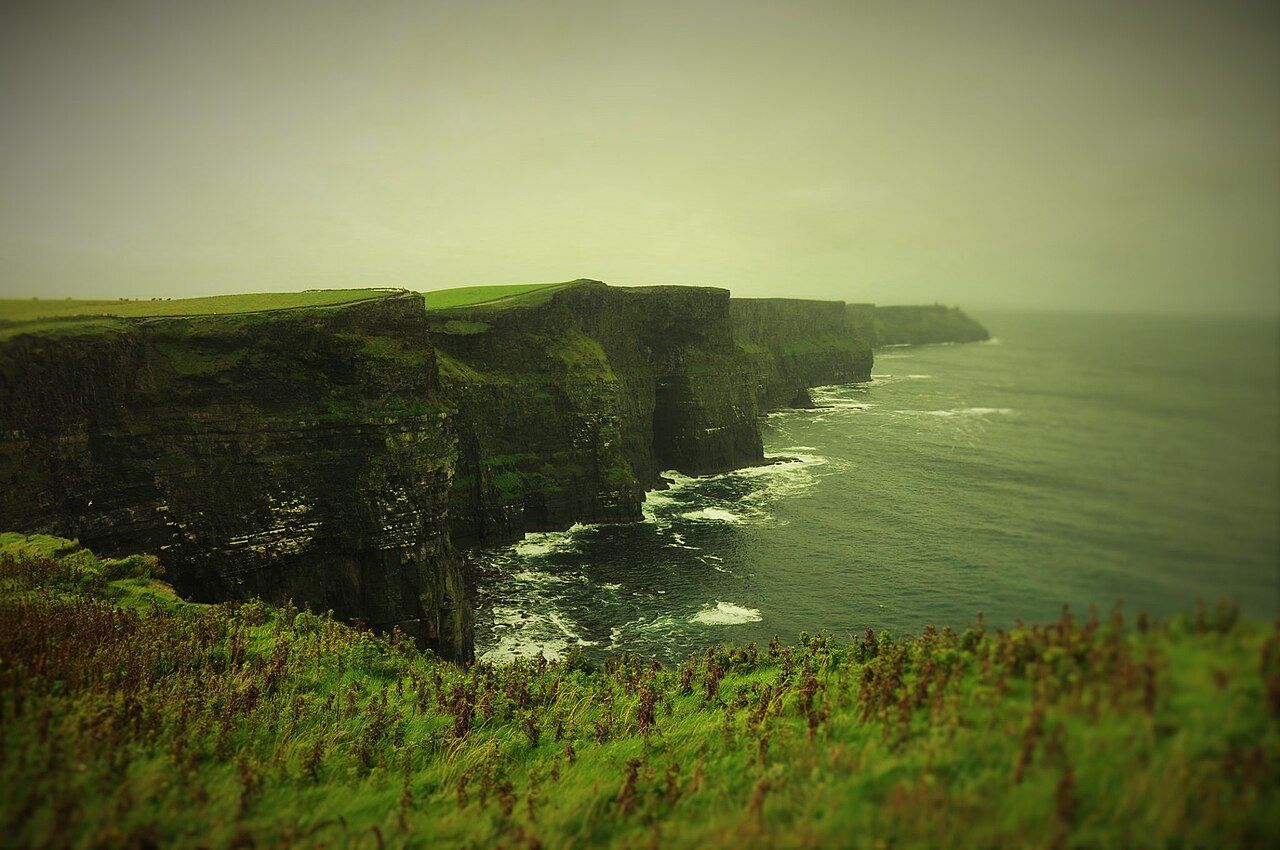
What does a wave look like when the cliffs above it are sheer? At Aill na Searrach, the answer is a big-wave surf break at the base of the Cliffs of Moher. The wave is far below the cliff top, and it is not there for every visitor to see.
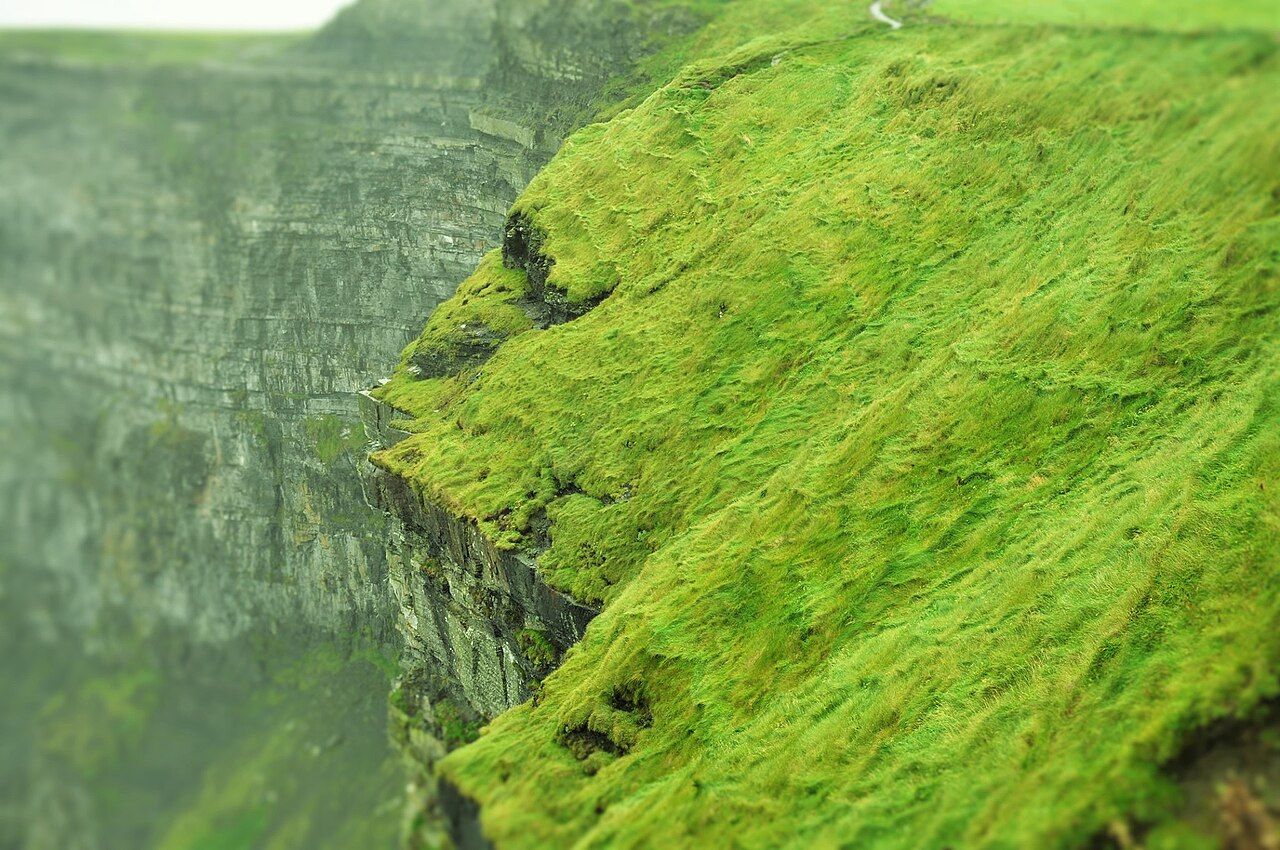
Aill na Searrach is a big-wave surf spot. That is the useful starting point, and also a good reason not to imagine an ordinary surf break with a regular appearance. It breaks only in large Atlantic swells, mostly in winter. The place is defined as much by waiting for the right kind of sea as by the wave itself.
The name means “the cliff of the foals”. Behind it sits a legend of horses leaping into the sea. That is a compact image, and it suits a place where the cliffs and water do most of the explaining. The name does not need a long introduction: a cliff, foals, a leap, and the sea below.
Aill na Searrach was first surfed in the twenty-first century by a small group of big-wave surfers. The detail gives the break a short history, but not a small reputation. A wave at the foot of these cliffs is not an everyday extension of beach surfing. It belongs to a particular scale of swell and a particular sort of surf.
The surfers reach the break by jet ski, because the cliffs above are sheer. That practical fact changes the picture. The wave is not approached from the cliff top, nor does the cliff top make the sea below easy to reach. The route belongs to the surfers and their jet skis; for visitors, the view is from above.
On big days, the wave can be watched from the cliff top, far below. There is something pleasingly plain about that arrangement: the surf is down there, and the audience is up here. The distance is part of the scene.
That separation makes Aill na Searrach a different kind of stop from a shoreline walk. The break cannot be counted on outside large Atlantic swells, and the season is mostly winter. A quiet day does not make the place a failed version of a surf spectacle. It is simply a day when the wave is not breaking.
Clare has room for other kinds of attention, too: the Flaggy Shore and a poem, or the Clare concertina. Aill na Searrach asks for a different measure. Its facts are spare: a name with a legend, a wave that breaks in large swells, and a cliff top far above. That is enough to keep the eye busy.
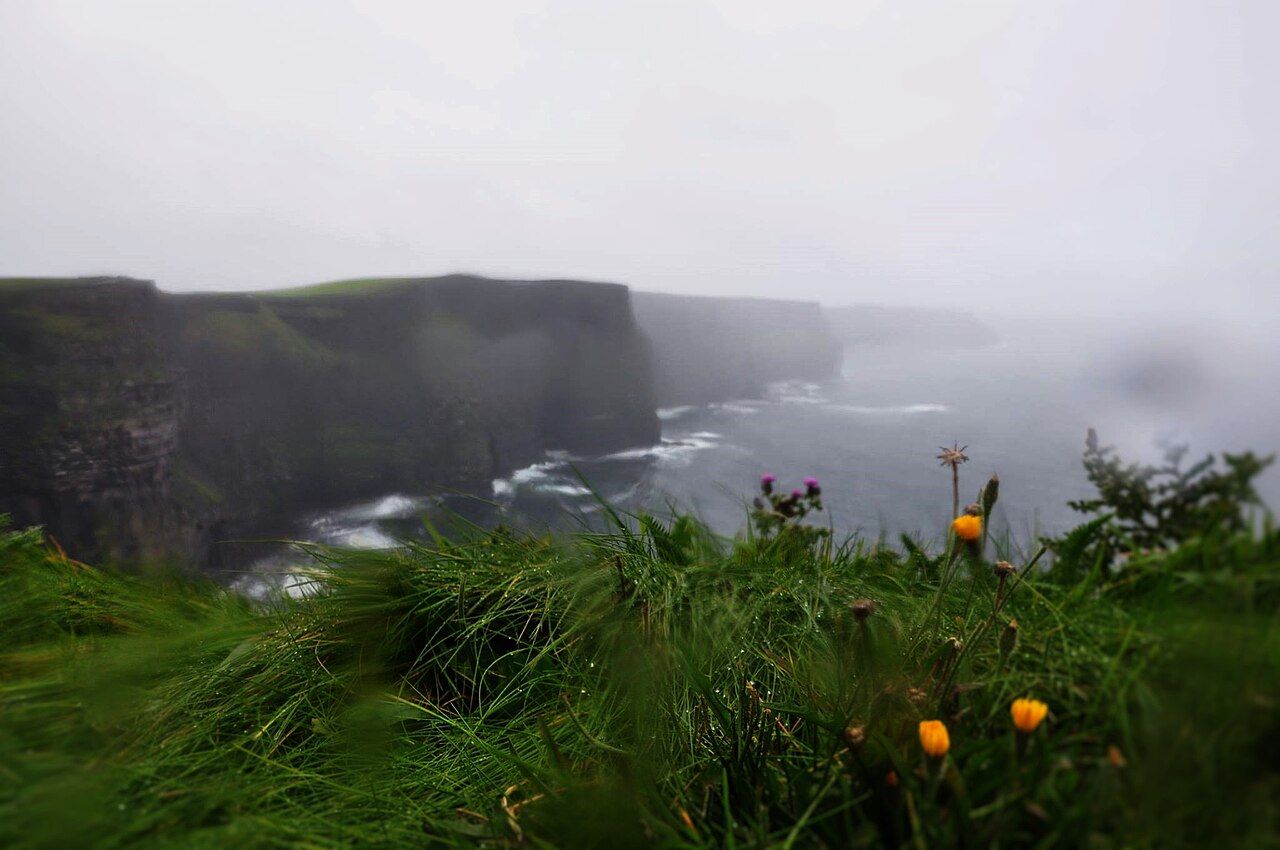
See also The cliffs, rock by rock.
The numbers: large Atlantic swells, mostly winter; the foals had the more direct route.