Doolin Pier and the Rough Water of the Sound
Flat limestone shelves, winter waves, island ferries and boat trips beneath the cliffs give Doolin pier its particular edge.
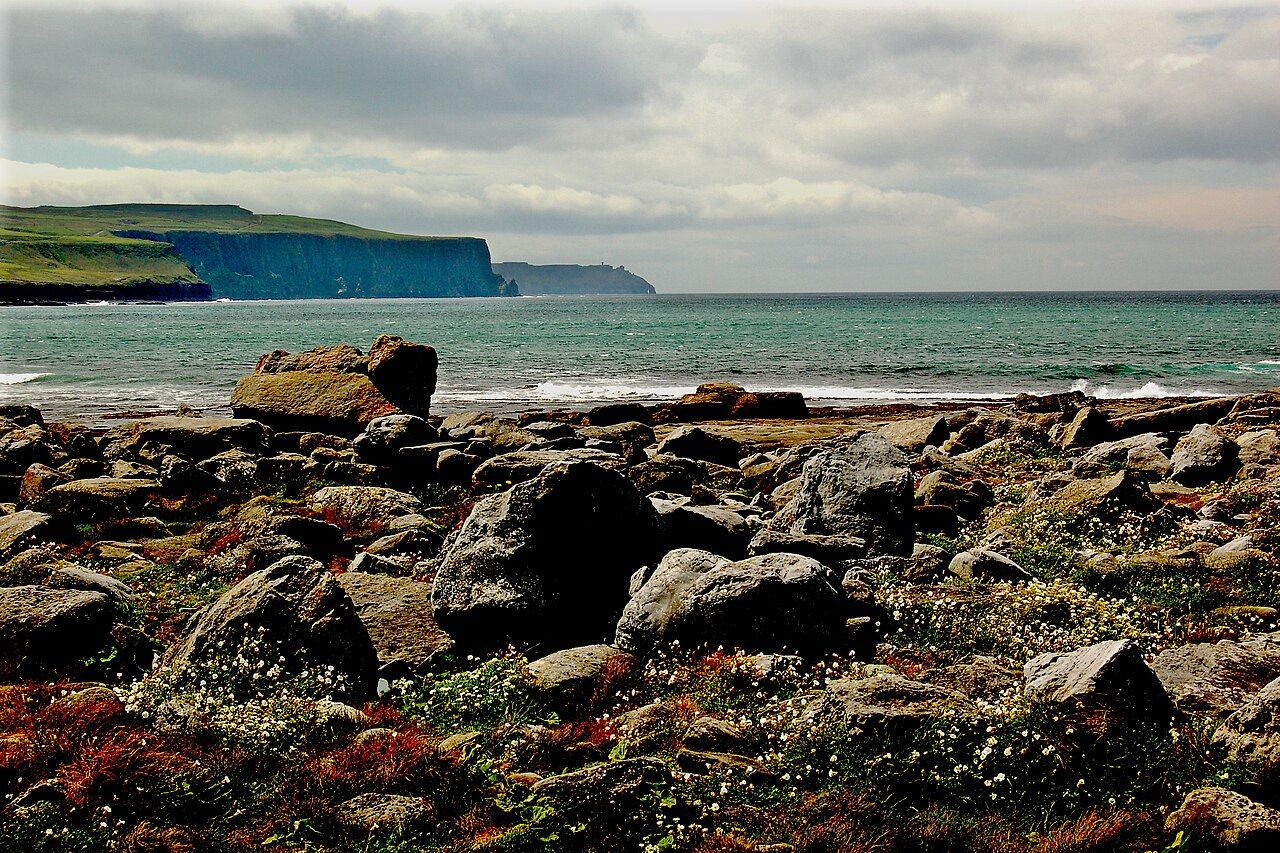
Big Atlantic waves break over the rocks beside Doolin pier in winter storms. Stone, water, and the force that comes in from the Atlantic. The sound between Doolin and the islands can be rough, and the pier is where that fact meets the ordinary business of setting out.
Ferries to the Aran Islands leave from here, as do boat trips under the Cliffs of Moher. Those are different journeys, but the pier gives them the same starting point: a place at the edge of the water, on shelves that the sea keeps washing. It is an unshowy arrangement. The limestone is not a decoration added for visitors; it is the ground beneath the pier, and the waves are not scenery arranged for a crossing. The name the Aille River sits beside this account of Doolin, though the pier story stays with the sound.
The ferries run mainly from spring to autumn. That seasonal rhythm belongs to the place, rather than to any tidy promise that the water will behave. Sailings are cancelled in heavy swell. A departure point can be fixed; the conditions beyond it are not. The sound is not a smooth strip of water simply because it lies between Doolin and the islands. Its roughness is part of the story, and sometimes the part that decides whether a sailing goes ahead.
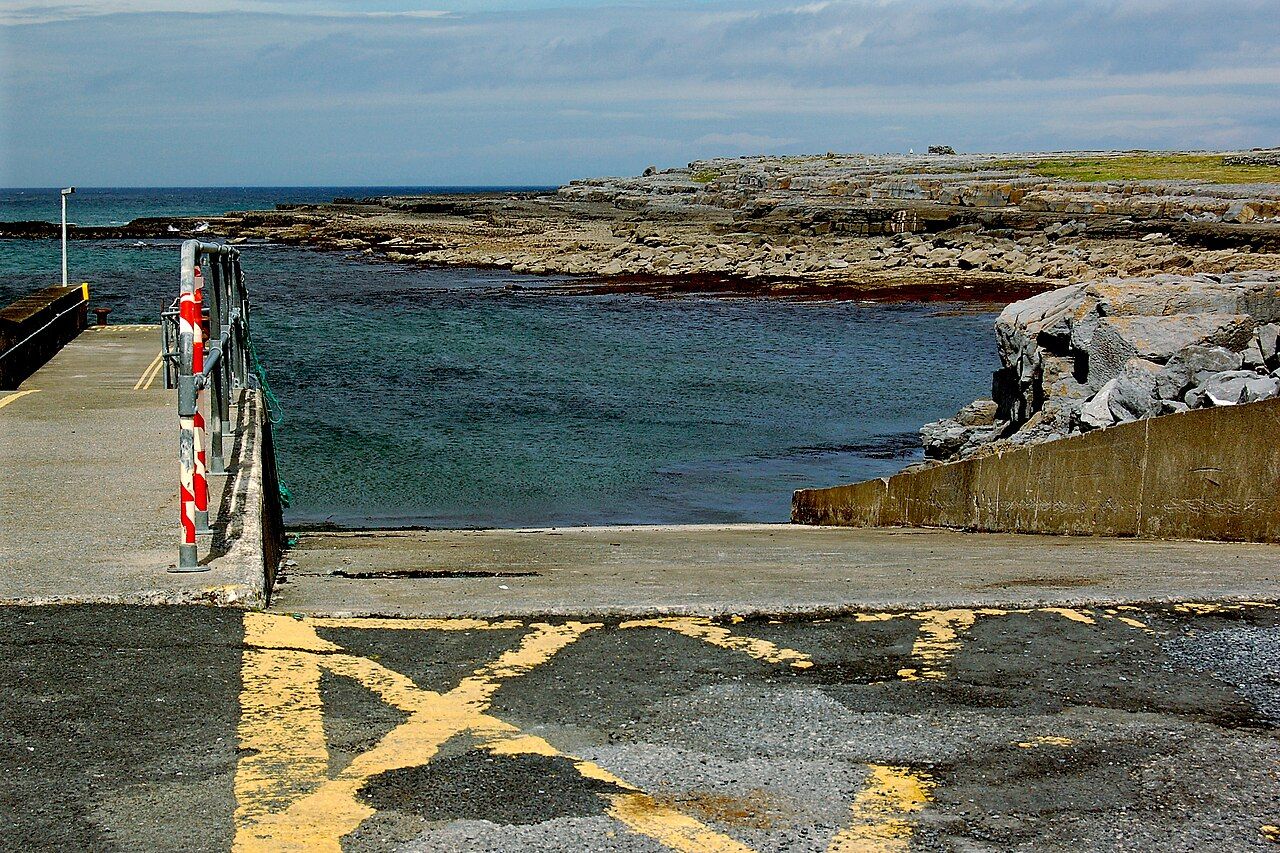
There is a temptation to treat the pier only as a threshold, a place where departures begin and attention moves elsewhere. That misses what is plain in the facts of it. The shelves, the waves, the departures and the cancellations all belong to Doolin. The pier is useful precisely because it stands where land and water meet, but that usefulness does not make the sea a passive background. In winter, the waves make their own case, breaking over the rocks beside it.
The nearest Aran island to Doolin is Inis Oírr, the smallest of the islands. A look at Three islands across the sound puts that destination in view, but the pier keeps the attention on the crossing point: the sound between shore and island, sometimes rough enough for sailings to be cancelled. The nearest island is not a guarantee of calm water. Nearness answers one question about distance; it says nothing about the swell.
That distinction is worth keeping. A ferry departure is a practical fact; so is its cancellation in heavy swell. Neither needs to be dressed up as a dramatic encounter. The rough water is not an obstacle in a story invented to make the pier seem more important. It is a condition of the sound, and the ferries operate within it. The plain account is enough: boats leave from Doolin, mainly in the season from spring to autumn, and heavy swell can stop them.
See also Doonagore Castle on the Hill.
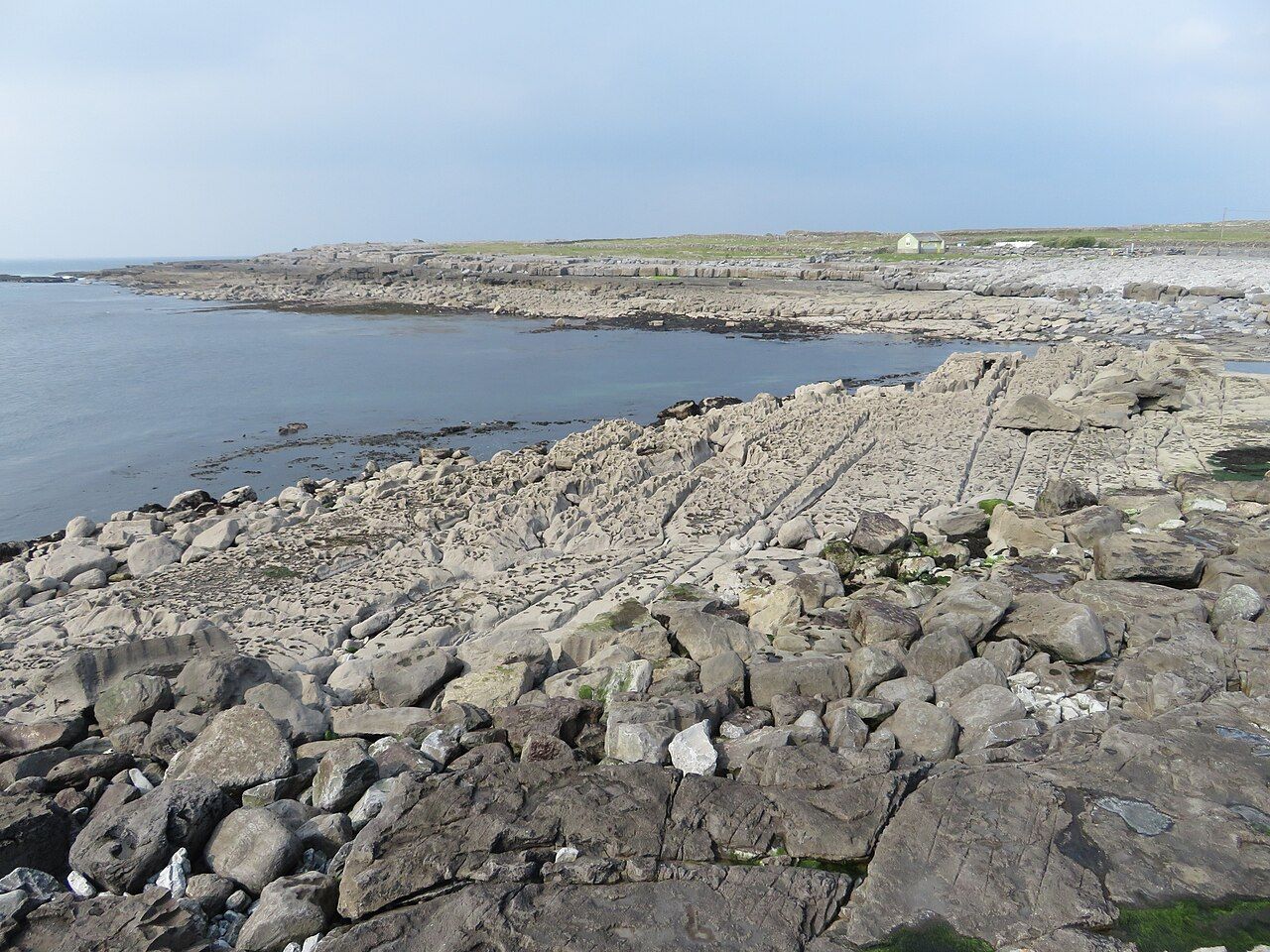
The boat trips under the Cliffs of Moher begin from the same pier. The route changes the view of the cliffs, but the starting place remains the limestone shelves beside the sea. For a visitor, that gives the pier a double character. It is both a way out towards the islands and a place from which the coast can be approached by boat. The practical point is simple; the setting refuses to be quite so simple.
Its appeal lies in the meeting of useful and elemental things: ferries and boat trips, flat shelves of limestone, Atlantic waves breaking over rocks. A bus window has its own quiet pleasures, but it cannot quite replace standing at the edge of a place where the water may decide the day’s plans. That is not a complaint against the pier. It is the reason the pier stays in the mind.
Doolin pier is a departure point, but it is not merely a line towards the islands or the cliffs. It holds the whole arrangement in one view: the land underfoot, the sea beside it, and the journeys that begin there when conditions allow. The sound can be rough. That fact gives the pier its plain logic.
The numbers: Ferries run mainly from spring to autumn; heavy swell cancels sailings. The sea keeps the last word, and has never been much for small talk.