Lahinch and the surf: where beach, wall and river meet
A long sandy beach, surf schools and a promenade give Lahinch its shape, while the Inagh River adds another meeting with the sea.
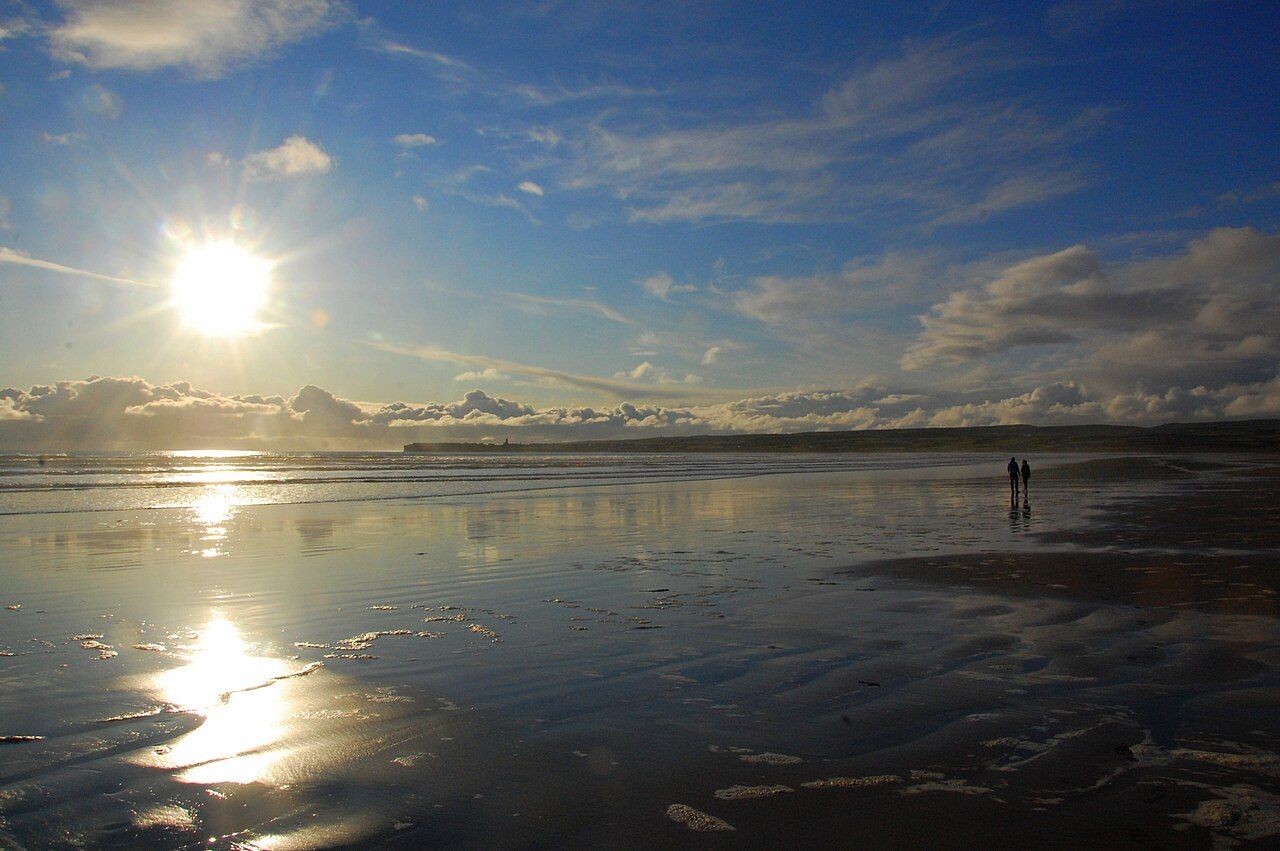
The sea sits beside Lahinch, and the town’s shape is easiest to understand from that fact. It is a seaside town on Liscannor Bay, south of the Cliffs of Moher. The beach is long and sandy, and the promenade follows the sea wall. Near the town, the Inagh River reaches the sea. These are not separate attractions so much as parts of one plain arrangement: sand, a wall, a river, and the bay. Lahinch does not need a complicated introduction. The water is already doing the explaining.
The beach is one of the main surfing beaches in Ireland. That gives the sand a particular purpose without taking away its simple character as a long stretch beside the town. Surfing is not an extra thought added to Lahinch afterwards; it belongs to the way the place is known. There is a useful directness in that. The beach is there, the sea is there, and surfing takes place on the beach. No elaborate story is needed to make the connection work.
From spring to autumn, surf schools teach on the beach. That is the practical rhythm supplied by the facts, and it is enough to give the season a clear outline. The teaching happens where the town’s best-known beach meets the sea, rather than somewhere removed from the subject. The detail matters. A surf beach can be admired at a distance, but a school teaching on it makes the activity part of the place’s ordinary identity. Lahinch is both a seaside town and a place where surfing is taught, in the same stretch of sand.
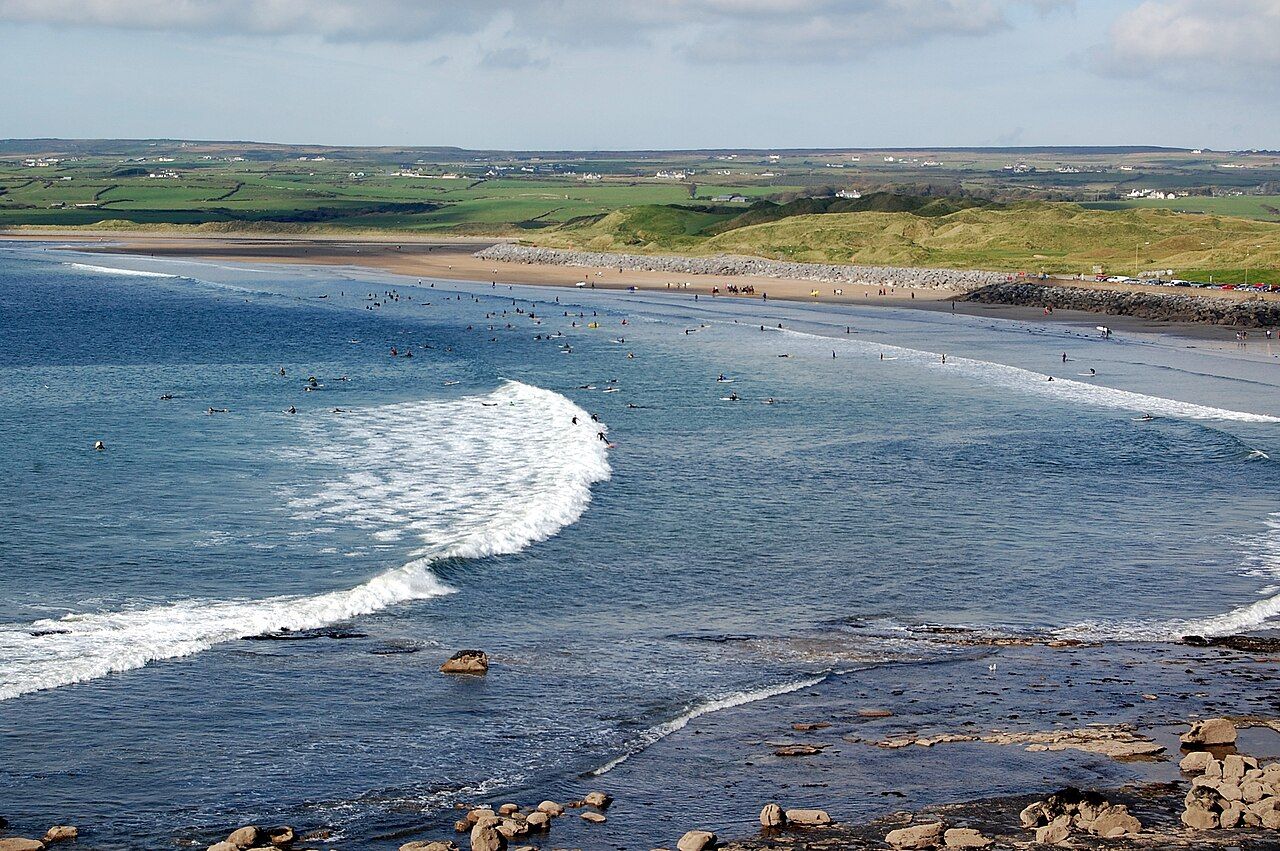
The long sandy reach can be a setting for surfing, a reason to walk beside the water, or simply the most legible feature of Lahinch. The sea wall gives the town a firm edge along the sea. The promenade follows it, making a second line beside the beach: one made of sand, the other made by the wall and the town’s route alongside it. Together they make the coastline feel easy to read. The favourite detail is that the promenade does not compete with the sea. It keeps beside it.
The Inagh River makes a different sort of meeting. It reaches the sea near the town, bringing the river into the same account as the bay and beach. That is a small fact with a useful effect on the imagination. Lahinch is not only a town facing out towards the sea; it is also a place where water comes down to meet it. The beach gives the eye a long line, the wall gives it a boundary, and the river gives the coast an arrival point of another kind. Each is easy to understand on its own. Together, they give the town its particular coastal grammar.
A route of thought can run South to Loop Head, but Lahinch is worth considering on its own terms before the mind wanders further down the coast. Its appeal does not depend on a list of extras. The beach is a main surfing beach in Ireland; surf schools teach there from spring to autumn; the promenade runs along the sea wall; and the Inagh reaches the sea nearby. Those facts are already a complete enough sketch. The place is not made more interesting by adding claims that its own geography does not need.
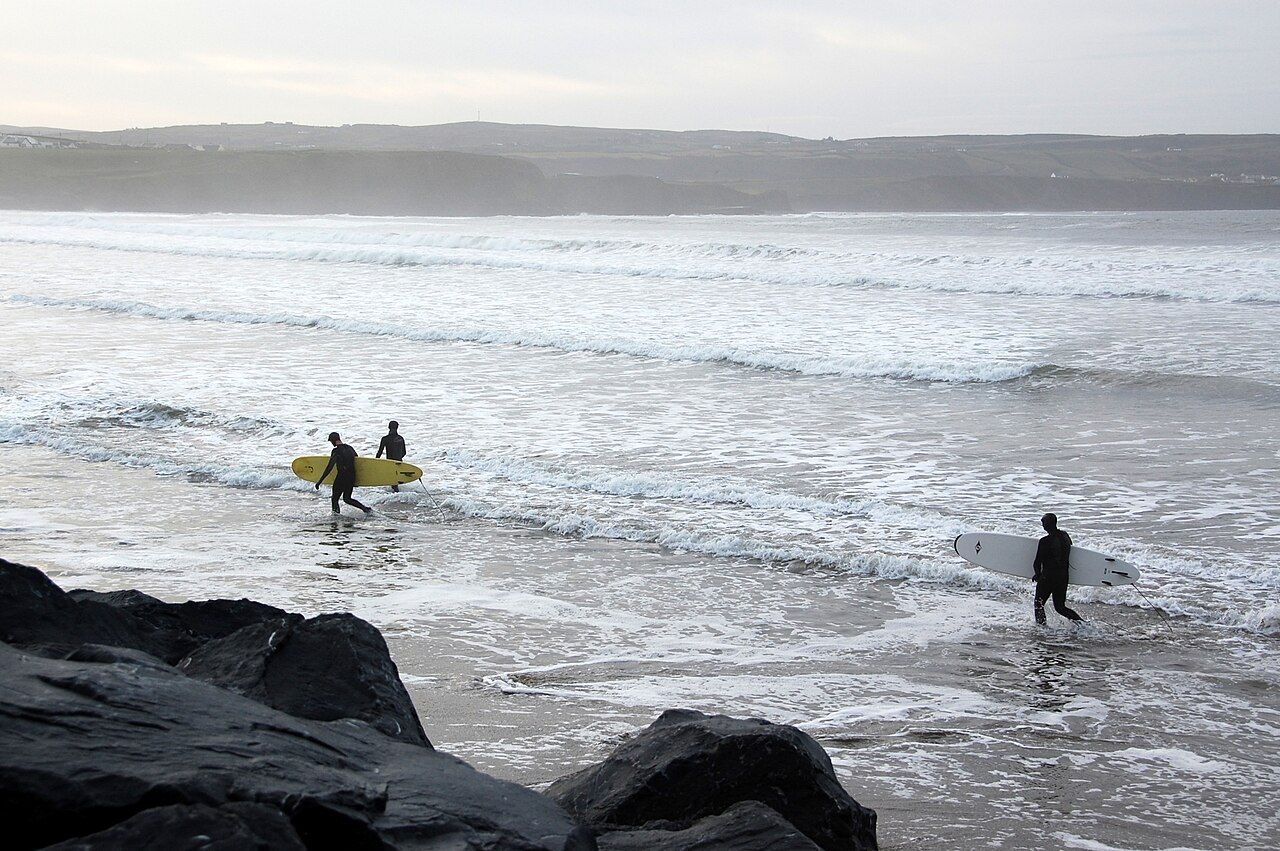
For visitors, the most useful thing is to hold these parts together rather than reduce Lahinch to a single label. “Surfing beach” is accurate, but the town is more than a name attached to a sport. The wall and promenade give the sea a close, walkable edge. The river brings another line of water into the picture. The beach remains the main event, long and sandy, but it is not isolated from the town around it. Lahinch makes sense as a coastal place because its features sit in relation to one another, not because any one of them has to carry the whole story.
There is a quiet pleasure in that straightforwardness. Lahinch offers a clear subject: a town beside a bay, a beach known for surfing, and water arriving at the sea by more than one route. Even the promenade is plain in the best sense. It follows the wall, and the wall follows the sea. The result is not a puzzle to solve. It is a place whose character can be read without fuss, and whose strongest feature remains exactly where it ought to be: between the town and the water.
See also Seaweed, oysters and the food of north Clare.
The numbers: surf schools teach on the beach from spring to autumn; the waves keep their own count.