South to Loop Head: Between the Atlantic and the Shannon
At the tip of south-west Clare, the peninsula runs between the Atlantic and the Shannon estuary, ending at a lighthouse, with sea arches and dolphins along the way.
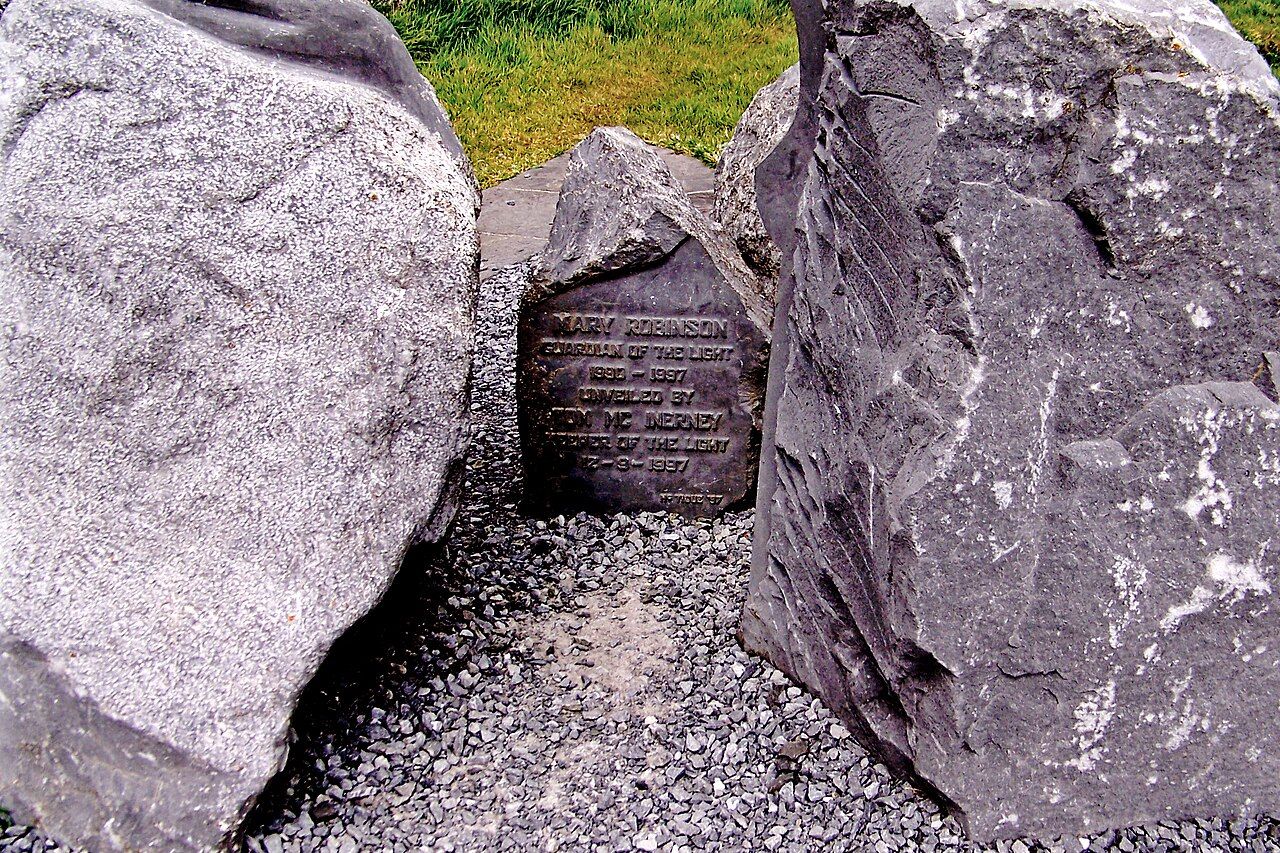
What makes a headland feel like an ending? At Loop Head, the answer is in the shape of the place. It is the tip of a long peninsula in south-west Clare, set between the Atlantic and the Shannon estuary. The land narrows towards its end; the water lies on both sides. There is a straightforward pleasure in a place with such a clear outline. A peninsula, a lighthouse at its end, and two different expanses of water beside it.
The Atlantic and the estuary give Loop Head its position, but they are not interchangeable parts of the view. The peninsula sits between them, with the lighthouse marking its far end. That is the simple geography, and it is enough to hold a day’s attention. A place can be understood without a long list of things to do. Here, the point is the point: the land reaching out, and the sea on either side. The bus window has a special talent for making that sort of outline legible, though the map has its uses too.
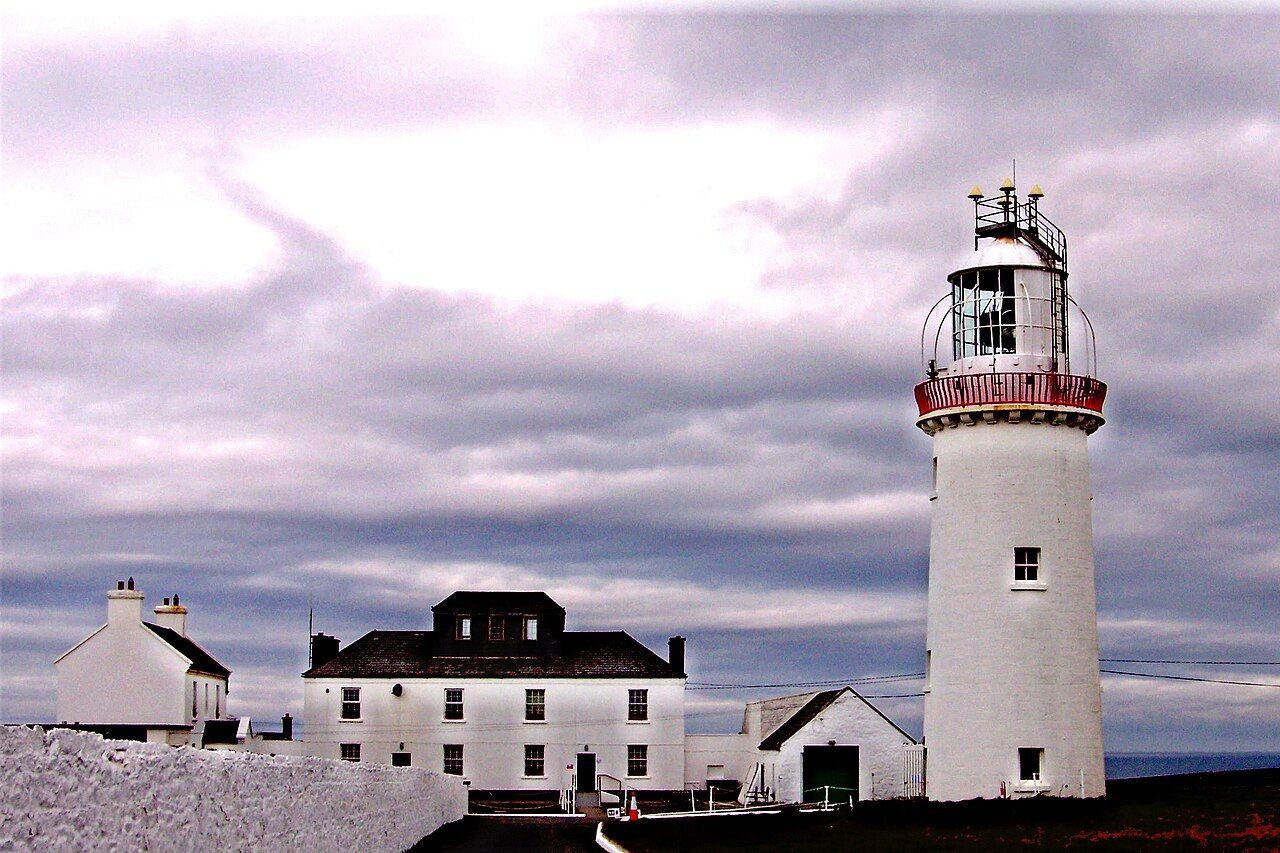
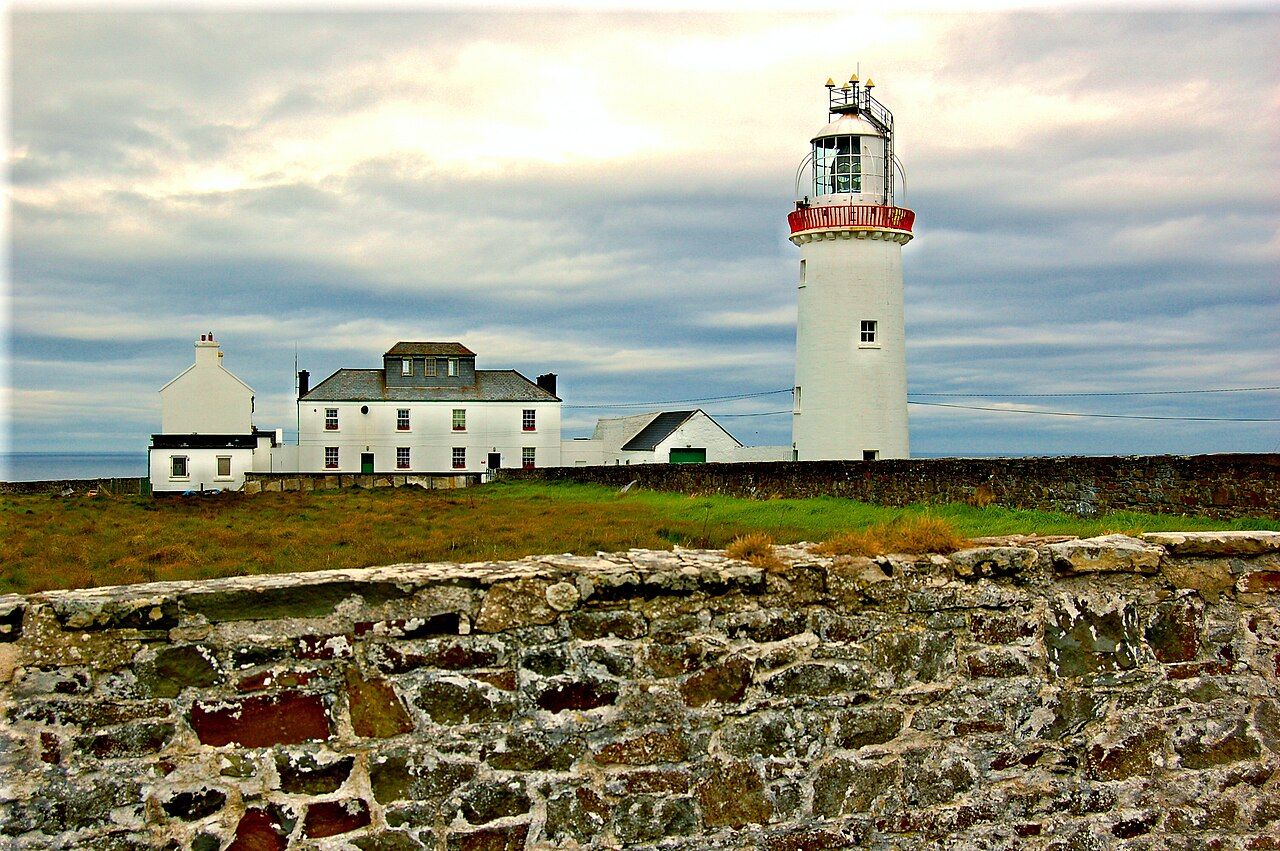
The lighthouse stands at the end of the peninsula, and its tower can be visited in summer. It is an unusually plain arrangement: headland, tower, sea. The tower gives a visitor a reason to pause at the very end, rather than treating the tip as a mark to reach and leave behind. In summer, a visit inside becomes part of the place’s appeal. Its position does the work. It stands where the peninsula finishes, with the Atlantic and the Shannon estuary for company.
Nearby, the Bridges of Ross make a different kind of punctuation. They are natural sea arches, near the head, and only one still stands. Only one arch still stands. That is a small fact with a large effect on the imagination. The plural name belongs to a place where the sea has left a reduced cast. A surviving arch is a more interesting thing to look at than an abundance of formations, simply because the word “only” makes the place feel specific. This is a favourite detail of the peninsula: a name that remembers more than the present view contains.
Only one arch still stands.
In autumn, the Bridges of Ross are known for watching seabirds passing in storms. The season and the weather belong together here, without needing a timetable or a promise of what will appear. The image is enough: birds passing through a storm, seen from near the head. It is a reason to think of the place as more than a summer stop at the lighthouse. Still, the tower has the clearer practical offer, since its visit is specifically in summer. The autumn bird-watching belongs to a different mood, and perhaps a less tidy plan.
See also Atlantic Weather on the Clare Coast.
The Shannon estuary brings another kind of life into the story. Bottlenose dolphins live there. A visitor looking towards the water has that fact in mind, but it is better not to turn it into a guarantee or a performance. The dolphins are residents of the estuary, not a scheduled part of a visit. That difference matters. The place is not a collection of attractions arranged for inspection; it is a peninsula between two waters, with wildlife living in one of them. The fact gives the estuary another dimension, without needing to claim more than it says.
At the base of the peninsula sits Kilkee, a Victorian seaside resort with a horseshoe bay. It is a marked contrast to the tip. Kilkee gives the peninsula a town and a curved bay; the head gives it an end and a lighthouse. Both belong in the same account, and neither has to stand in for the other. The horseshoe bay is the detail to hold on to. “Seaside resort” can sound like a category rather than a place, but the shape of the bay makes the description particular. This is the southern starting point of the peninsula’s long reach, not a footnote to it.
South to Loop Head is best understood as a change in scale. At Kilkee, the peninsula begins with a town and a bay. Towards its end, the lighthouse becomes the marker, while the Bridges of Ross sit nearby and the Atlantic and estuary continue on either side. The attractions are few enough to remember without notes. That is a relief. A long peninsula does not need to be filled with claims; it needs room to remain itself. The strongest details are also the plainest: one arch left standing, dolphins living in the estuary, a tower open in summer, birds passing in autumn storms.
There is a useful distinction between going to the end and understanding the whole peninsula. The lighthouse belongs to the end. Kilkee belongs at the base. The Bridges of Ross are near the head, while the dolphins belong to the Shannon estuary. Put together, those details make a coherent picture rather than a checklist. The place is not difficult to describe, and that is part of its appeal. Atlantic on one side, estuary on the other; land running between them. The bus window can keep the geography in view. The lighthouse takes care of the final punctuation.
The numbers: one lighthouse, one surviving arch, two bodies of water. The arch is plainly not one for company.