Atlantic Weather on the Clare Coast
The Clare coast faces the open Atlantic, where wind, rain, sudden sun and winter waves make weather part of the place, not a tidy backdrop.
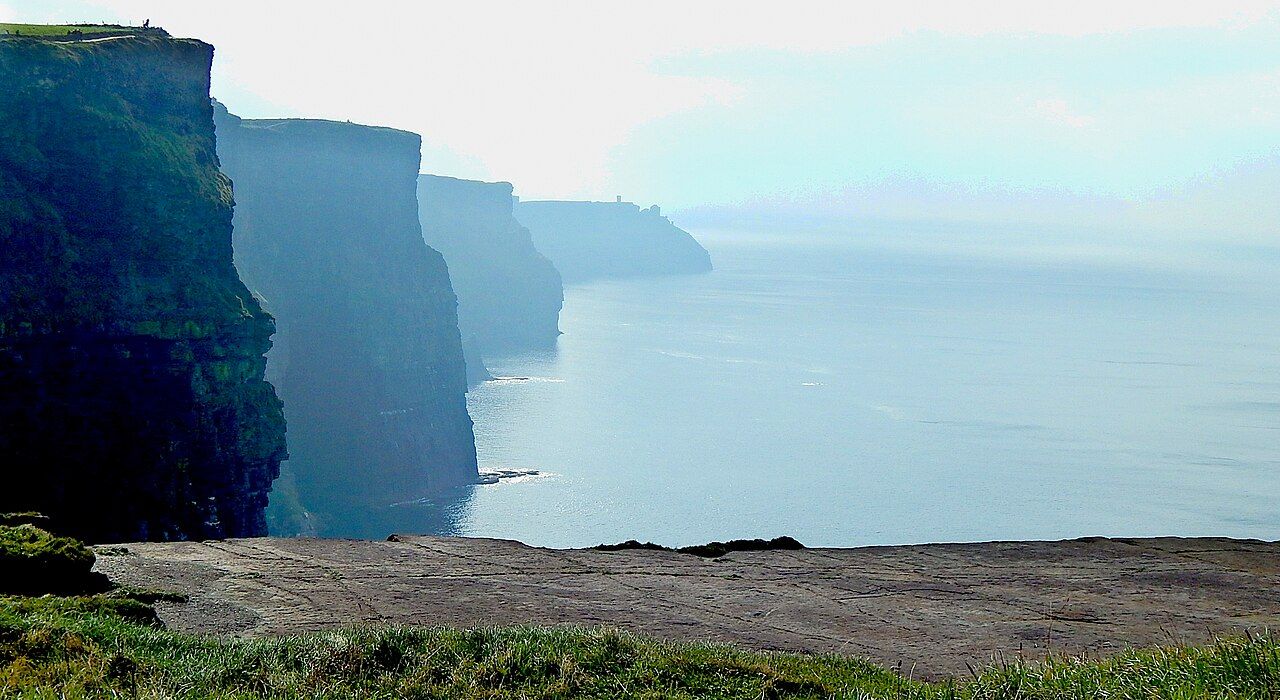
A bright spell between showers can change the whole look of the Clare coast. Then the rain returns, or the wind gathers, and the scene has shifted again. Nothing needs to happen in the way a visitor might expect a scene to happen. The weather is enough. The coast faces the open Atlantic and catches its weather first, which is a plain fact with a fairly large presence. On this stretch of County Clare, the sky is not background decoration. It is part of what the place is doing.
Rain and wind come mostly from the south-west. That direction matters less as a detail to memorise than as a way of understanding the coast: the Atlantic is open in front of it, and the weather comes in from there. The phrase “catches its weather first” sounds almost brisk, as if the coast has put its hand up before the rest of the country. It has. There is the open water, the wind and rain, and the land receiving them.
The weather can change within minutes. Bright spells arrive between showers, sometimes making the rain feel like a short interruption and sometimes making the next shower seem already on its way. A visitor’s first instinct may be to decide which sort of day it is. That is a poor use of effort here. There may be no settled answer. The useful thing is to notice what is actually happening: rain, a gap, a bright spell, wind. In that order, or in another one. The coast does not owe the day a neat arrangement.
This quick change gives the place a different rhythm from a landscape that stays under one mood. A spell of sun does not cancel the rain; the rain does not make the bright spell a mistake. Both belong to the same short stretch of time. There is something practical in accepting that. Less time spent arguing with the weather, more time seeing the coast as it is at that moment. The visitor who waits for a whole day to declare itself may wait rather a long time. Even the phrase “a fine day” starts to look a bit too confident.
Winter storms are another matter. At Doolin and along the Burren coast, waves crash over the rocks. The open Atlantic meets the coast with force, and the rocks take the impact. It is weather at work. The coast is not merely looking dramatic; waves are crashing over rocks, and the scale of that is plain enough.
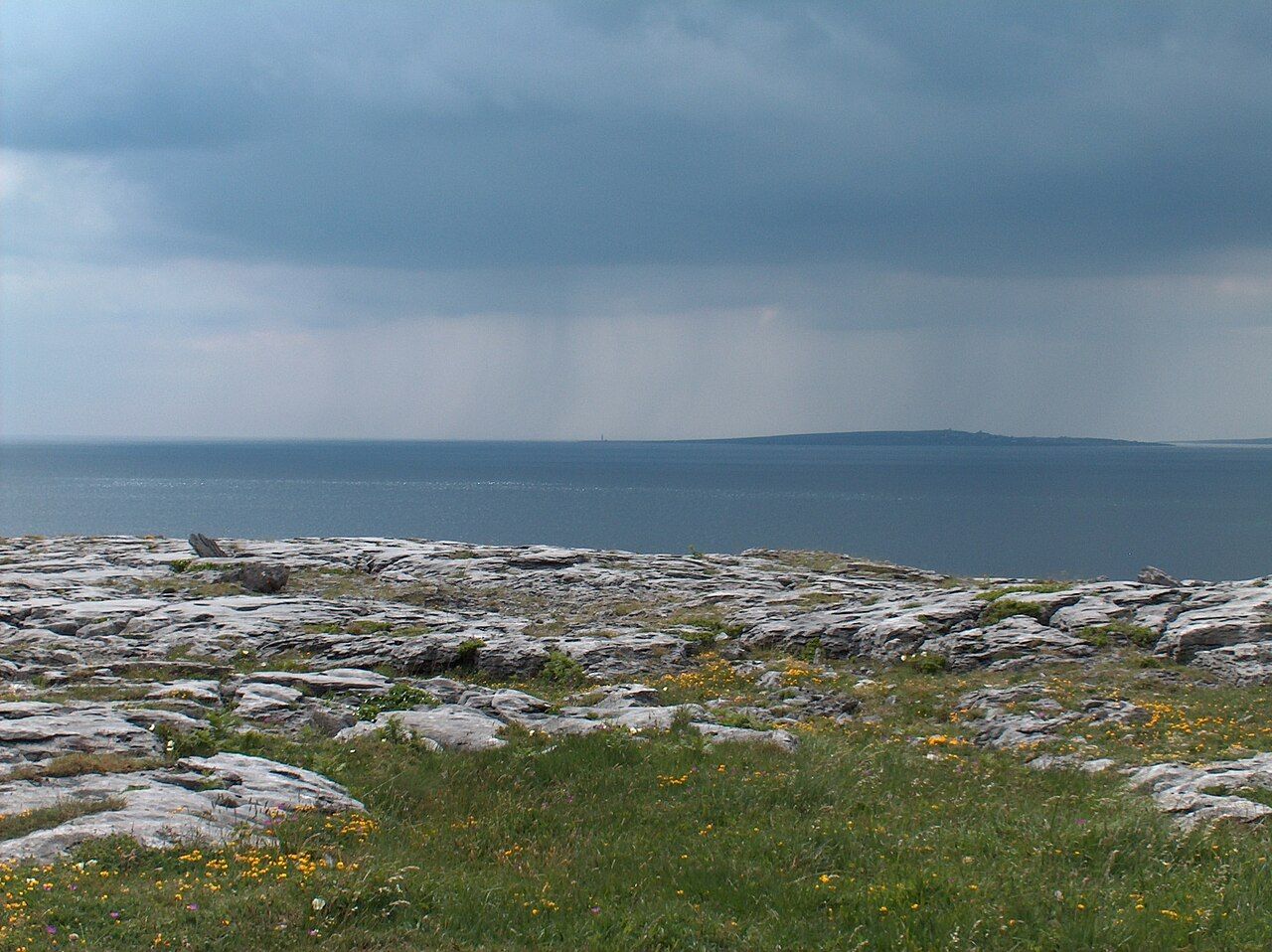
There is also a useful distinction between the coast in storms and the coast in ordinary showers. A shower is part of the quick changes, with bright spells between. A winter storm sends waves crashing over rocks. The weather is not one single experience repeated at different volumes. It alters what the coast is doing. Doolin and the Burren coast have their place in that account, not as separate promises of a particular view, but as parts of a coast exposed to the same Atlantic weather. The details are few. They are enough.
Snow is rare on the coast. It belongs in the story as a possibility, not as the usual shape of winter here. The more familiar weather in these facts is rain and wind, mostly from the south-west, with changes that can happen within minutes. That is a more useful picture than a dramatic winter scene treated as the whole year. The coast has storms, but it is not permanently a storm. It has bright spells too. And in June and July, the long days give light until late in the evening. May in north Clare has its own place in the calendar, though the central point remains the same: the weather does not stay put.
For a visitor, that makes the coast less like a fixed view and more like a place encountered in passing conditions. Rain, wind and sun do not need to be ranked as good or bad before the day can begin. The open Atlantic sets the terms, and the coast receives them first. In winter, waves crash over rocks at Doolin and along the Burren coast; in June and July, light lasts late into the evening. Between those statements sits the ordinary business of showers and bright spells. It is a modest kind of certainty, and probably the only kind the weather offers.
See also Kilfenora’s Crosses and Cathedral.
The numbers: June and July give light until late in the evening. The weather’s timetable remains a rumour.