Seaweed, oysters and the food of north Clare
A food story of coastal gathering, seasonal oysters and the grasses and herbs that feed the Burren’s lamb and beef.
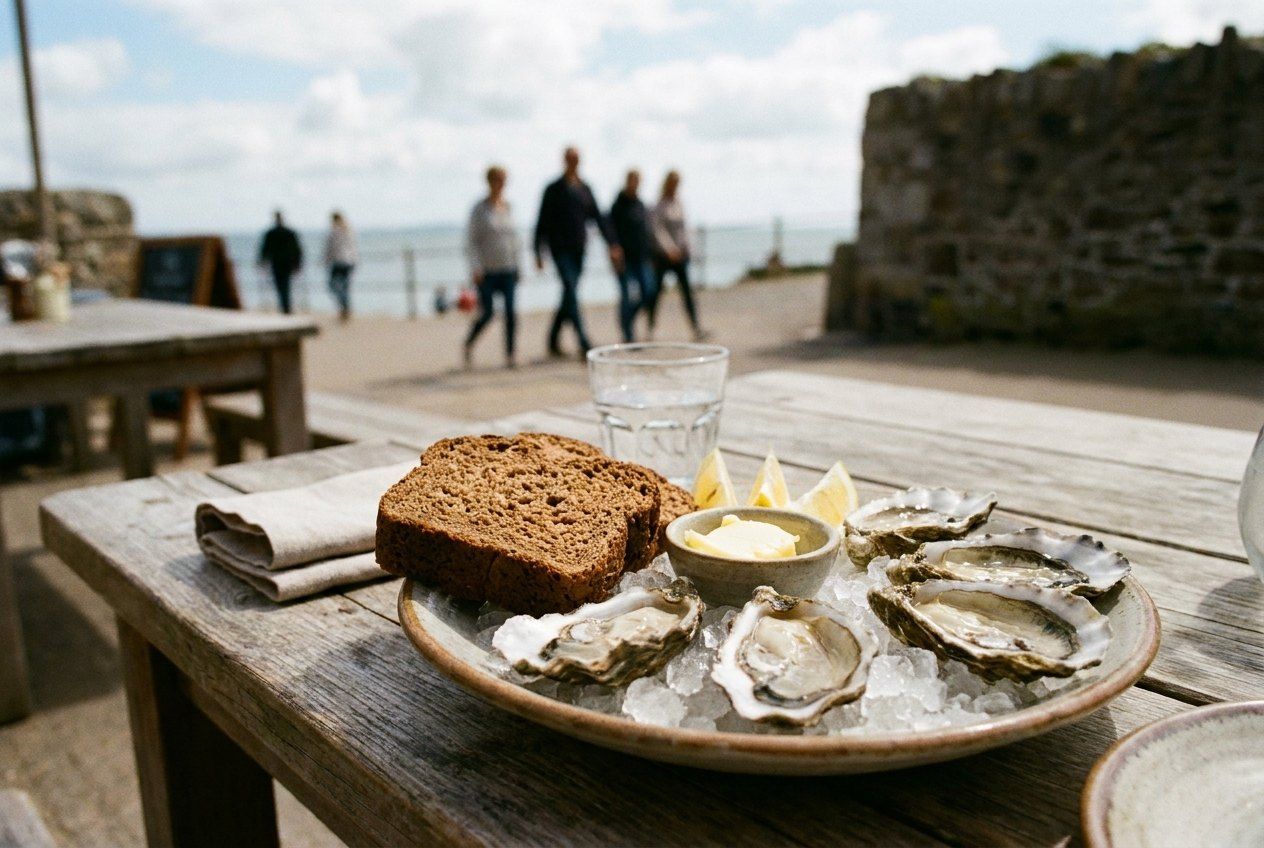
What does the coast leave on the table when its food is read as a record of work, ground and season? In County Clare, the answer is not a single dish or a neat menu. It is a set of connections: seaweed gathered along the coast, oysters from Galway Bay, and lamb and beef from the Burren, where animals graze on limestone grasses and herbs. Smoked salmon and farmhouse cheeses made in north Clare add to the picture. The food matters, but so does the landscape and the labour held inside its names.
Seaweed has long been gathered on the Clare coast for two uses: food and fertilising fields. That double purpose is worth keeping in view. It resists the tidy division between what belongs on a plate and what belongs to the work of the land. Seaweed is not simply a coastal curiosity, brought in to make a story sound unusual. It has been part of eating and growing here. The history is plain, useful and more interesting than any grand claim about a secret ingredient.
Dillisk is a red seaweed, eaten dried. The description is brief, but it gives the food a particular shape: coastal gathering, then a way of keeping it. The dried form is the point. Dillisk carries the coast into a pantry-sized piece of food, and its place in the story is direct. A list of ingredients can make it sound like an oddity; set beside the long practice of gathering seaweed for food, it belongs to a larger habit.
See also Kilfenora’s Crosses and Cathedral.
Galway Bay is known for native oysters, harvested mostly from September to April. That season gives the oyster story a useful boundary. The Galway International Oyster Festival is held each September, and the calendar brings harvest and festival into the same part of the year. Oysters have their own place, with a name tied to the bay and a season that stretches across several months. The simplest account is the strongest one.
There is a satisfying contrast between the oyster and the Burren’s lamb and beef. One comes from a bay; the other is linked to animals grazing on limestone grasses and herbs. Those details do not need much translation. “Limestone” sets the ground beneath the Burren food, while grasses and herbs name what the animals graze on. The food story is not only about what can be gathered or raised, but about the conditions named in the facts themselves. The Burren is not just a label on a plate. It gives the lamb and beef a clear relation to place.
North Clare also makes smoked salmon and farmhouse cheeses. They deserve space beside the more striking words in this story, not a lesser place because they sound familiar. The phrase “farmhouse cheeses” carries a sense of making, while “smoked salmon” tells what kind of salmon is made there. The useful point is that both belong to north Clare’s food. A visitor reading the region through what is made there finds more than one route between coast and table.
The best way to hold these foods together is not to pretend they make one grand tradition with a single taste. They are different kinds of evidence. Seaweed joins the coast to food and fields; dillisk keeps that edible use especially clear. Oysters bring a named bay and a harvest season. Burren lamb and beef point to limestone grasses and herbs, while smoked salmon and farmhouse cheeses put making in north Clare. It is a varied account, and the variety is its strength. Flattening it into a list of local specialities would skip the relationships that make the list worth reading.
There is also a small pleasure in how little the story needs. The coast, the bay, the limestone, the grasses and herbs: each gives a reason for a food to be here without requiring a grand explanation. Seaweed has uses beyond the plate; oysters have a season and a festival; the Burren’s grazing belongs plainly in the account of its meat. These are practical details, not decoration. Together they make a food story that stays close to its sources and lets the place remain the subject.
The numbers: native oysters are harvested mostly from September to April; the festival is held each September. The calendar has clearly developed a taste for oysters.