Currachs and the island sea
A long look at the light boats of the Aran Islands, made for work at sea and still present in summer regattas and on film.
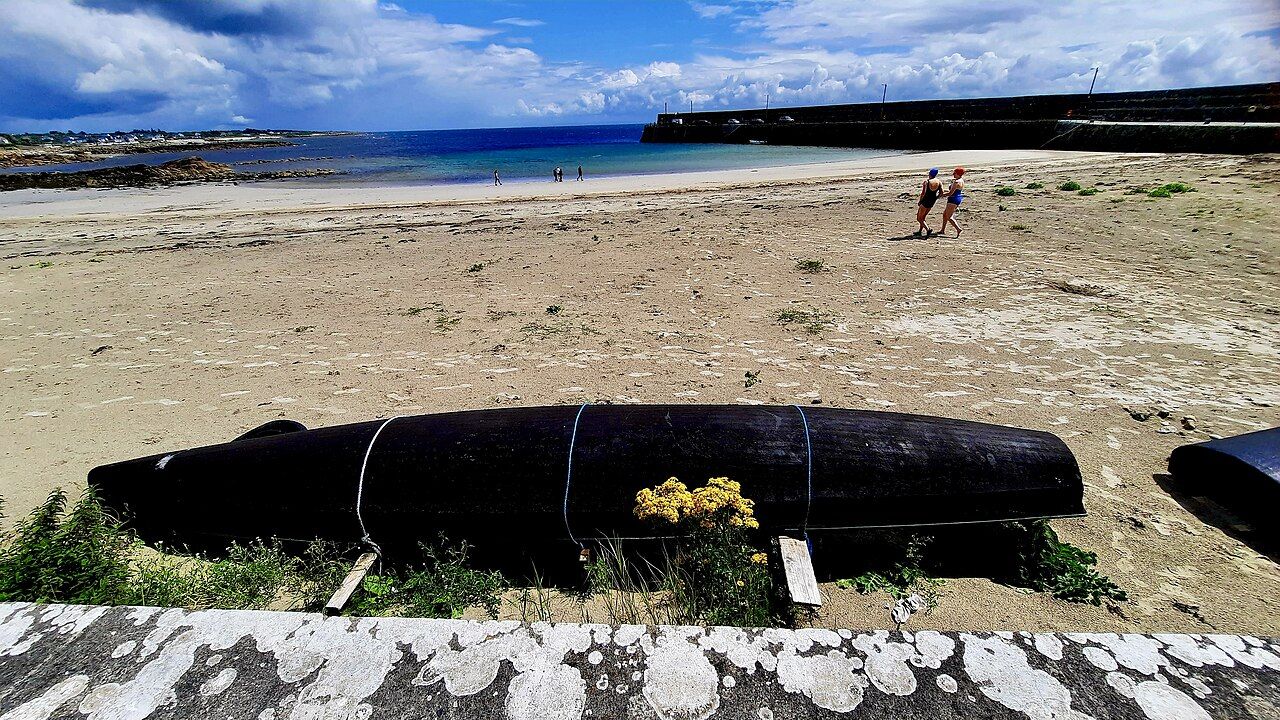
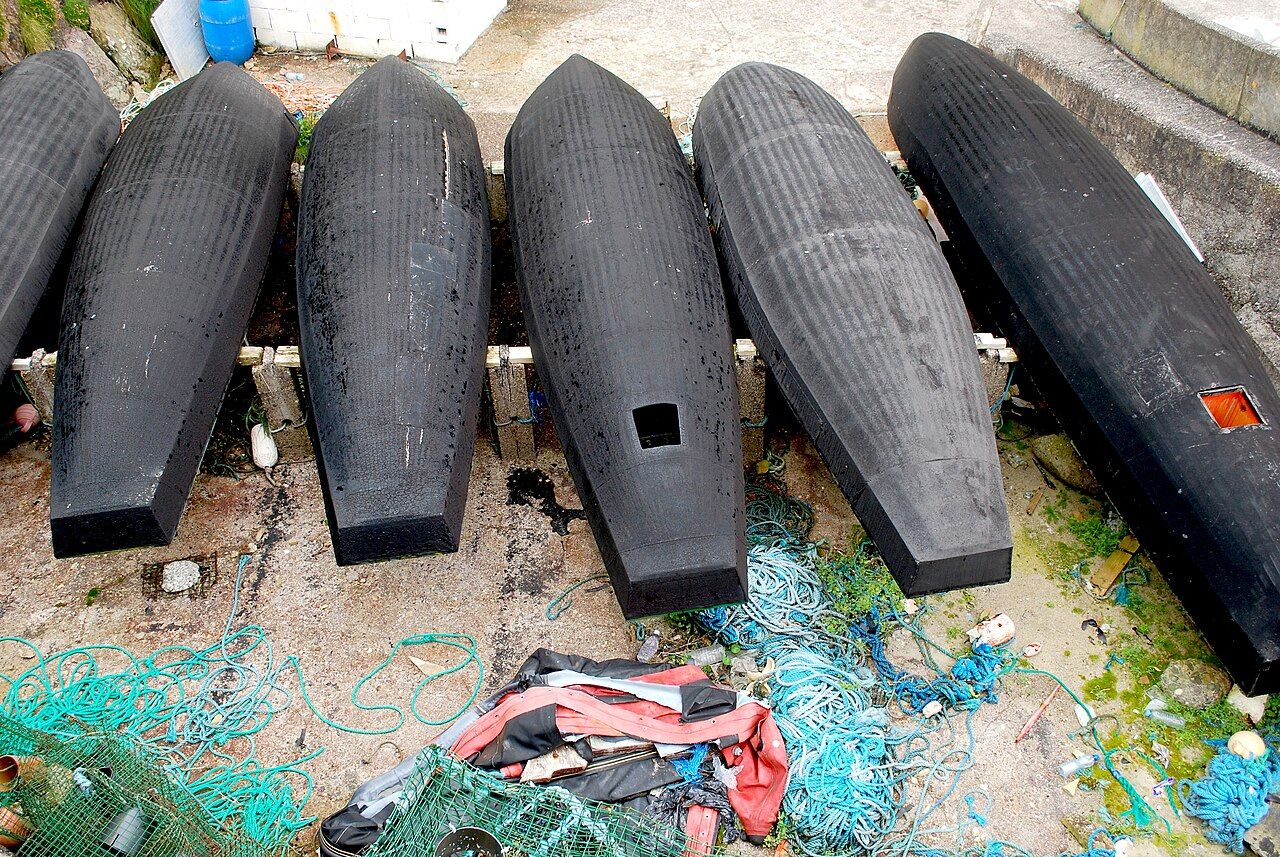
A light boat, a wooden frame, canvas and tar. Earlier currachs used animal hides. The boat’s construction is plain enough to hold in mind, but its place in island life is larger than its materials. On the Aran Islands, currachs were used for fishing and for carrying goods and animals to the mainland. The sea was not simply around the boat. It was part of the work the boat was made to do.
That combination is the useful starting point for a visitor: not a boat as ornament, but a boat understood through its tasks. Fishing on one side of the account; carrying goods and animals to the mainland on the other. A currach could be light and still belong to serious work. The short list of materials and uses says more than an elaborate description would. It gives a sense of a practical design without pretending to know every detail of how each crossing went.
The oars make the picture stranger and clearer. They are narrow, without blades. It is an easy detail to pass over, and a favourite to keep. The boat’s lightness, its frame, its covering, and those oars belong together in the mind, though the facts do not explain how the design came about. The absence of blades is enough to make the familiar word “oar” feel incomplete. A currach is not a standard picture of a boat with one unusual feature added. Its parts ask for a different picture from the start.
Synge described islanders handling currachs in rough seas. That is a sharper account than a general statement that the sea could be difficult. The people and the boats are there together, and the roughness is not tidied away. There is no need to supply a scene that the description does not give. The important fact is that currach handling in rough seas was part of what Synge chose to describe. For a visitor, that makes the boat’s working life easier to understand: not just a shape on the water, but something handled in conditions that called for skill.
The 1934 film Man of Aran, by Robert Flaherty, shows islanders in currachs. It offers another way to keep the boats in view, beside Synge’s description and the facts of fishing and transport. A film can make a boat visible; a short account can make its uses legible. Neither detail needs to be inflated into a claim about everything island life was like. The steady point is smaller: currachs belonged to islanders’ work, and they remain part of the way the Aran Islands are represented.
The link between land and sea matters here, but the boat stays at the centre. Dún Aonghasa on the cliff edge gives the island story a view from land; the currach gives it a working shape on the water. That is a contrast, not a claim that one explains the other. A visitor can hold both in mind without turning either into a grand symbol. The currach is already interesting in its own right: light, covered, rowed with narrow oars without blades, and used to fish and carry goods and animals to the mainland.
Currach racing is still held at regattas in summer. The word “still” does useful work. It joins the boat’s practical history to something that continues, without making the regatta stand in for every older use. The boats have not been reduced to an image from a film or a description of rough seas. Racing belongs in the account too. For a visitor, that is a satisfying range: work, written description, film, and summer regattas. No single one has to carry the whole meaning of the currach.
Perhaps that is why the plain facts hold together so well. A wooden frame covered with canvas and tar; animal hides in earlier versions; narrow oars without blades; fishing and transport; people handling the boats in rough seas; racing at summer regattas; islanders on screen in Man of Aran. Each detail adds something, and none asks for a borrowed legend. The currach is light, but the account around it is not slight. Even the oars have managed to make a point without a blade.
The numbers: 1934, the year of Man of Aran. The oars are not blade-counting types.
See also The Aran Sweater and Its Stitches.