The Aran Sweater and Its Stitches
A heavy jumper of undyed wool, named after the Aran Islands, with patterns that carry both familiar names and a much-repeated story.
What can a pattern tell about the Aran Islands, and what belongs only to the stories told about it?
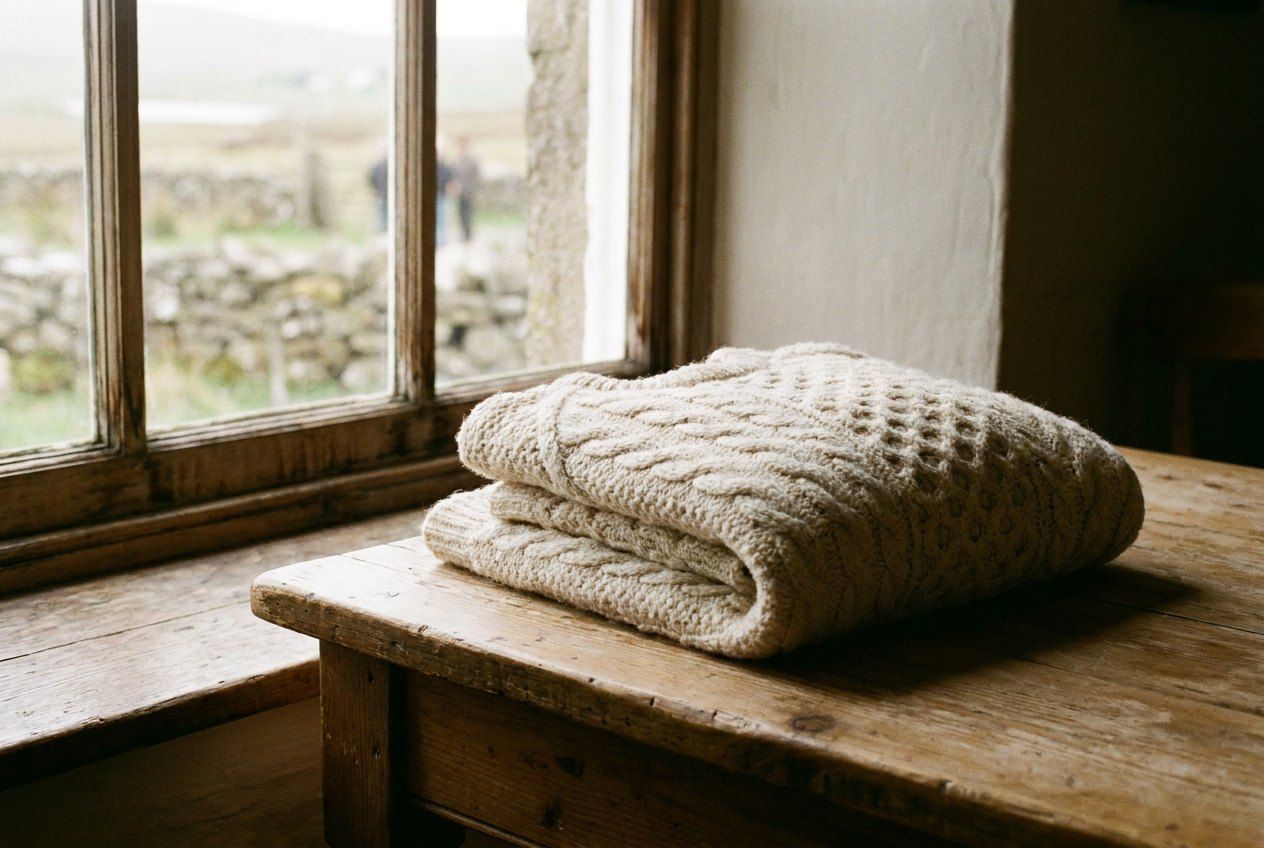
The Aran sweater is a heavy knitted jumper of undyed wool, named after the Aran Islands. That is a plain beginning, and a useful one: the name ties the garment to a place, while the wool and weight describe what it is. An island name, undyed wool and a knitted surface of named patterns are enough to give the sweater its particular identity.
The stitches have names that are easy to keep in mind: cable, honeycomb, diamond and moss. They are not interchangeable labels for one general pattern. Each names a different part of the knitting, and the names give the eye somewhere to pause. The interest is in the actual pattern, not in assigning a meaning to every stitch. A visitor can look at the jumper and recognise that the names belong to a vocabulary of knitting.
There is a popular story that each family had its own pattern, so drowned fishermen could be identified. It is a striking tale, and it is often attached to the stitches. There is little evidence for it. That qualification matters. The story can be repeated as a story, but it should not be passed off as an established account of how the patterns worked. The difference between a memorable tale and evidence is part of the sweater’s history, too.
The sweaters became widely known in the mid twentieth century. That is the firm point in the story of their recognition: not an exact date, and not a claim about a single turning point. It is a useful reminder that the fame attached to the garment has its own history. The Aran name, the stitches and the family-pattern story may seem to belong together, but each needs to be held to what is known.
The wool has a practical quality. Natural lanolin in the wool sheds water. The jumper is heavy, the wool is undyed, and the wool’s natural lanolin sheds water. That combination is more convincing than any overworked explanation of what a cable or diamond must signify.
Aran knitting patterns are now made around the world. The name still points to the islands, while the making of the patterns has travelled beyond them. That is not a reason to blur the place from the story; it is a reason to keep the two things clear. The sweater takes its name from the Aran Islands, and its patterns have a life well beyond them. The stitches remain worth looking at without asking them to prove a tale.
See also Inis Meáin and Synge’s Chair.
The numbers: no figures stated.