Liscannor, Stone and St Brigid’s Well
A village on the bay south of the Cliffs of Moher, where ripple-marked stone, a ruined tower house and a holy well give the place its shape.
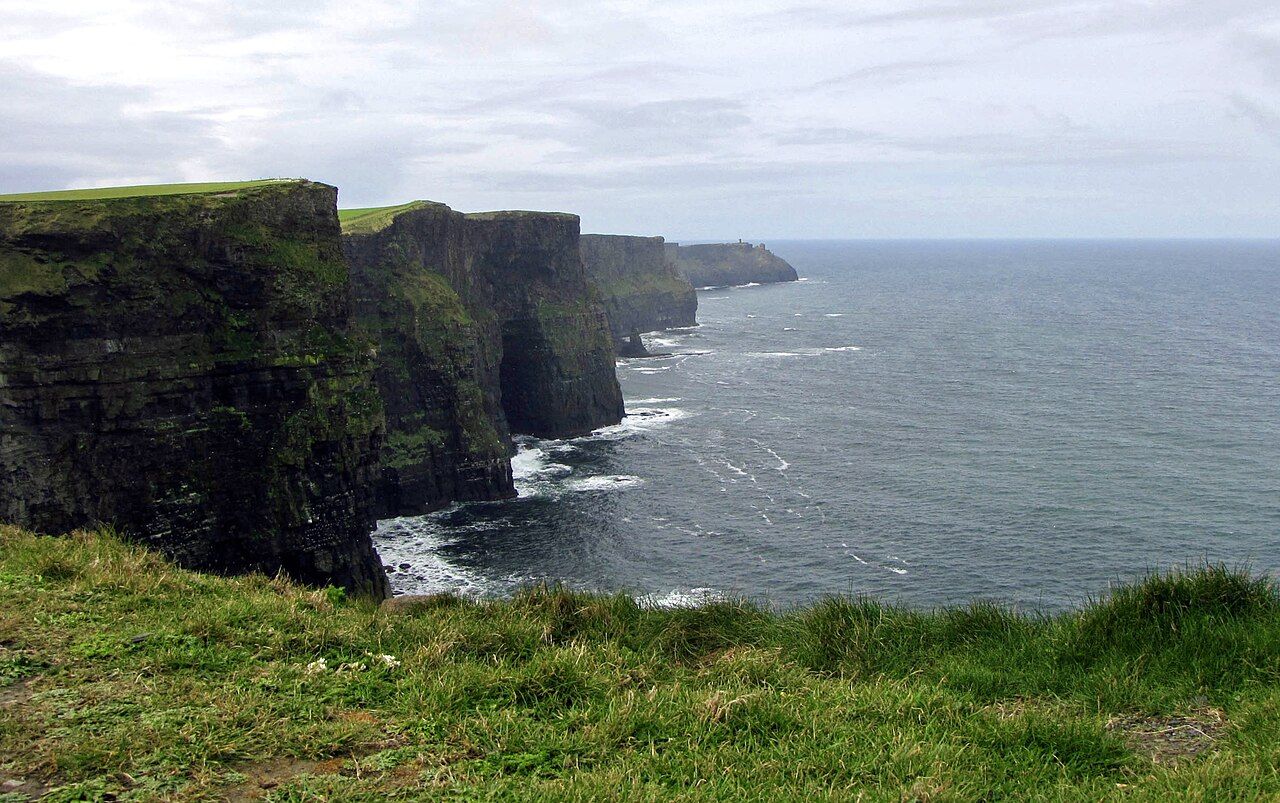
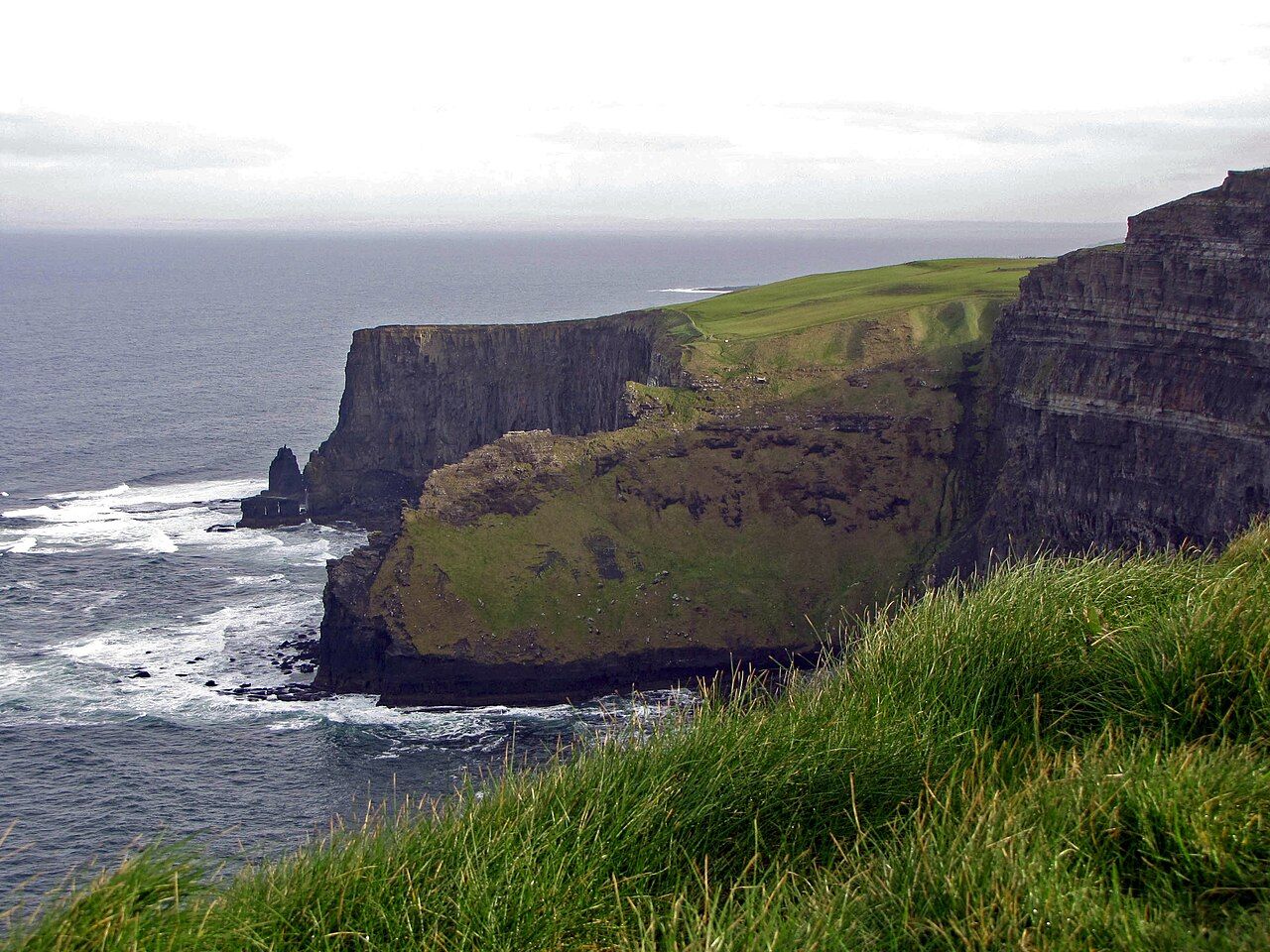
What gives Liscannor its character: the bay, the stone, or the well between the village and the cliffs? The answer is probably not one thing. Liscannor sits on the bay south of the Cliffs of Moher, with a ruined tower house by the harbour and St Brigid’s Well between the village and the cliffs. These are not grand ingredients, and that is their strength. The place is understood by looking at what is close together: a village, stone taken from nearby, a holy well reached through a passage, and a tower house left in ruin.
Liscannor stone is a flagstone, quarried nearby and used for floors and walls. Ripple marks and fossil trails run through it. There is something pleasingly plain about a material with its own record visible on the surface. The marks are not decoration added later; they belong to the stone itself. In floors and walls, this local material gives ordinary parts of a building a particular texture. It is also a reminder that Liscannor is not only a place to pass on the way to the cliffs. Its name belongs to a stone with a recognisable character, used well beyond the quarry face.
The stone makes a good first thought, but it should not take over the whole visit. A wall can be admired without turning every surface into a lesson. The useful thing is to notice how the ripple marks and fossil trails make the flagstone distinct, then let the village remain a village. Liscannor has enough to say in its own materials and landmarks.
St Brigid’s Well lies between Liscannor and the cliffs, and is visited on pilgrimage. Reaching it means passing through a passage lined with offerings, photographs and rosaries. The passage is not a decoration around the well; it is part of the visit. Its contents make the approach feel personal, though the details are those of other people’s devotion. The well merits attention as a place in its own right. The offerings and photographs give the passage a close, human scale, while the well’s place between village and cliffs keeps it tied to the geography of Liscannor.
The passage is not a decoration around the well; it is part of the visit.
That is the detail worth carrying away: not an imagined story about what each offering means, but the visible fact of offerings, photographs and rosaries gathered along the passage. A holy well visited on pilgrimage does not need an added explanation to be taken seriously. The setting is enough. St Brigid’s Well is a place with a clear purpose, and the approach makes that purpose plain. It deserves a little attention in its own right, rather than being treated as a quick pause before the cliffs.
See also Aill na Searrach: the wave under the cliffs.
By the harbour stands Liscannor Castle, a ruined tower house. The word “ruined” can make a building sound like a leftover, but the tower house still belongs in the village’s present-day outline. It gives the harbour another kind of stone to consider: not flagstone with ripple marks and fossil trails, but a structure now described by its ruin. Its place by the harbour, and its form as a tower house, are enough to make it part of Liscannor’s particular mix.
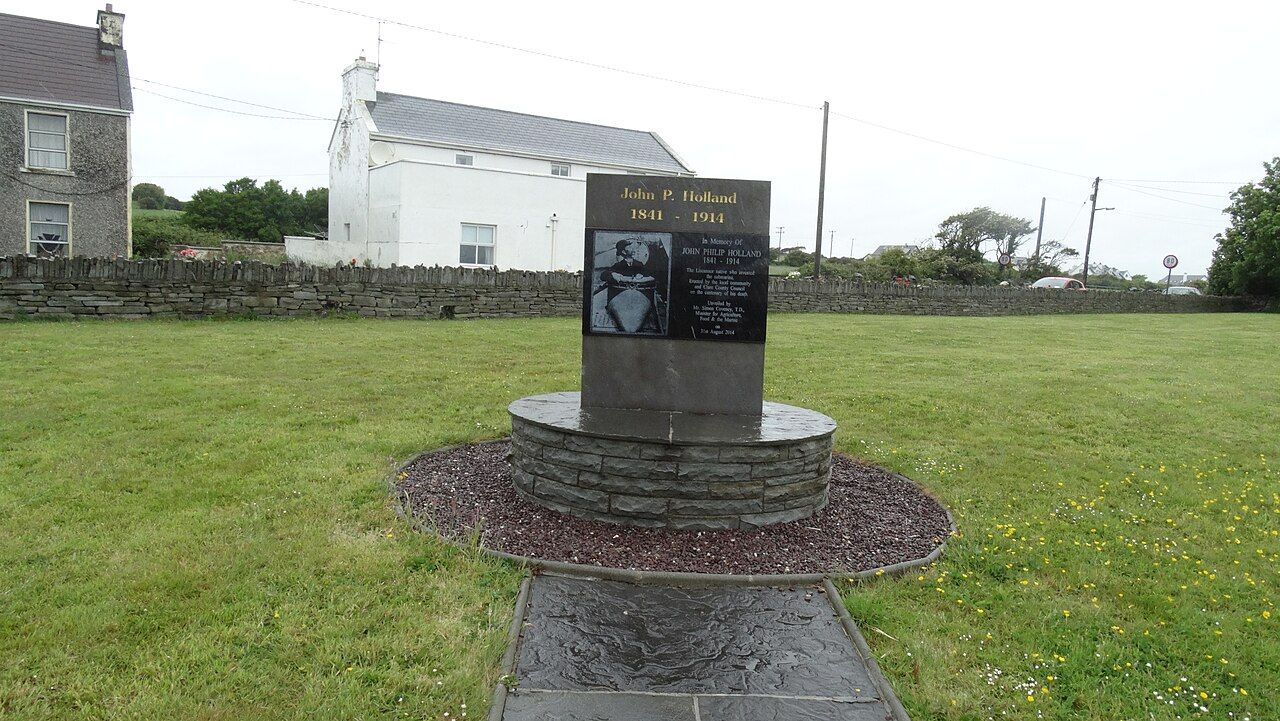
John Philip Holland, inventor of the submarine, was born in Liscannor in 1841. That fact sits neatly beside the village’s other details, though not because stone, well and submarine share some hidden connection. They do not need one. A village can hold a local material, a place of pilgrimage, a ruined tower house and the birthplace of an inventor without arranging them into a tidy theme. The range is the point. Each detail offers a different way into the place, and none has to explain the others.
For a visit, the best approach is to keep the scale modest. Notice the stone for what it is; give the passage to St Brigid’s Well its proper attention; take in the tower house by the harbour. The Cliffs of Moher lie to the north, but Liscannor is not merely a southern marker beside them. The village has its own substance, made from the stone underfoot and the places gathered between the bay and the cliffs. That is quite enough for a day’s thinking. The numbers: 1841, John Philip Holland’s birth year in Liscannor. The submarine is not counted; it would make the figures dive.